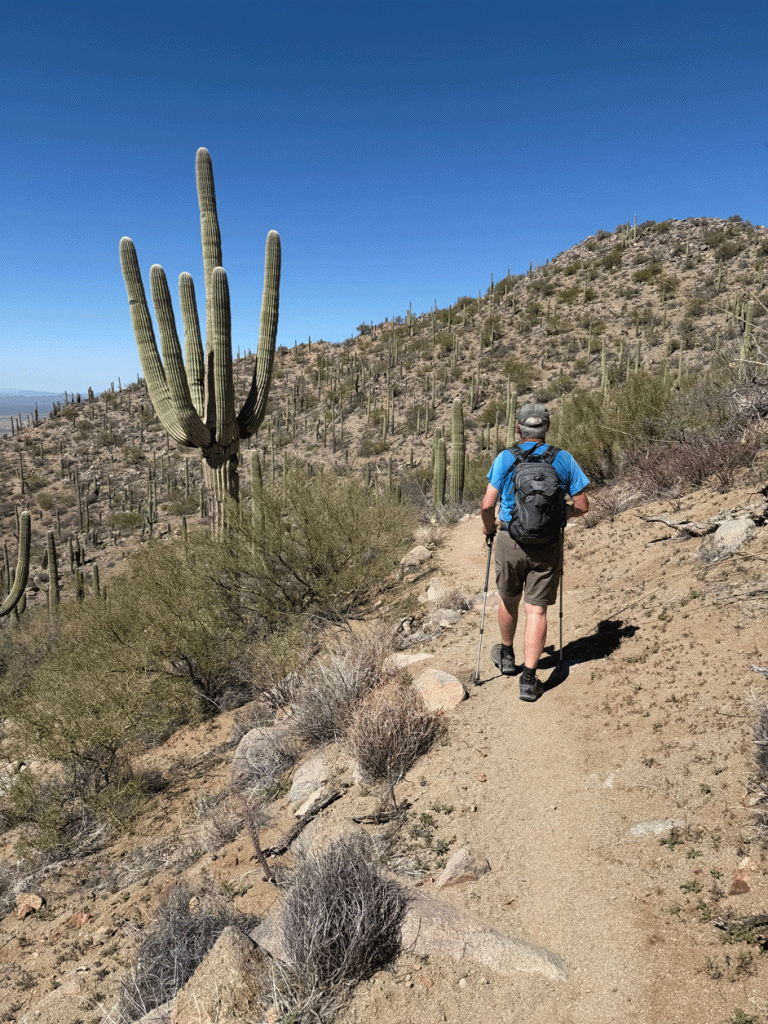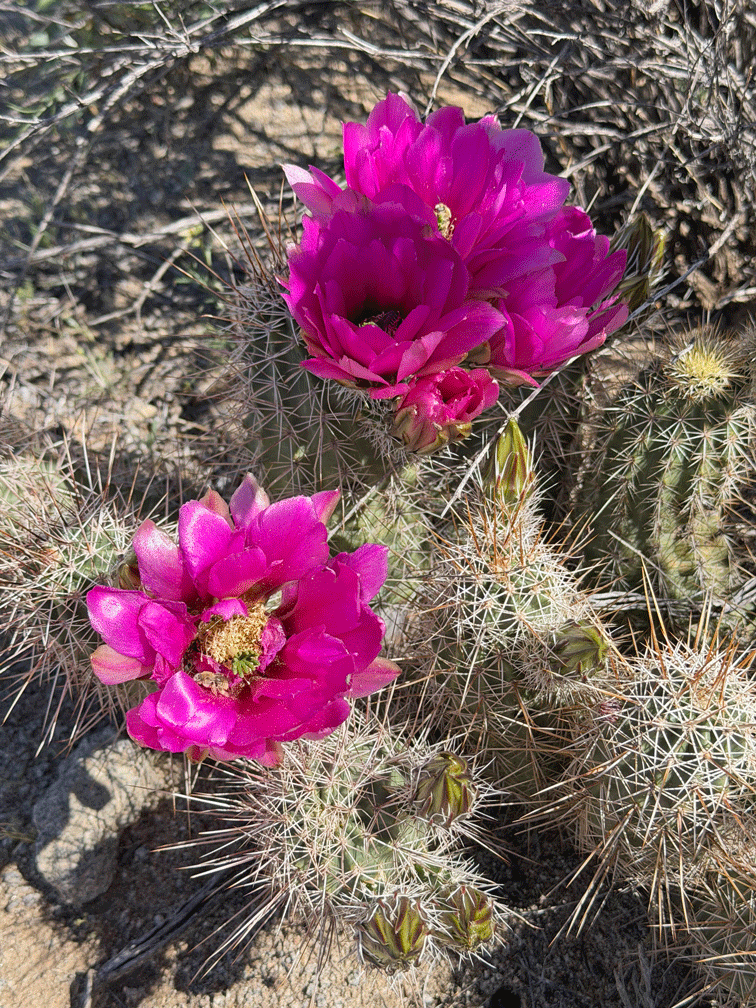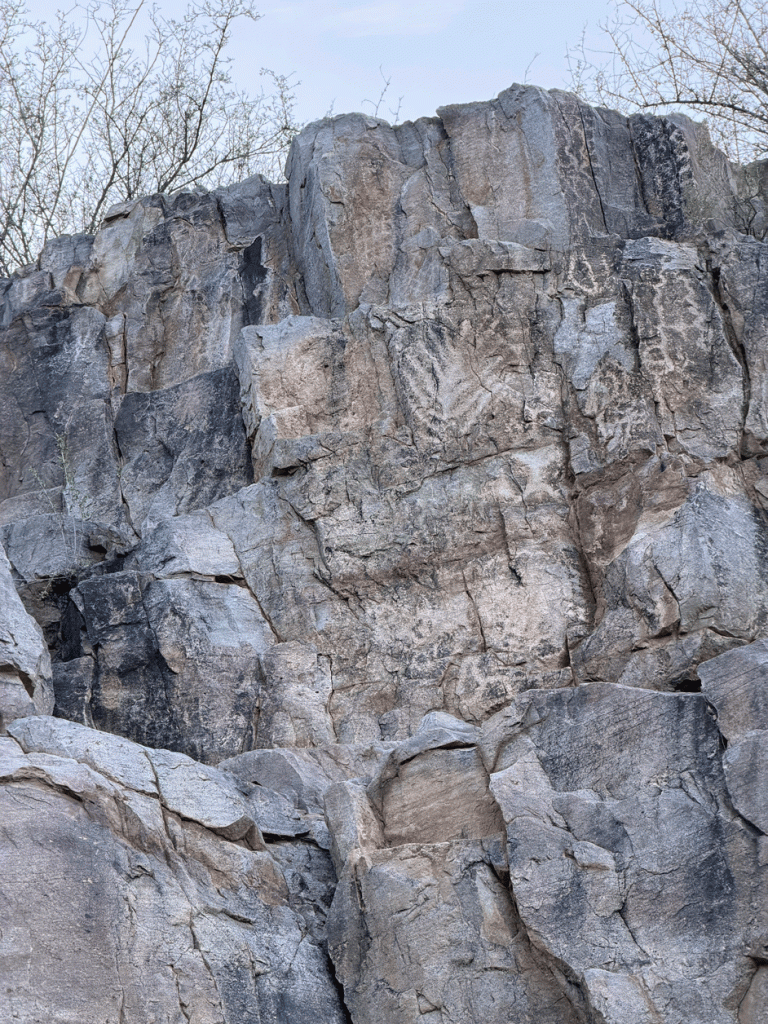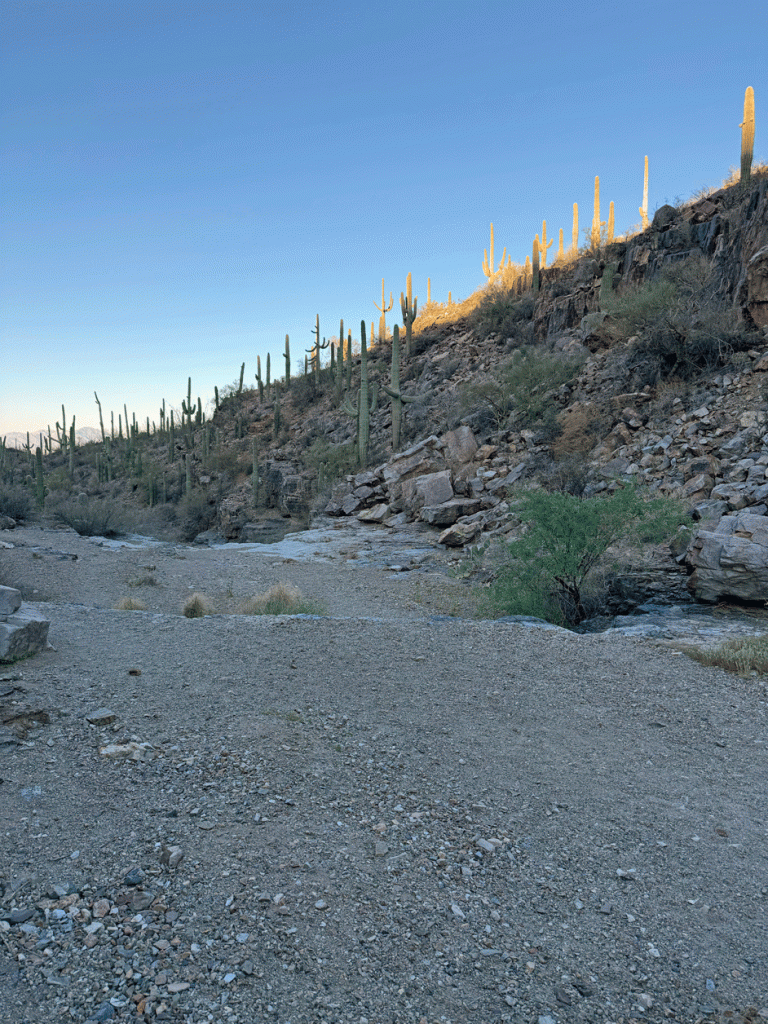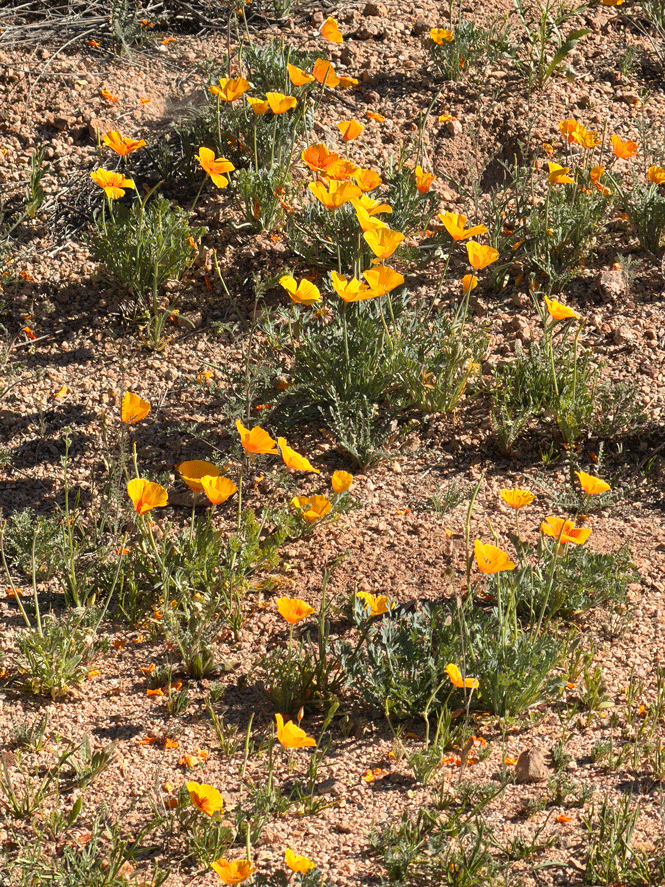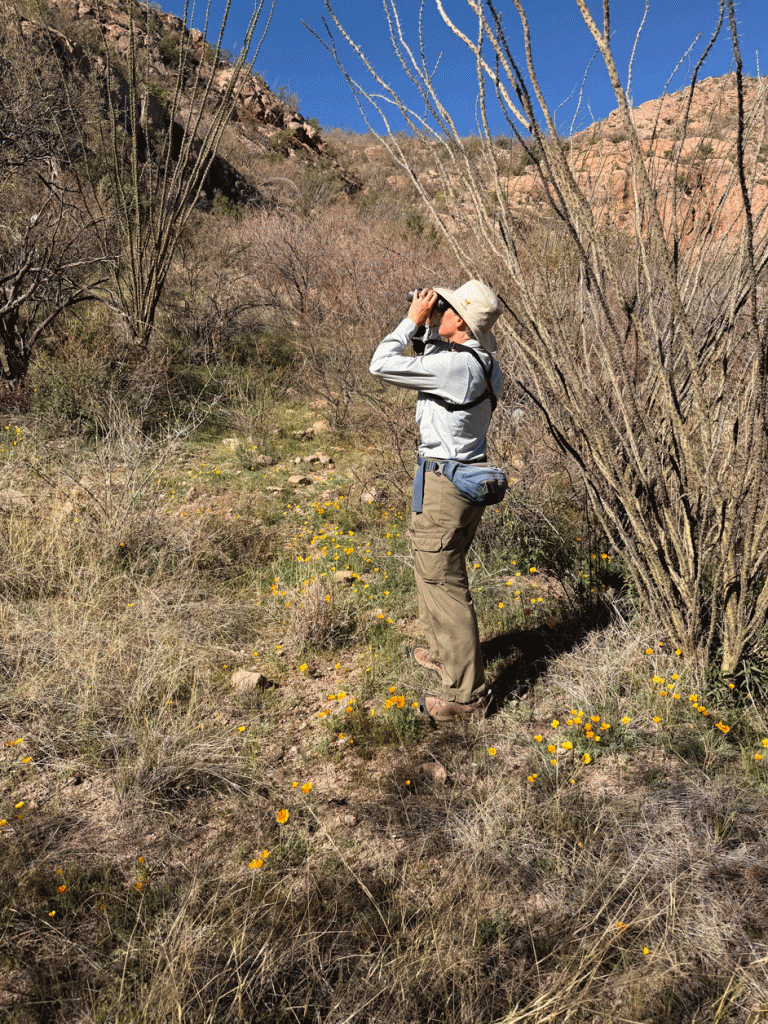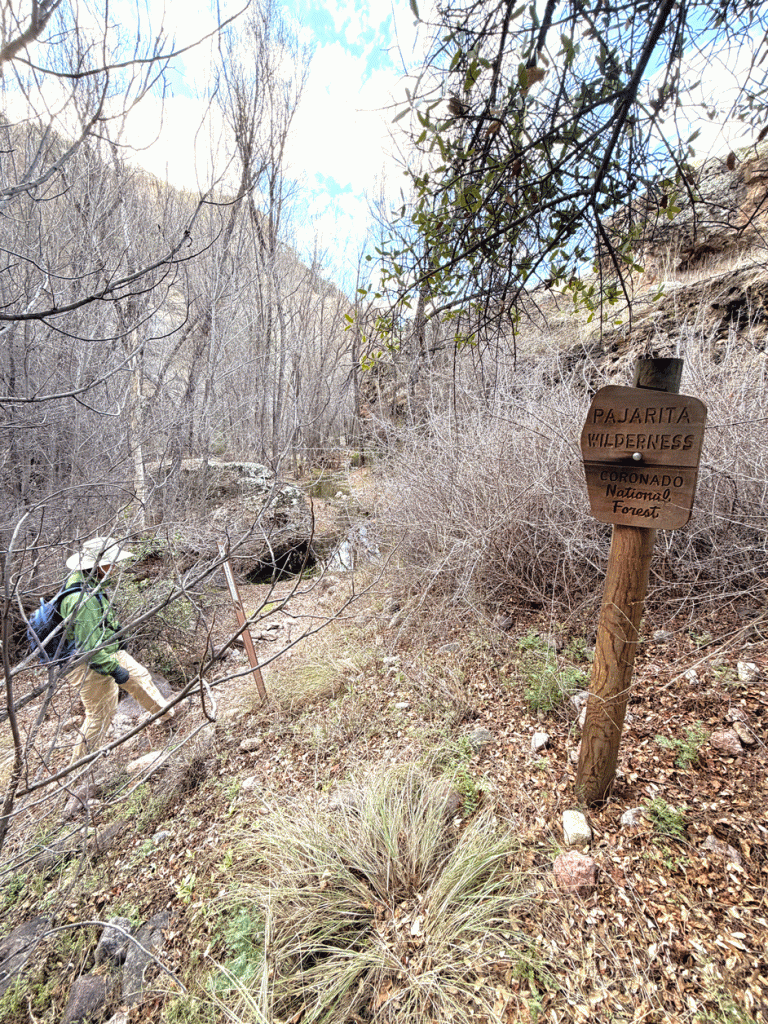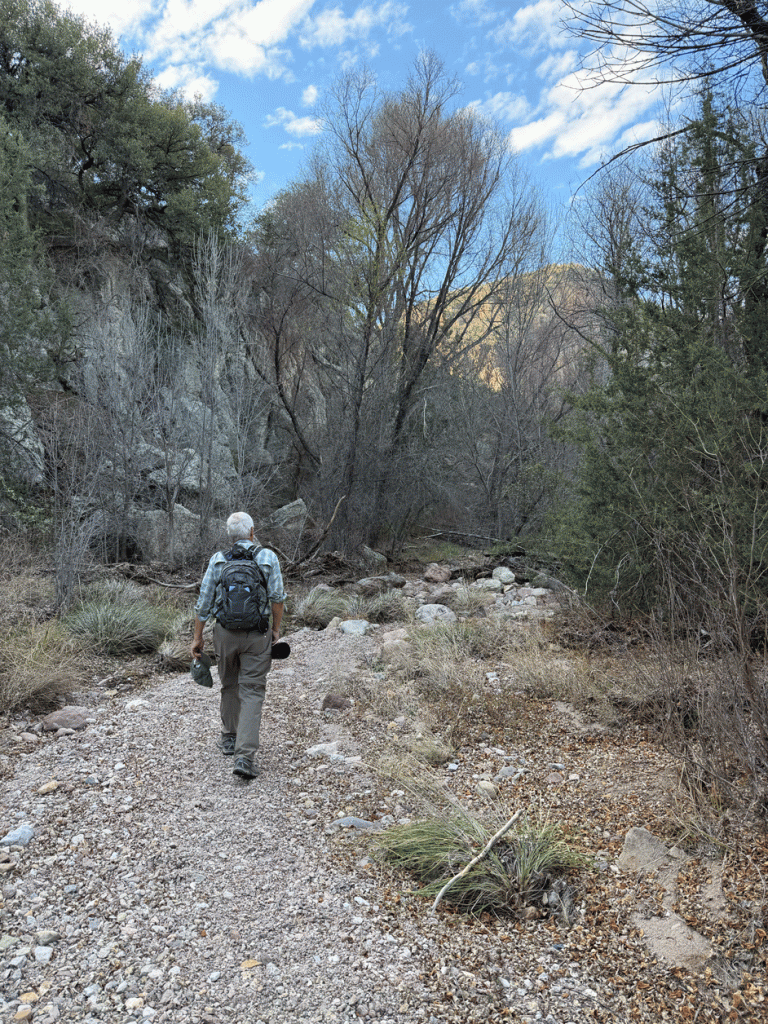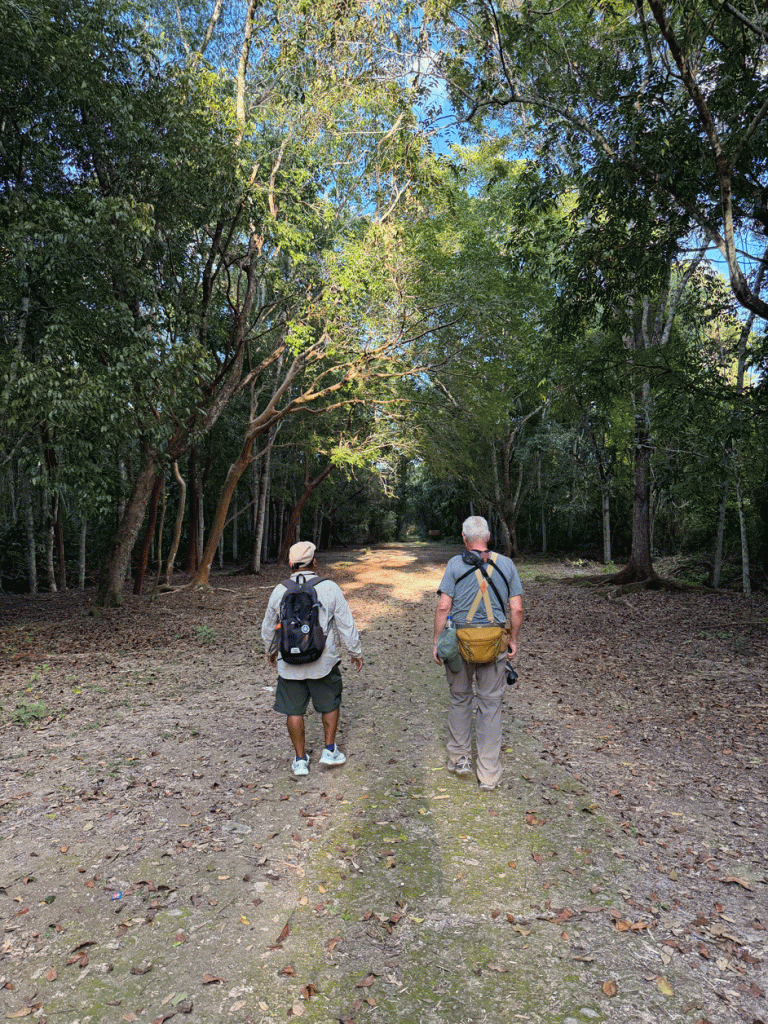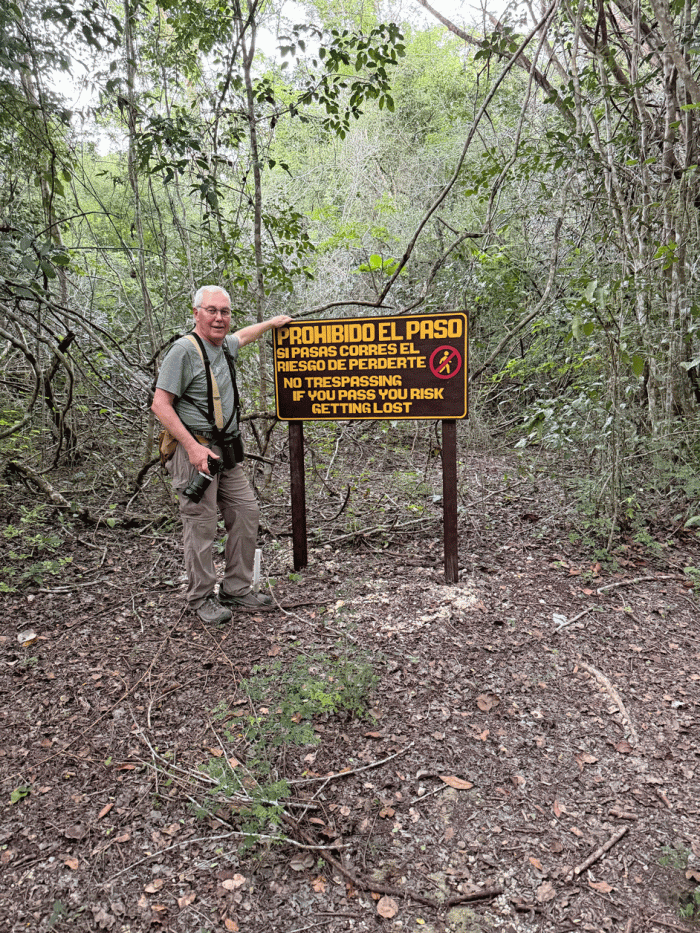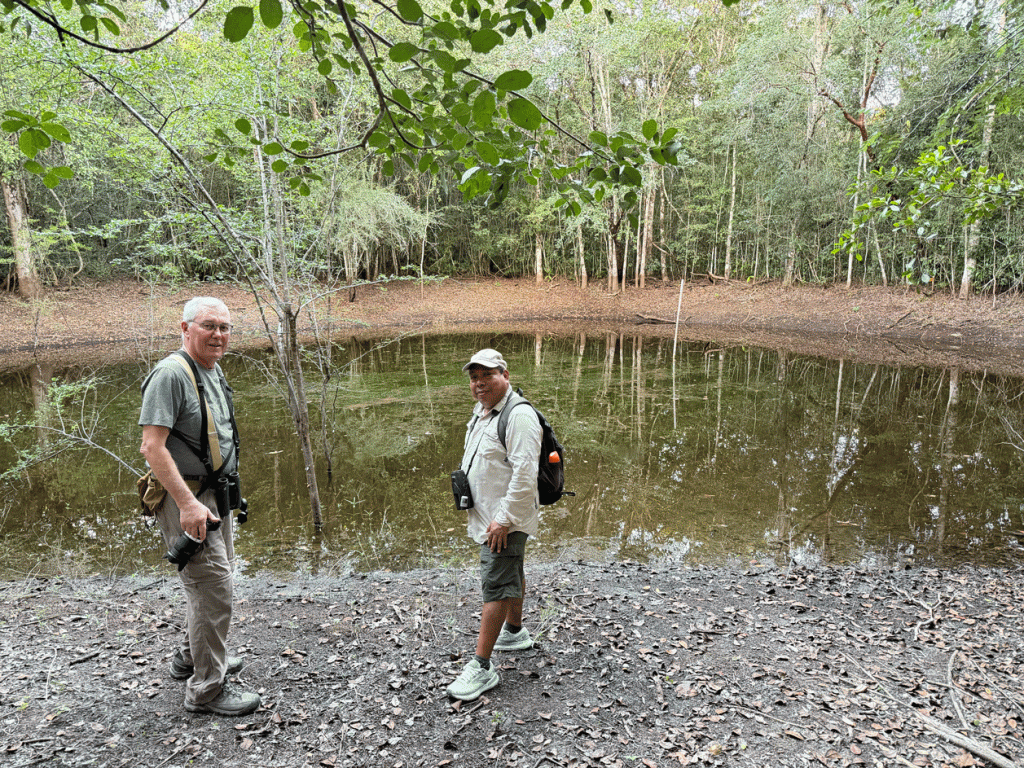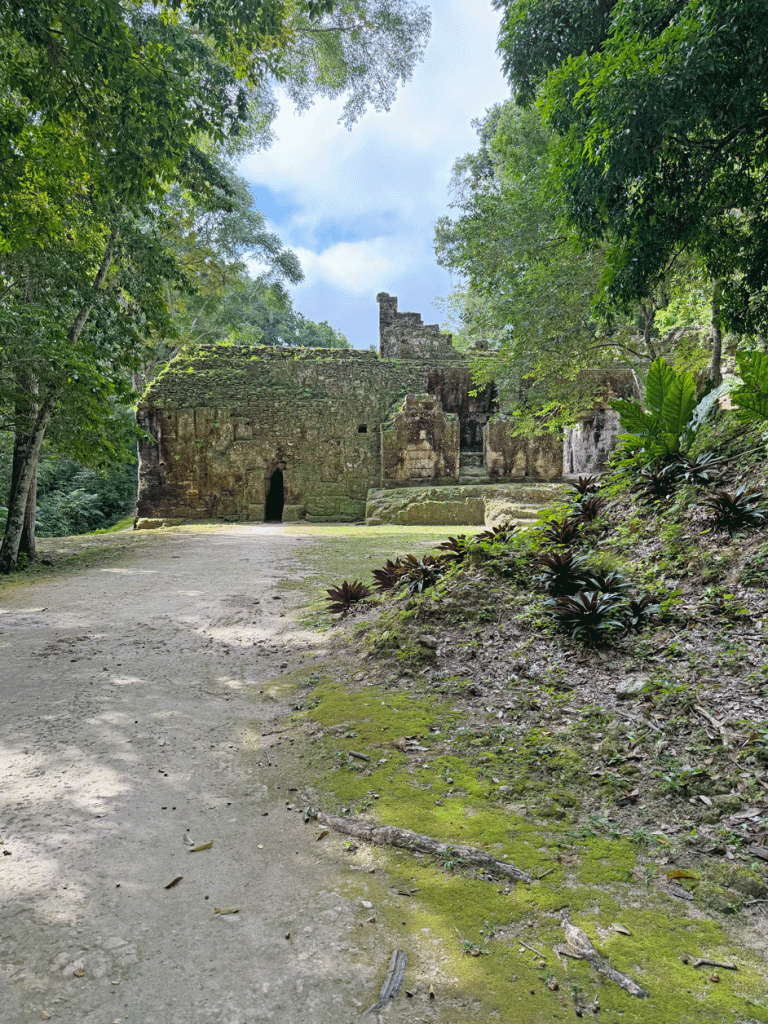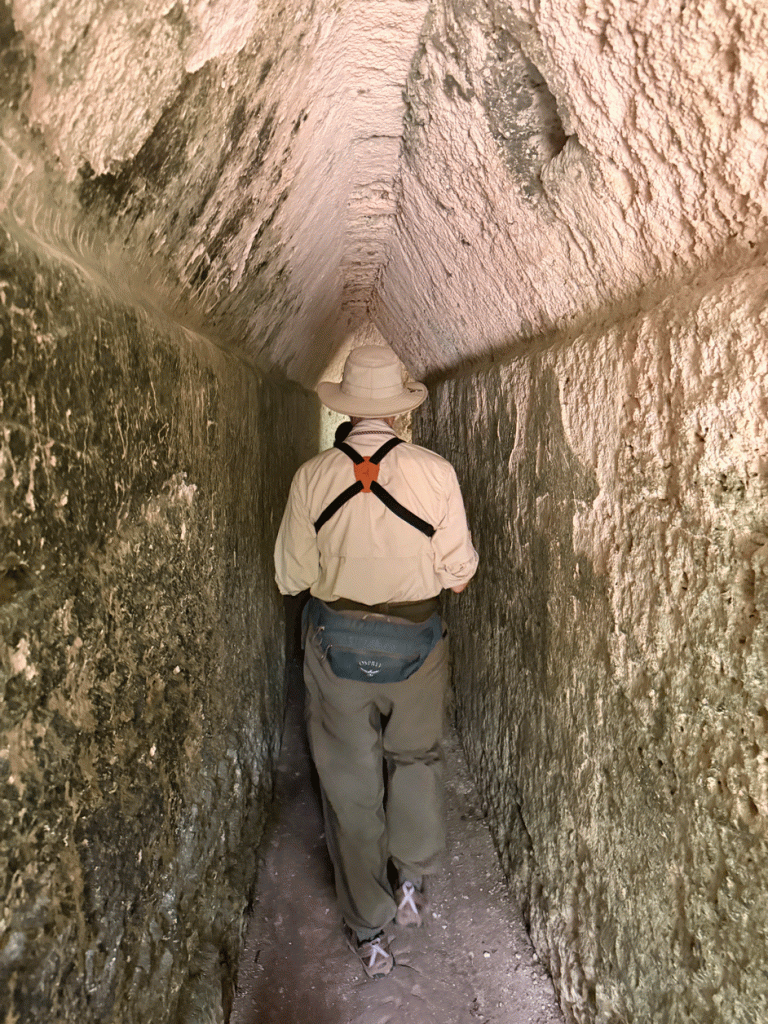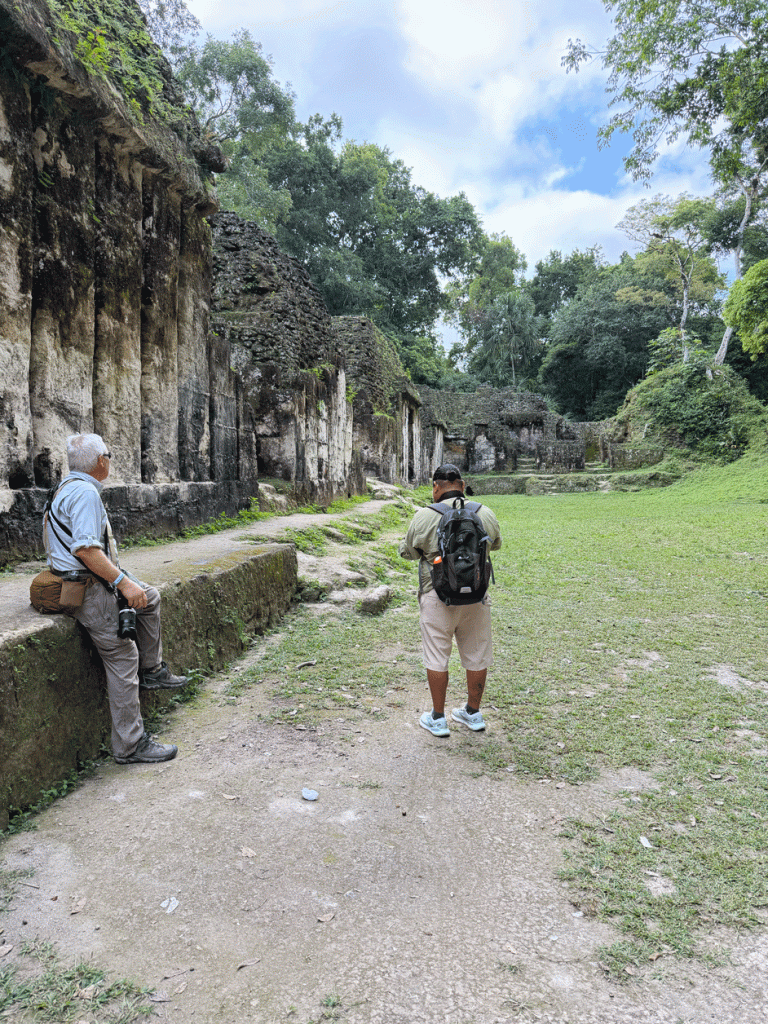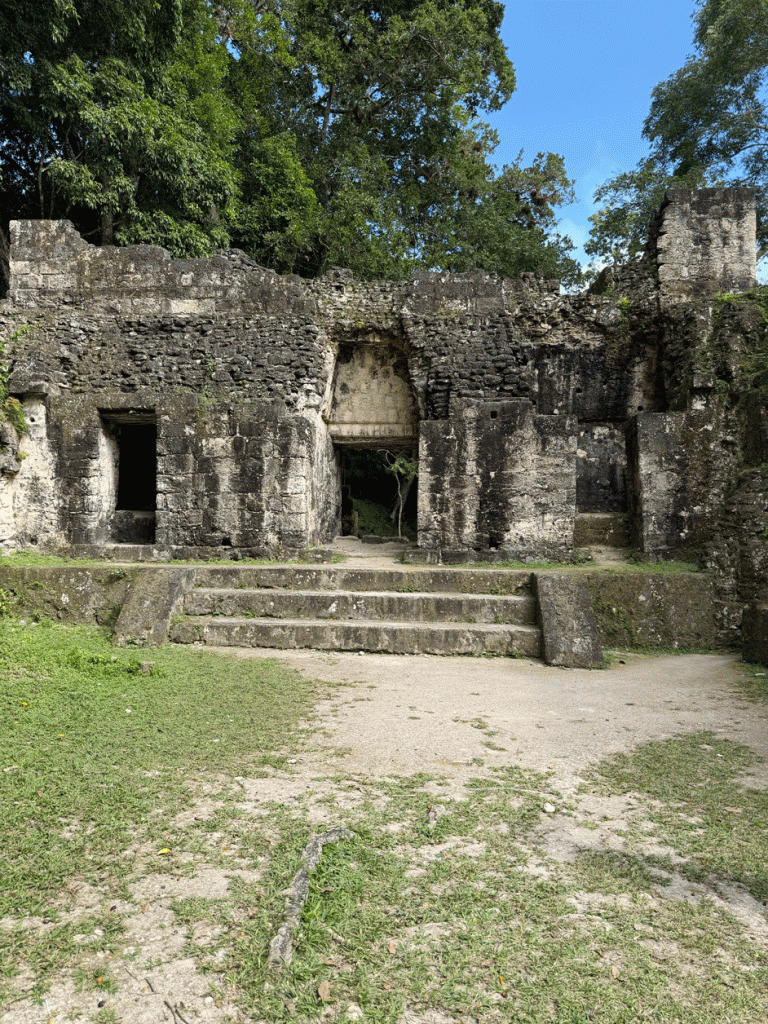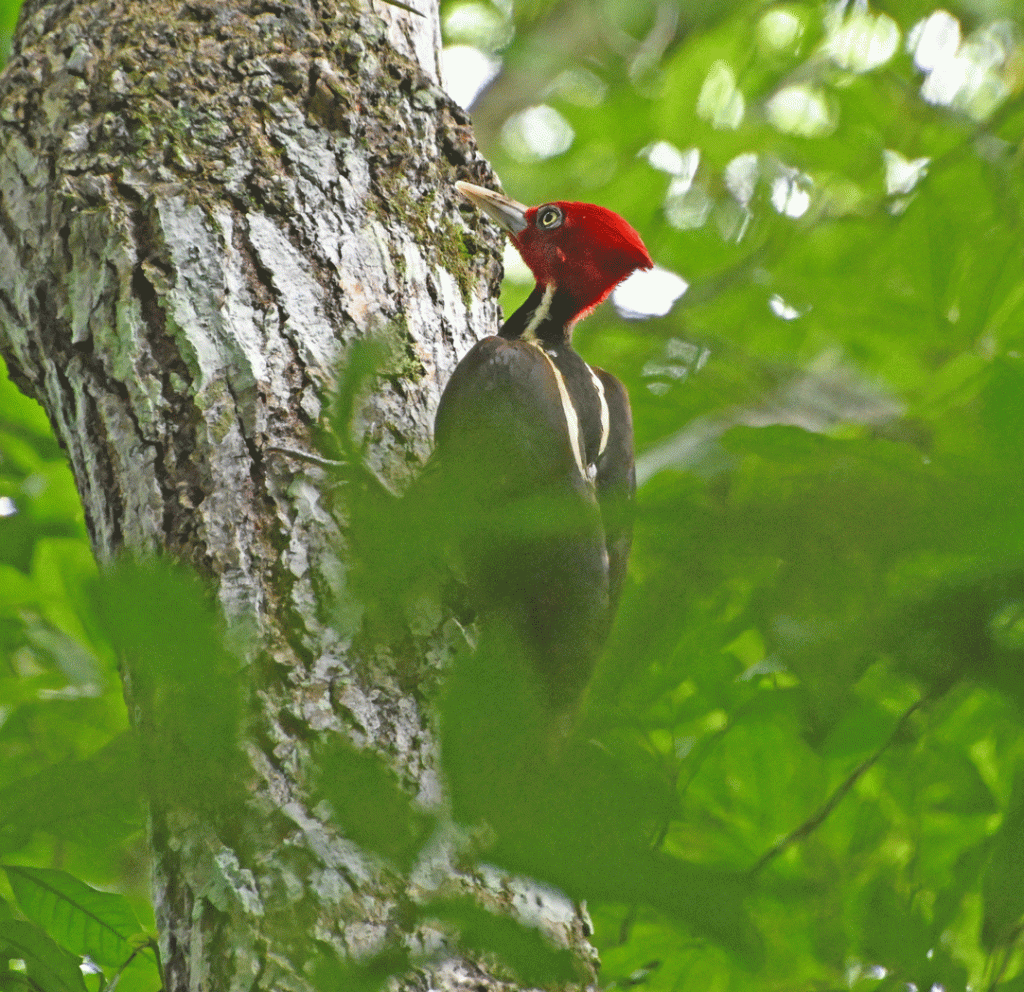
December 2025 in Arizona: part 2

December 2025 in Arizona: part 2

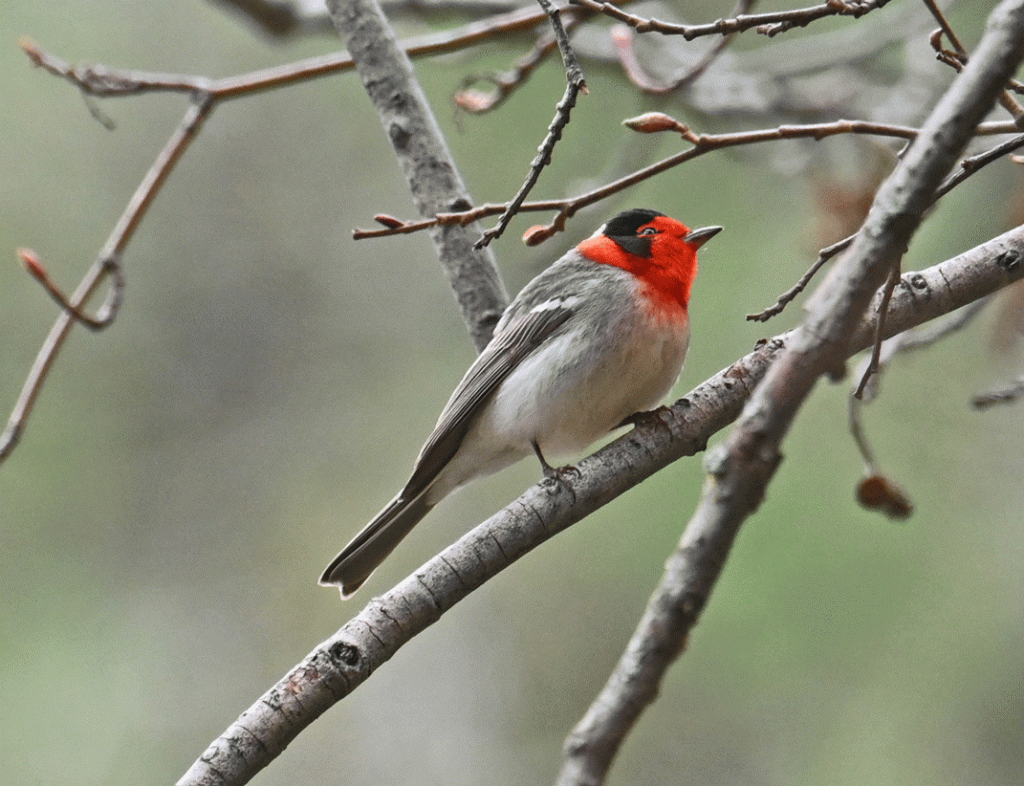
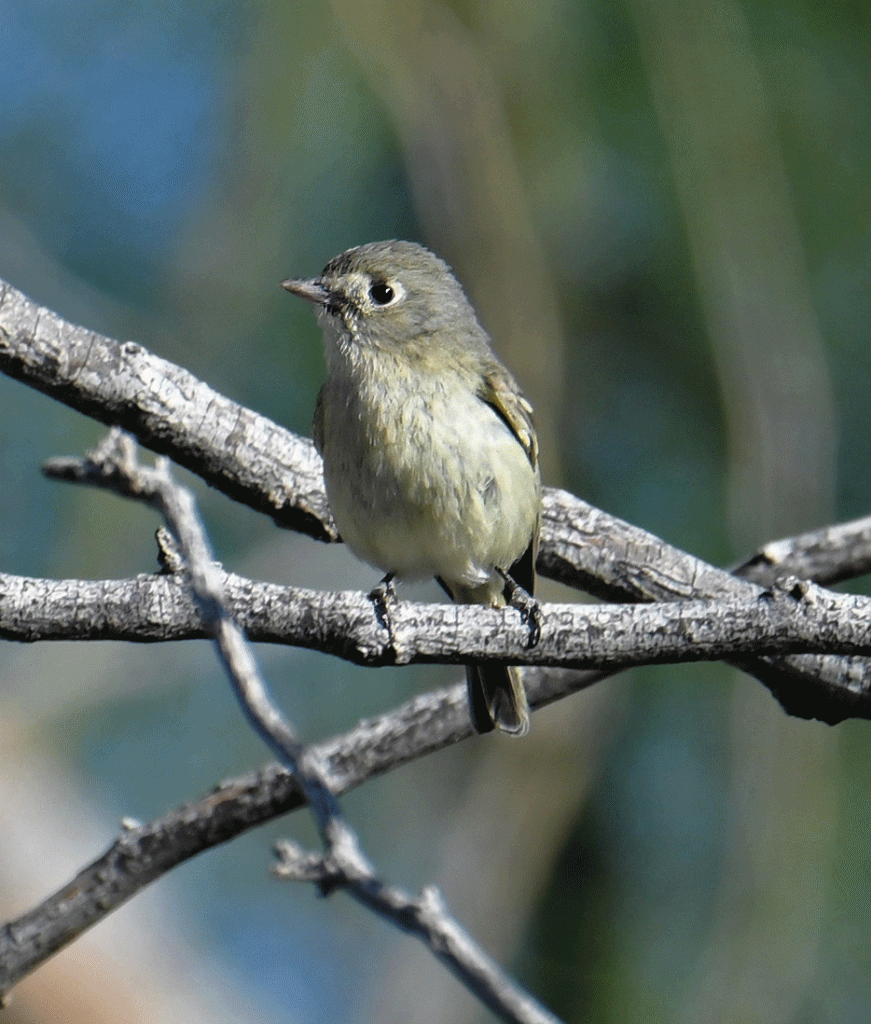
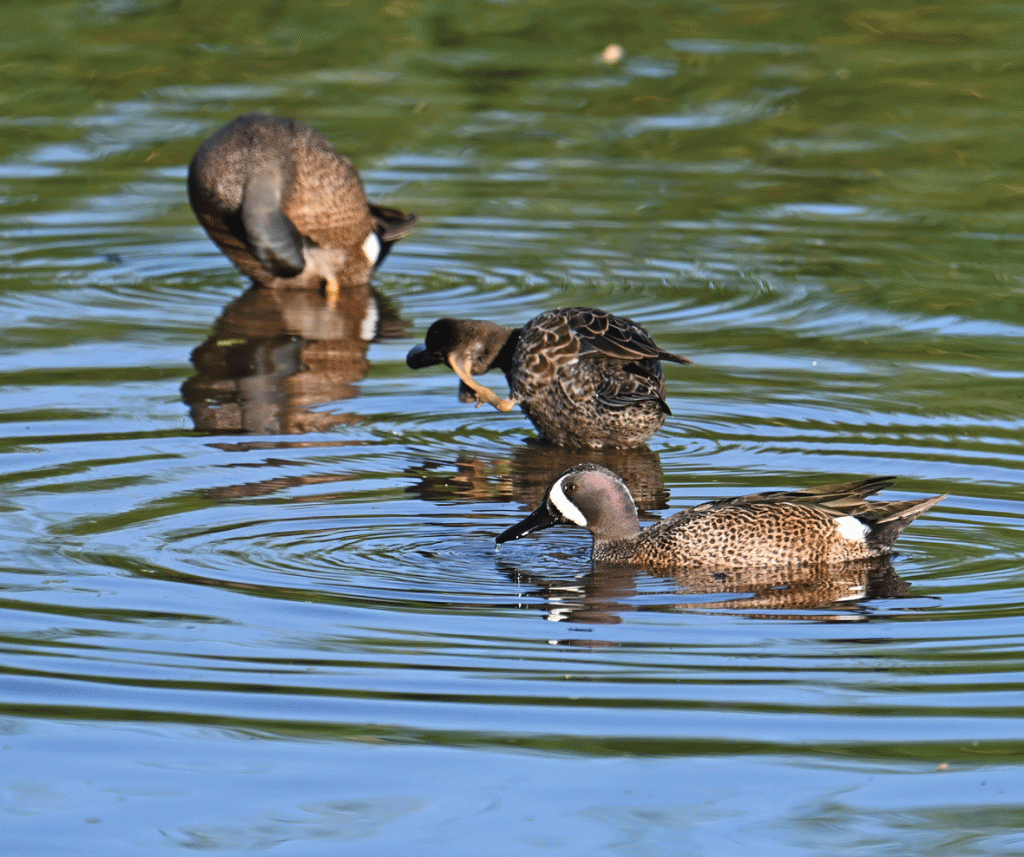
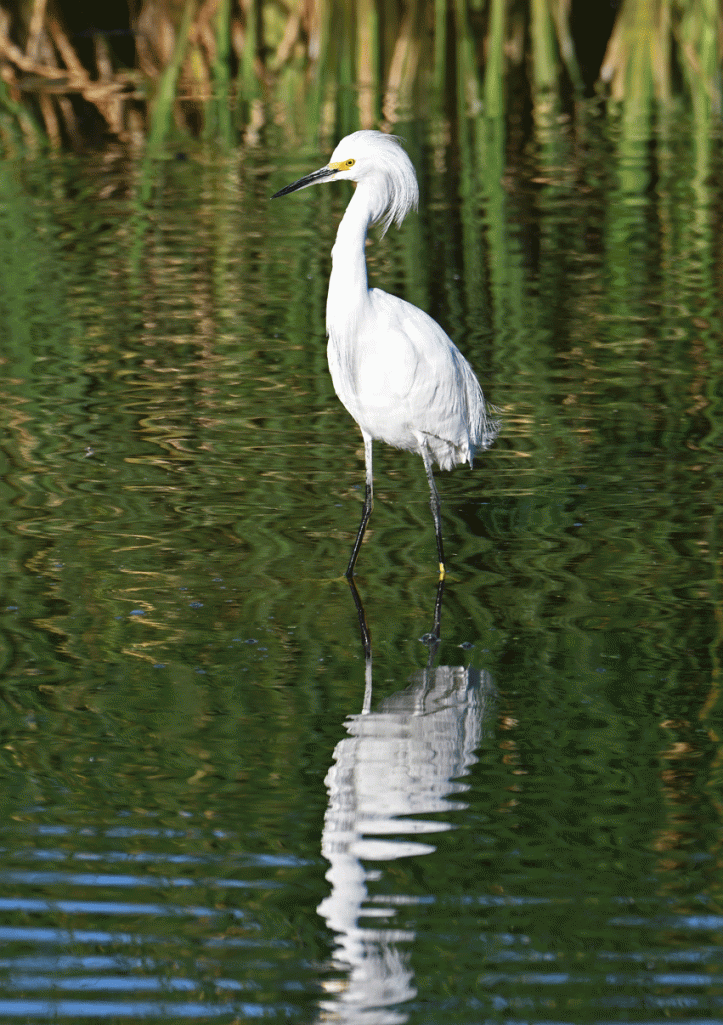
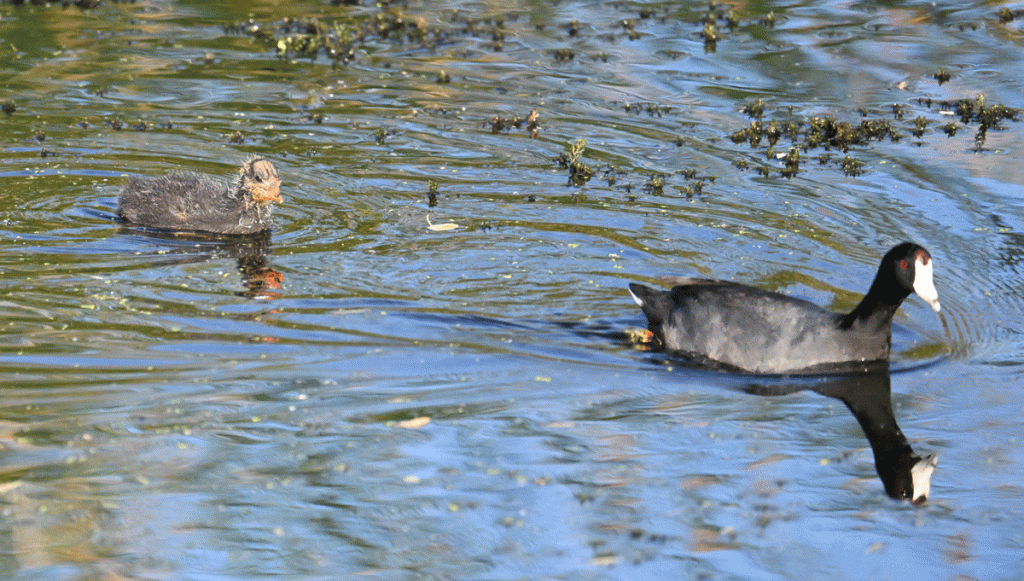
This blog will be about some of the birds we saw in December as well as some of the birding locations.

On December 1st, we were at Sweetwater Wetlands when Doug got a message about a rare bird that had just been spotted in Green Valley. It was only another 35 minutes south, so we went to try to see it. At first it was hard to find among the hundreds of other ducks, but there were other people there to help and its bright orange knob set it apart. It was a Black Scoter, a bird that breeds in the Arctic and spend its winters on the coast. Sometimes it might be seen inland in Ontario and Quebec but it rarely if ever gets as far south and inland as the Tucson area. A bird like this was expected to be a “one day wonder” so people who could manage it, hurried over. One young guide hustled over so quickly that he arrived without his shoes! But he had his binoculars so that was the most important thing. It was a life bird for him as well as for us.

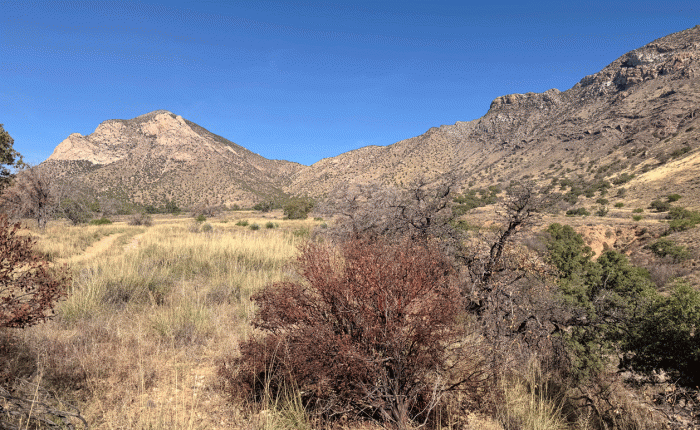
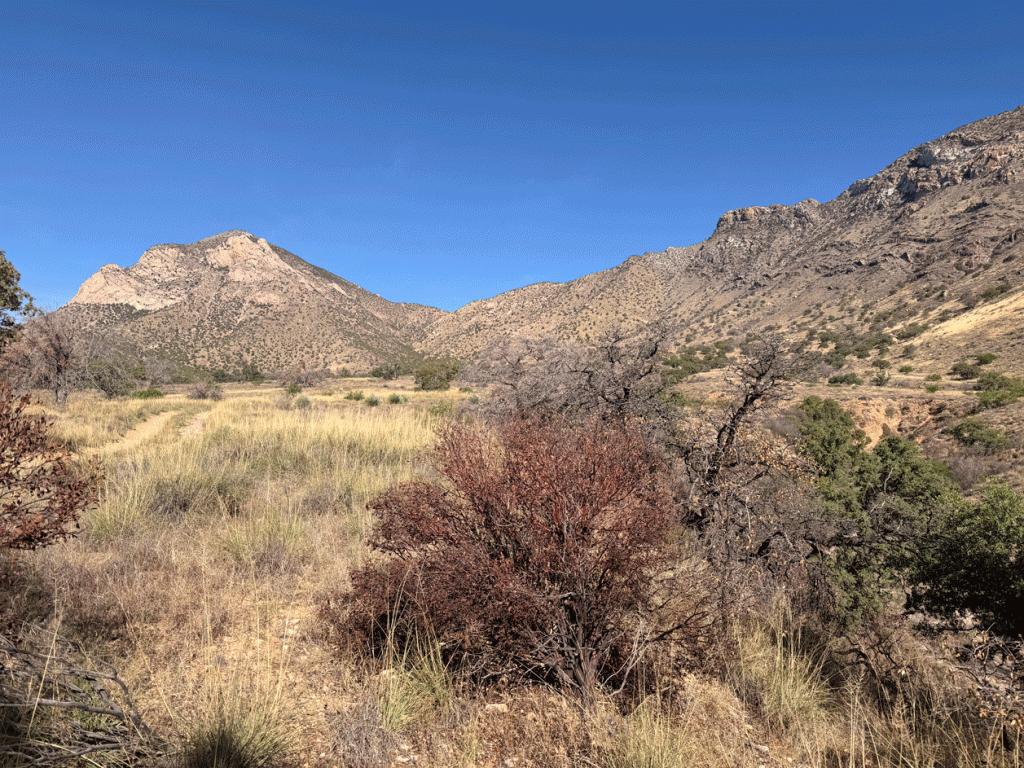
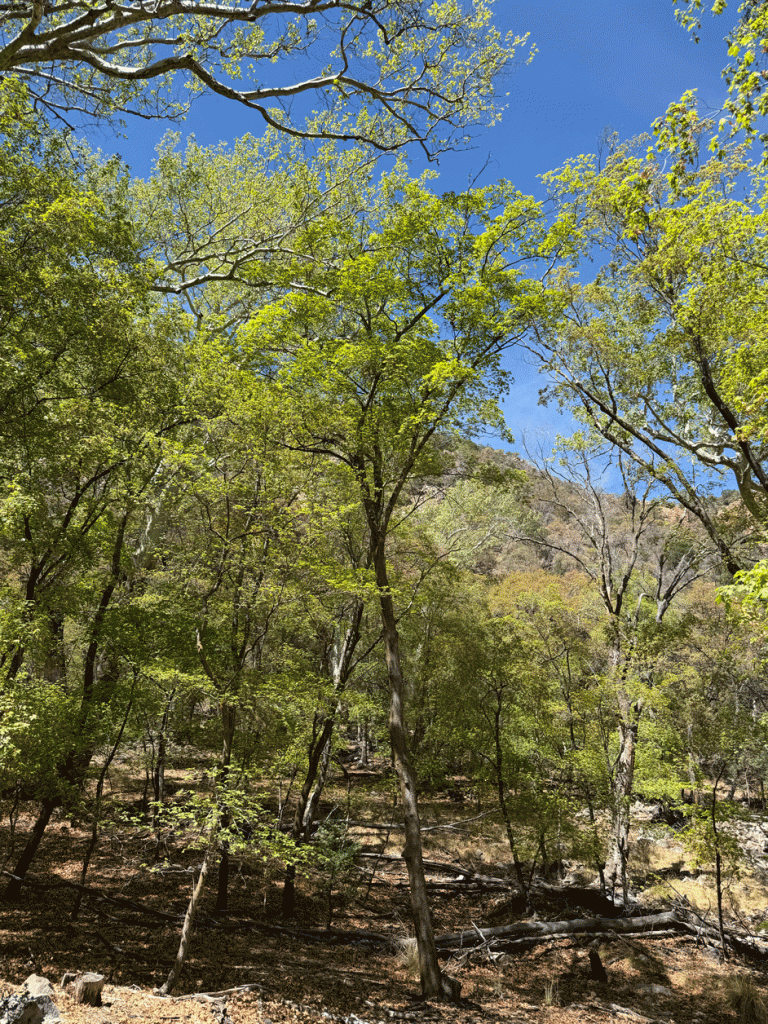
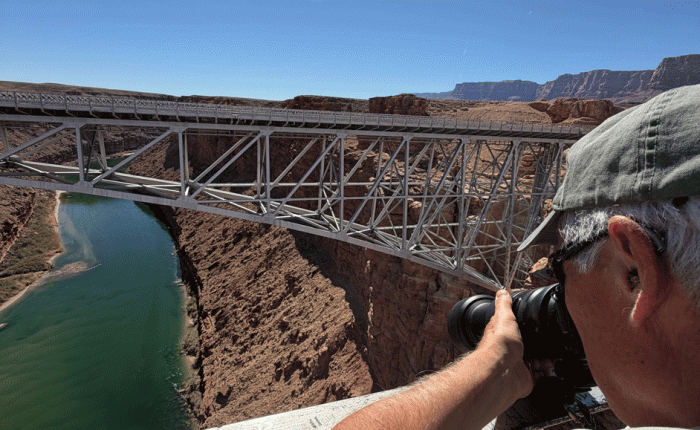
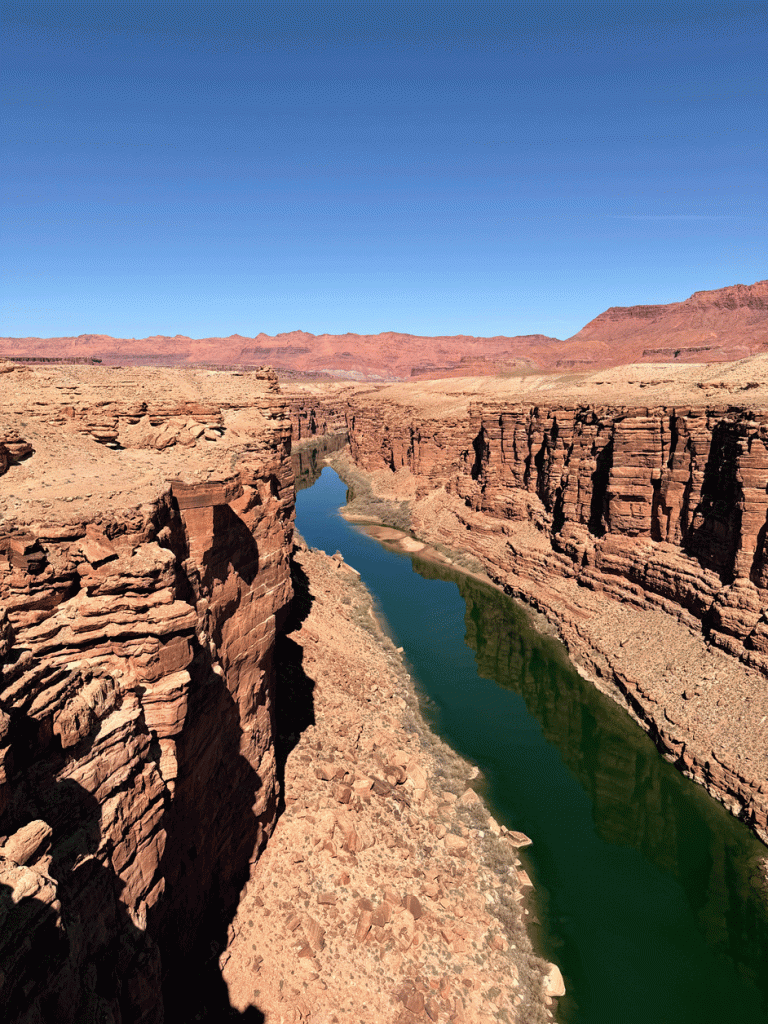
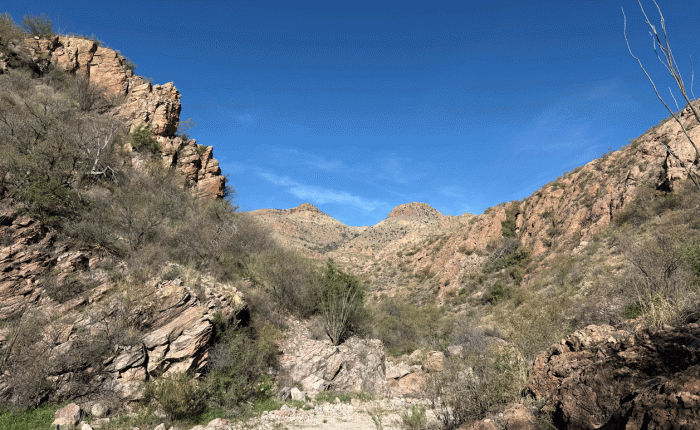
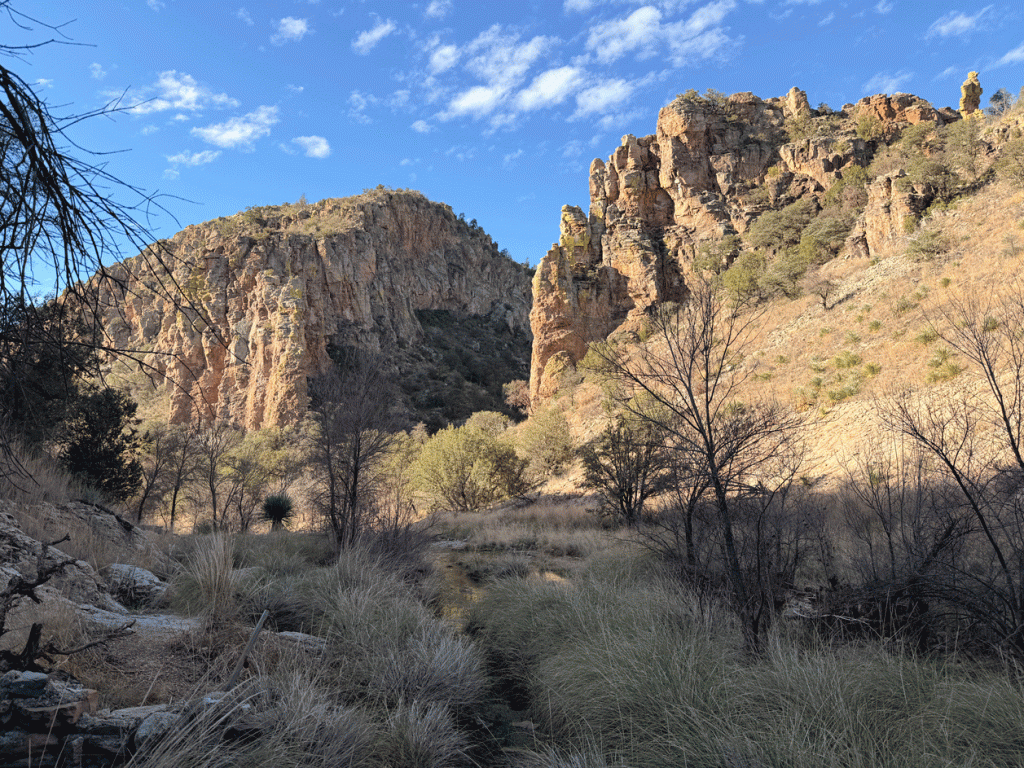
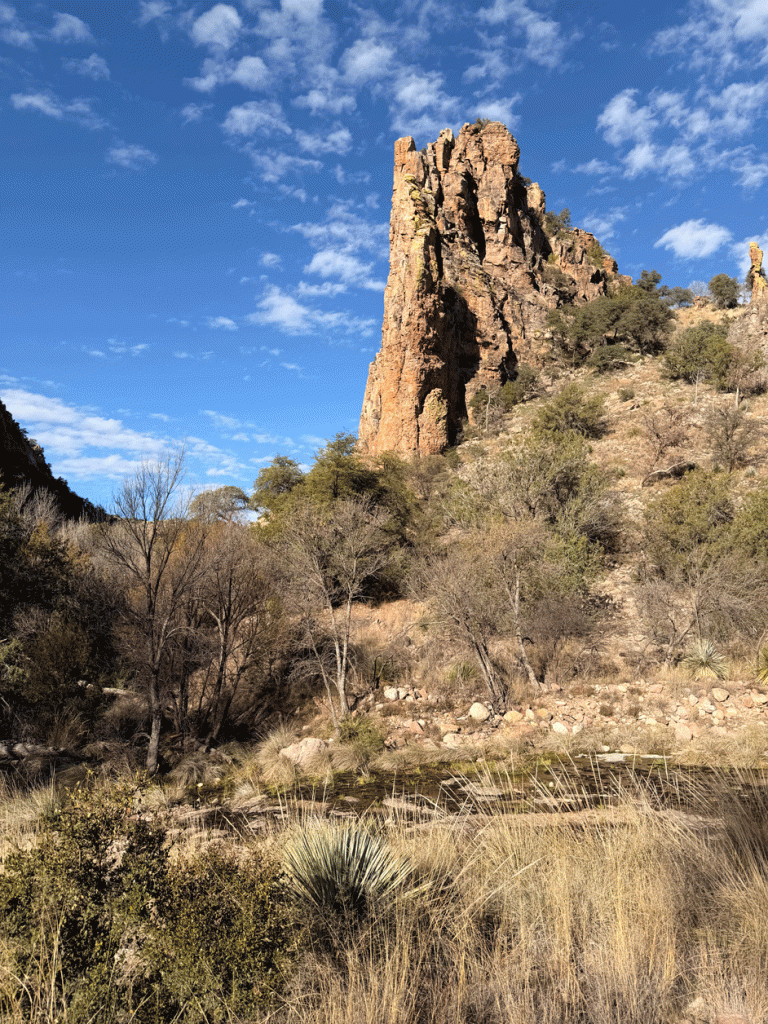
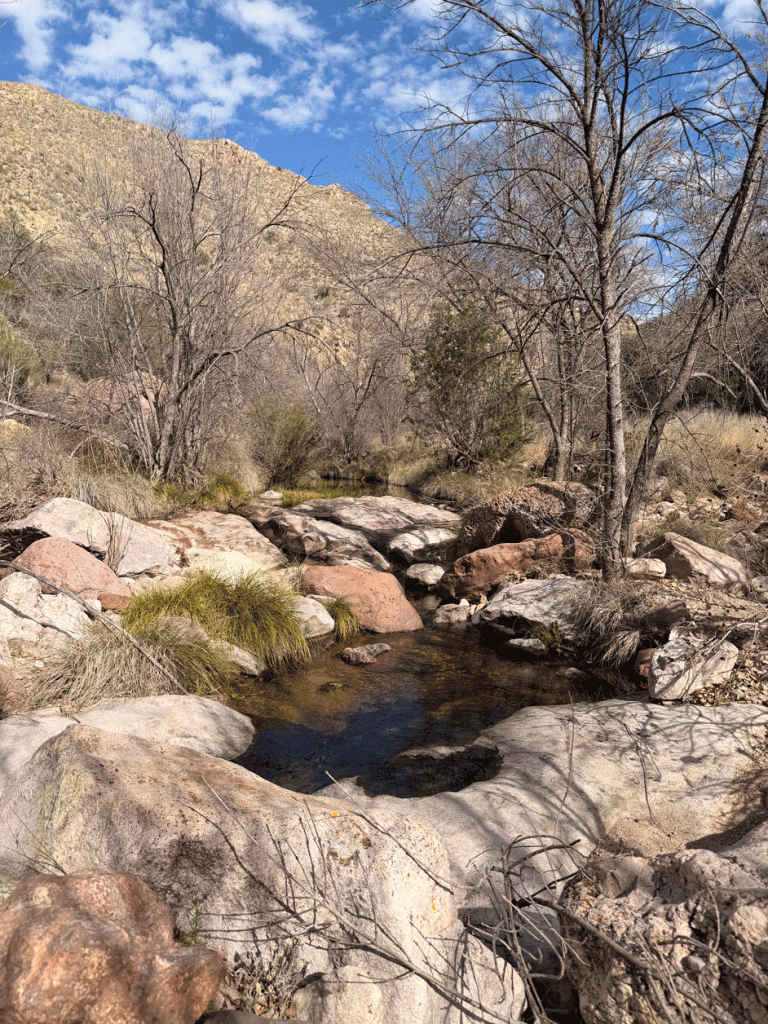
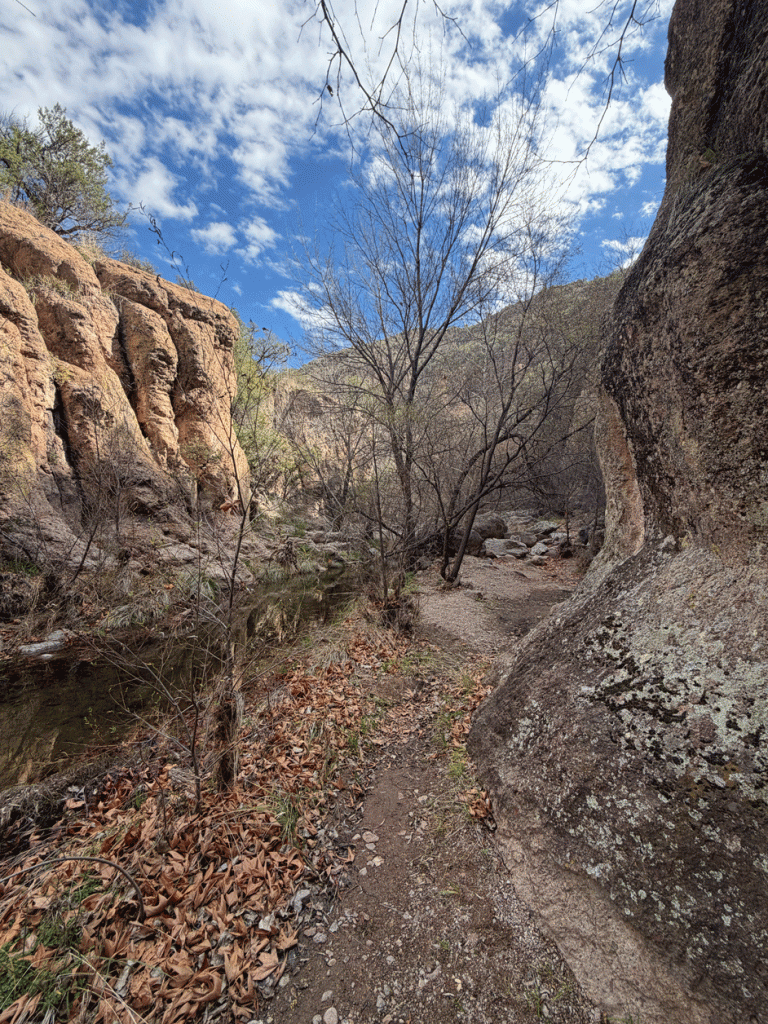
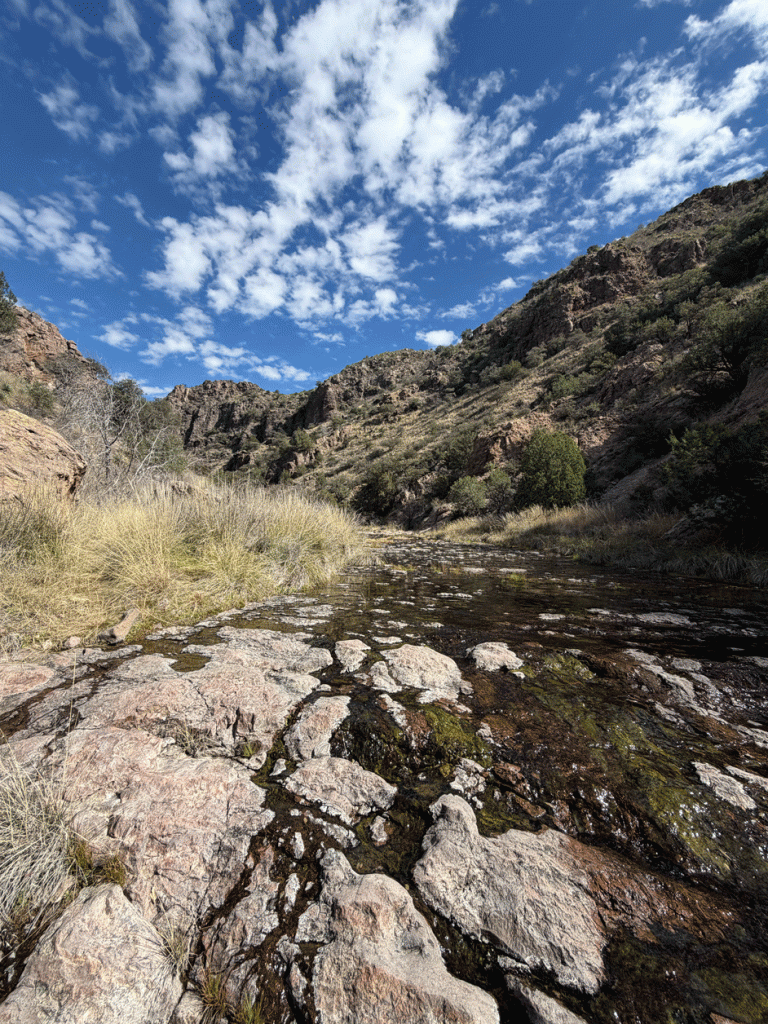
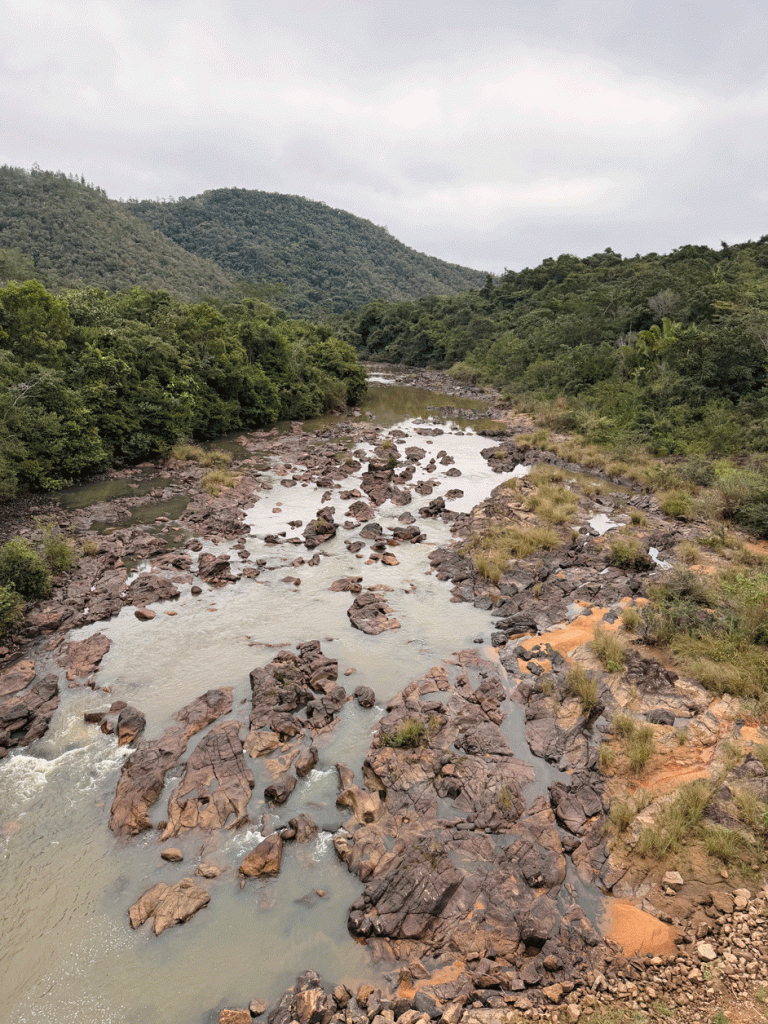
We birded at Madera Canyon a number of times. This was an “autumn” scene on December 4th looking upstream from one of the bridges.

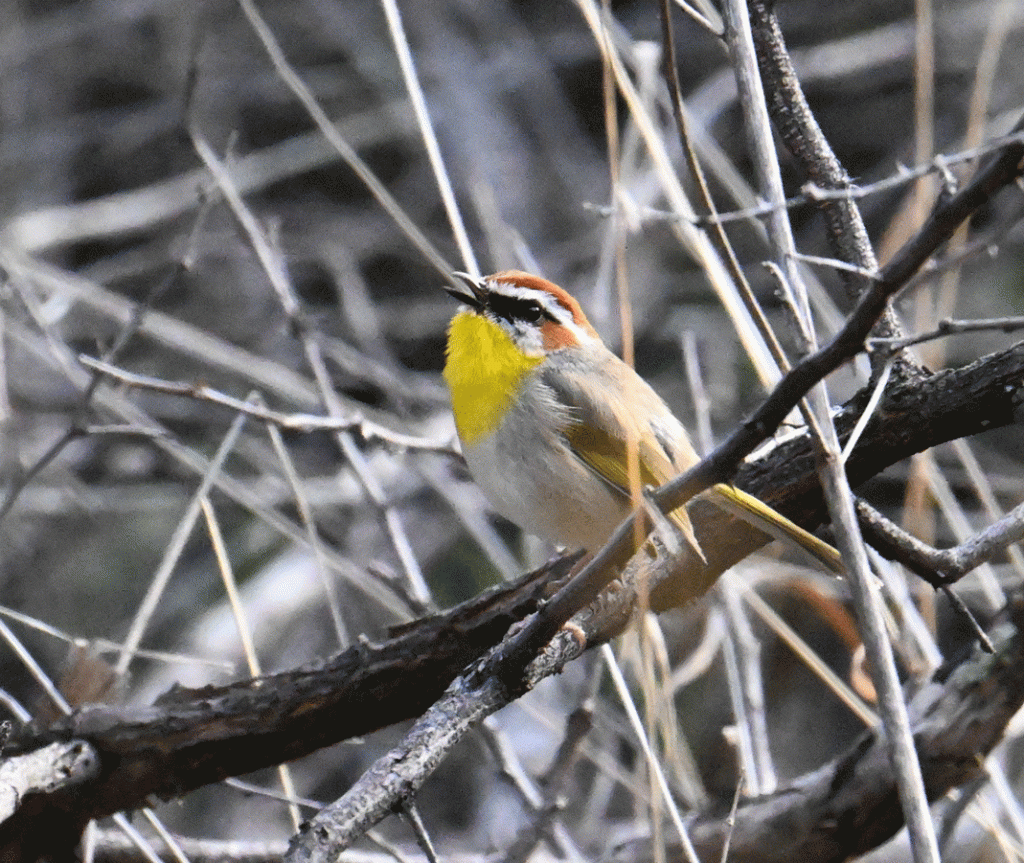
This Western Bluebird was one of a small flock that we encountered. We often see bluebirds throughout the winter, but usually at lower elevations. Winter weather had not yet arrived to the canyon.

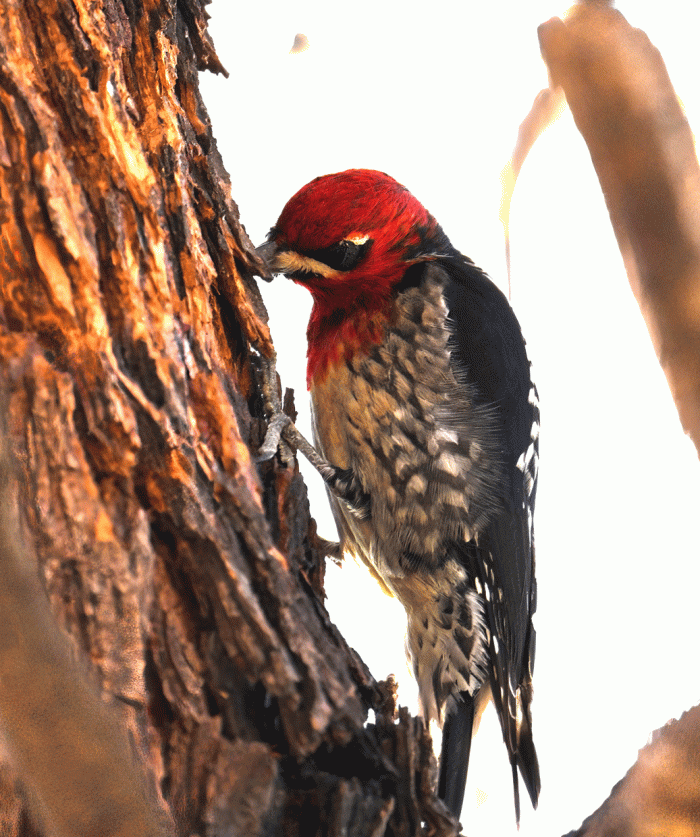
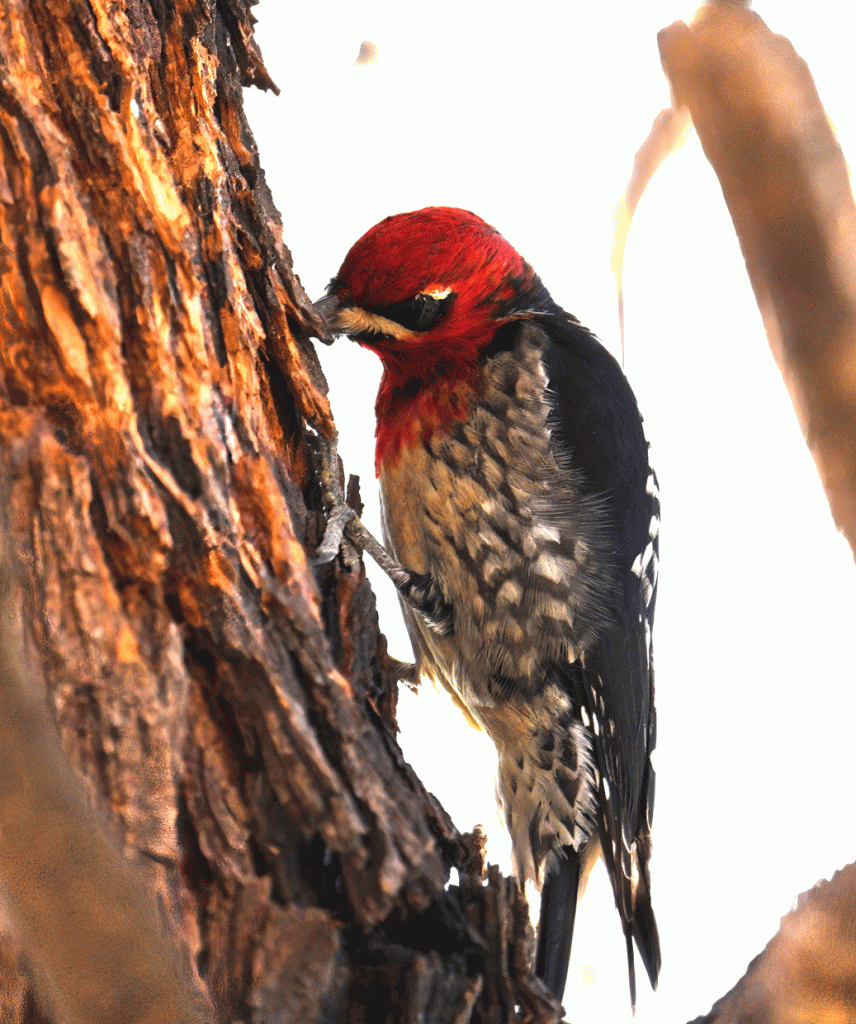
Red-naped Sapsuckers are uncommon, but tend to visit the same trees that they have drilled rows of sap wells. They eat the sugary sap, but they also eat the insects that are attracted to the sap, as well as berries and fruits. We saw a sapsucker (which we expect was the same one) almost every time we passed that section of trail.

We visited Santa Rita Lodge in Madera Canyon and saw a pair of Inca Doves that were hanging out below the feeders. Inca doves are petite and have intricate patterning on their feathers.

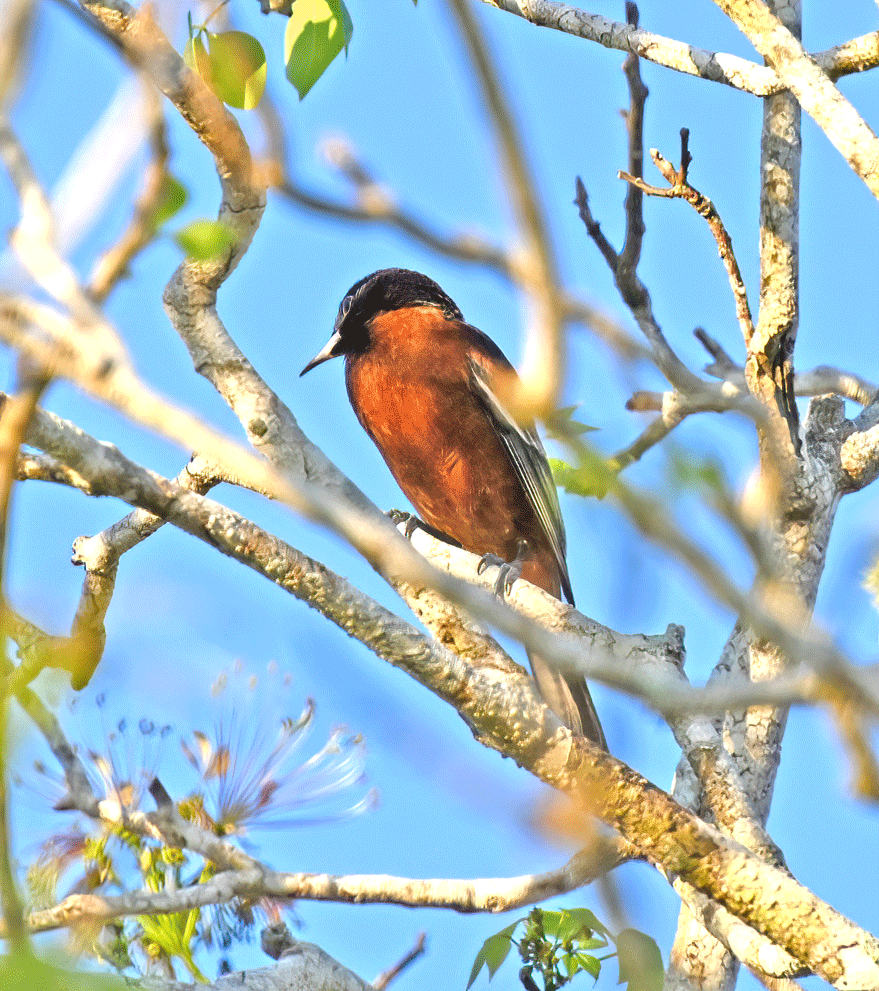
We were lucky that this male Hepatic Tanager perched so close to us. Hepatic Tanagers are common in Madera Canyon in the summer. This one seems happy to stay in the canyon and visit the feeders. Notice how its head and throat are brighter.

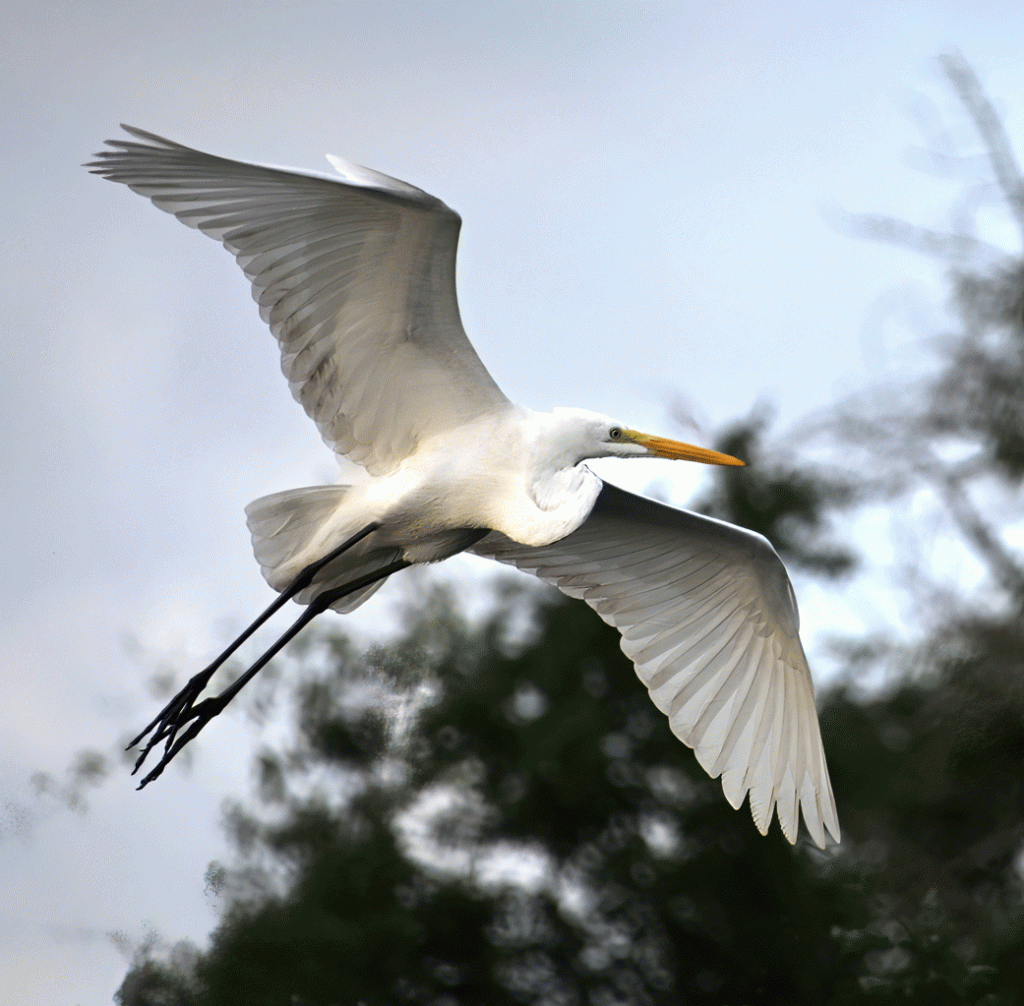
We visited Sweetwater Wetlands again on December 6. A Snowy Egret was way up in a tree.

Here’s the photo Doug took of that egret, with its yellow feet in view.

Vermilion Flycatchers are so photogenic, and we see them every time we visit the Wetlands. Sometimes we overlook the common birds, so this photo of a bright male will help make up for it.

White-breasted Nuthatches are very common when we bird around Tubac or in the mountains but they are often high in the treetops. This one was a “rarity” because it was hanging out in the city. It was also easy to photograph because it was low on the tree trunk, without shrubbery all around. White-breasted Nuthatches are bigger than the Red-breasted Nuthatches that we have at our feeders in BC.

Water treatment facilities provide good habitat for waterfowl and shorebirds. We saw the Black Scoter at the Green Valley Water Reclamation Facility. Sweetwater Wetlands is set up to return water to the aquifer. The photo below is of the Avra Valley Water Treatment Facility. The green parts have water, the brown ones don’t. We visit these spots because wherever there’s water in the desert, there will be birds.

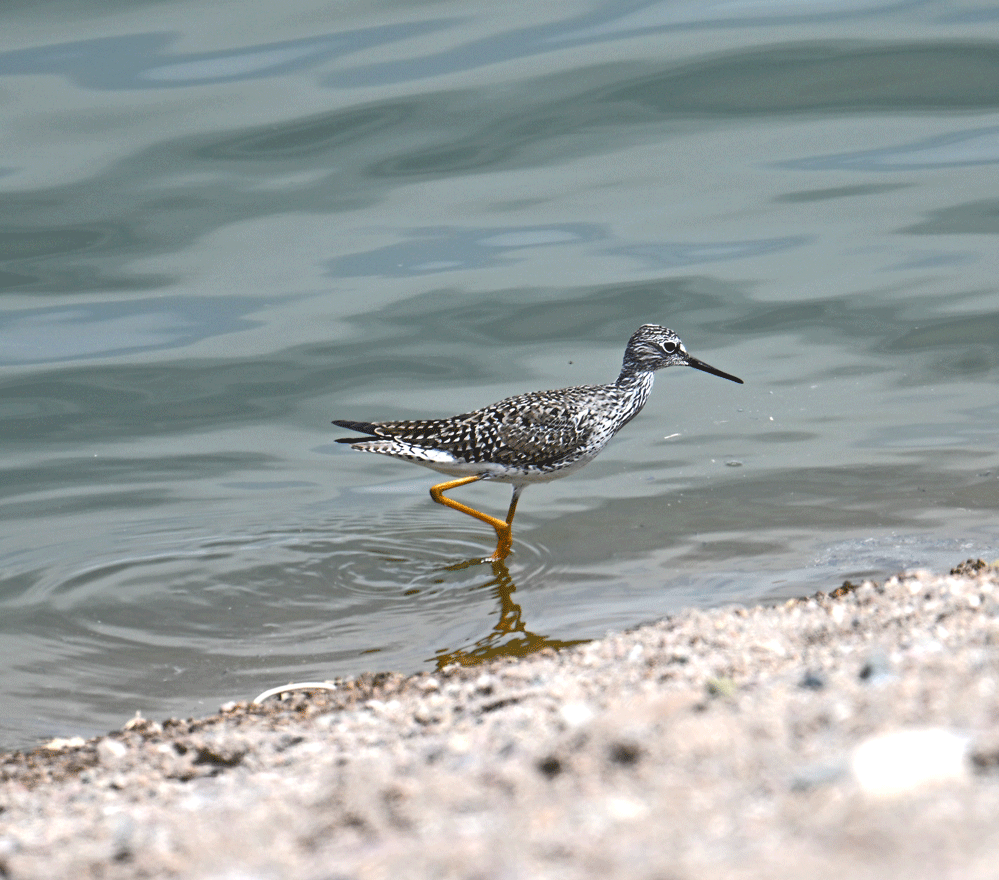
Here’s a group of Greater Yellowlegs that flew into the pond while we were at the Avra Valley site.

On December 8, we did a longer trip to the outskirts of Phoenix. We forgot to take photos of the first place we stopped; a wildlife area (Base and Meridian) where Doug got a glimpse of a rare Yellow-throated Vireo.

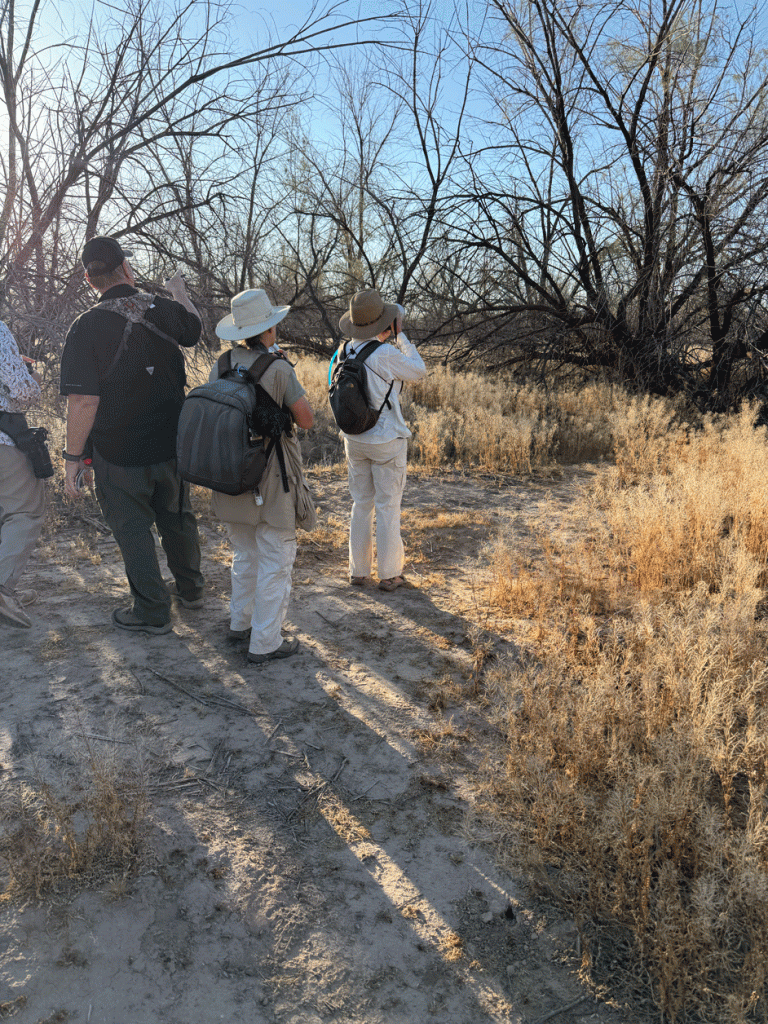
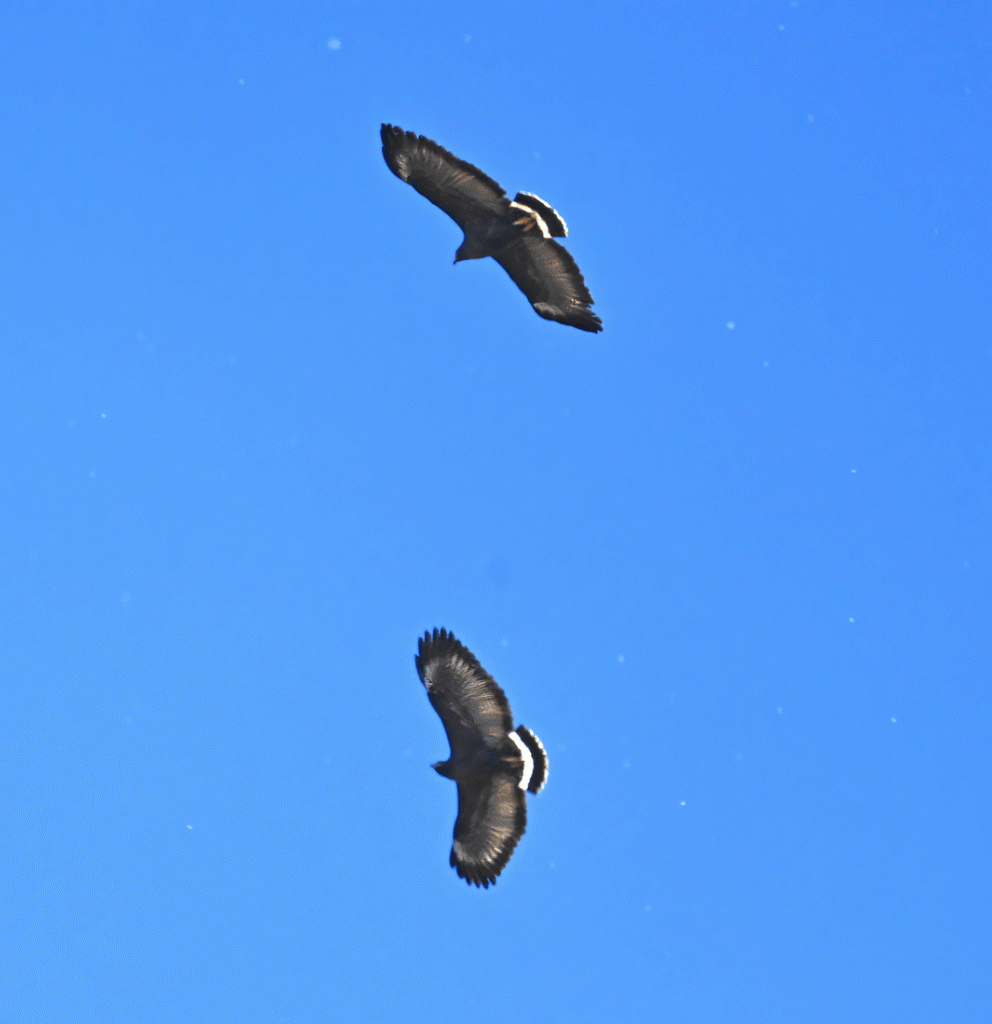
Next we went to the Veteran’s Oasis Park in Chandler because a Short-tailed Hawk had been sighted there consistently. When we got to the hill that gave the best vantage point, the people there welcomed the extra eyes. Some of them had been waiting over three hours to see the bird. We were thinking of leaving after about forty-five minutes when one birder saw something far out that looked promising. Luckily the hawk flew closer, and we were able to get the scope on it and confirm that it was a Short-tailed Hawk. (No photo of the hawk however.)

A Northern Saw-whet Owl chose to roost at Aqua Caliente Park on the east side of Tucson. Because we weren’t sure how long it would stay, we went the second day it had been seen. It was asleep on a branch of a Eucalyptus tree, seemingly oblivious to the crowd that was on the path ten metres away. It was well hidden in the leaves and we would probably not have seen it if someone hadn’t shown us where to look. Usually this species of owl would roost at higher elevations. (As It turned out, we didn’t need to rush, the owl returned to the same perch every day and has continued to do so for almost for a whole month. Perhaps it will stay the winter.)

There was a female Common Merganser at the pond in the same park. Her crest is highlighted by the afternoon light. It’s unusual to see one merganser in the winter because they are often in small groups that may even gather into large numbers at favoured sites. We see them regularly in the summer in BC.

Doug took this photo of the lone Northern Pintail on the lawn, socializing with his Mallard friend because it was one of the few times that we’ve seen a pintail on land. Male Northern Pintails look quite elegant with their long necks and long tails.

We visited Reid Park later in the month. There are many resident ducks in the two ponds of the park so we can count on seeing the ducks close up. Here are some similarly coloured ducks; the Redhead and Canvasback. The male Redhead is on the left and has a rounded head, with a “nail” on his blueish bill. The male Canvasback’s forehead is more slanted and his bill is darker. It’s hard to see the Canvasback’s red eye because it blends in, while the yellow eye of the Redhead stands out.

Also at Reid Park, we were lucky to get a view of this Summer Tanager, because they are often high in the treetops. As the name implies, it should only be here in the summer. According to the “Sibley Guide to Birds,” this bird with blotchy orange-tinged feathers is an “orange adult female Eastern.” She seems to be staying the winter.

We volunteered again for the Nogales Christmas Bird Count and did the same section of the Anza trail south from the Guy Tobin trailhead in Rio Rico. Cottonwoods line the Santa Cruz River. The fields away from the river were dry and weedy. We saw almost the same number of different species on our count this year in comparison to last year, but a smaller number of individual birds, especially sparrows.

Here’s a view of the Santa Cruz River. There’s always water here because there is outflow from the Nogales Water Treatment Facility, just upstream of this point. The indentations in the mud are made by the cattle that graze the adjacent land. We did not encounter any cattle, and there didn’t seem to be anything that could have sustained them anyway. Doug got a quick view of a Green Kingfisher along the water, which was probably our most interesting bird of the day.

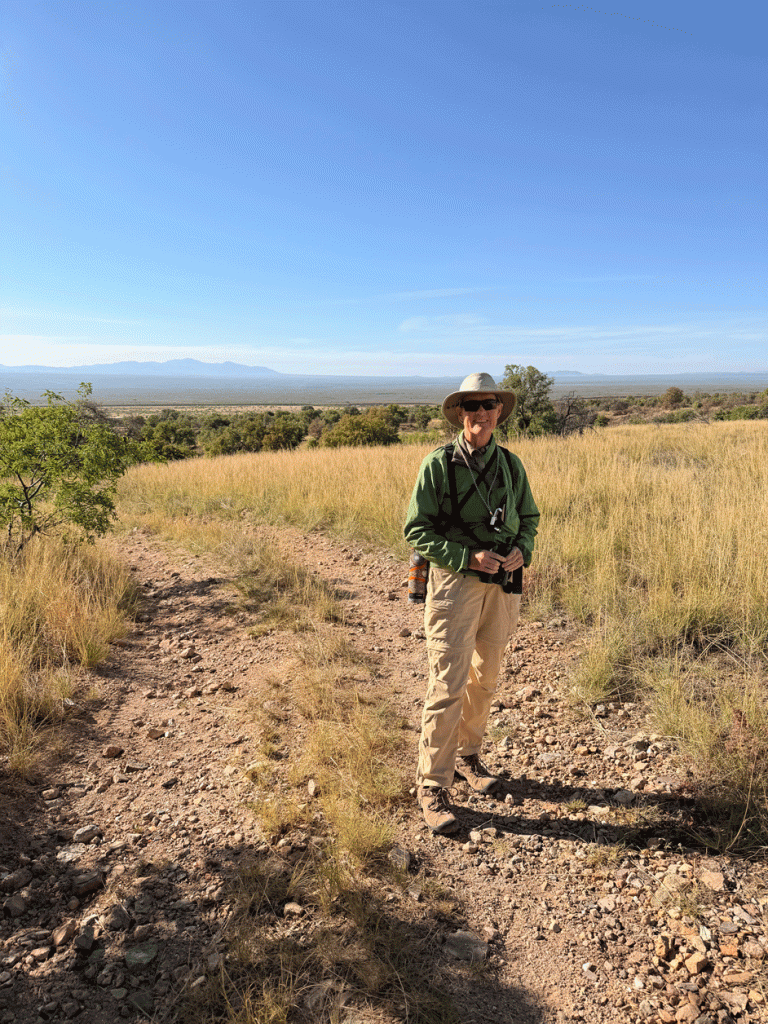
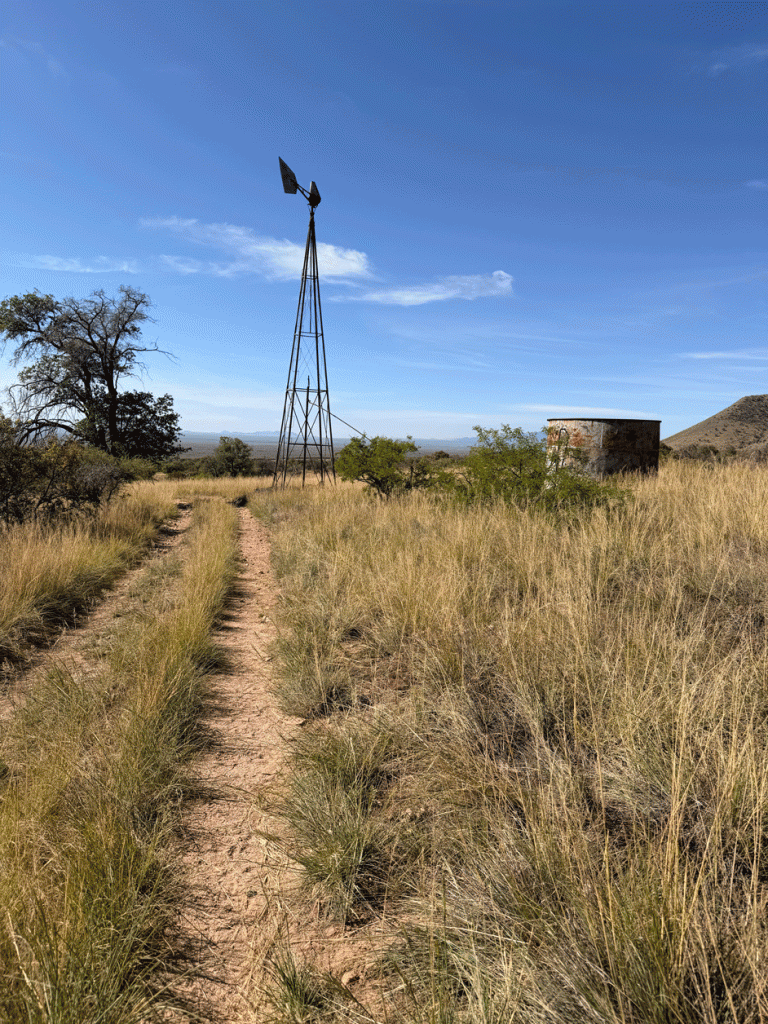
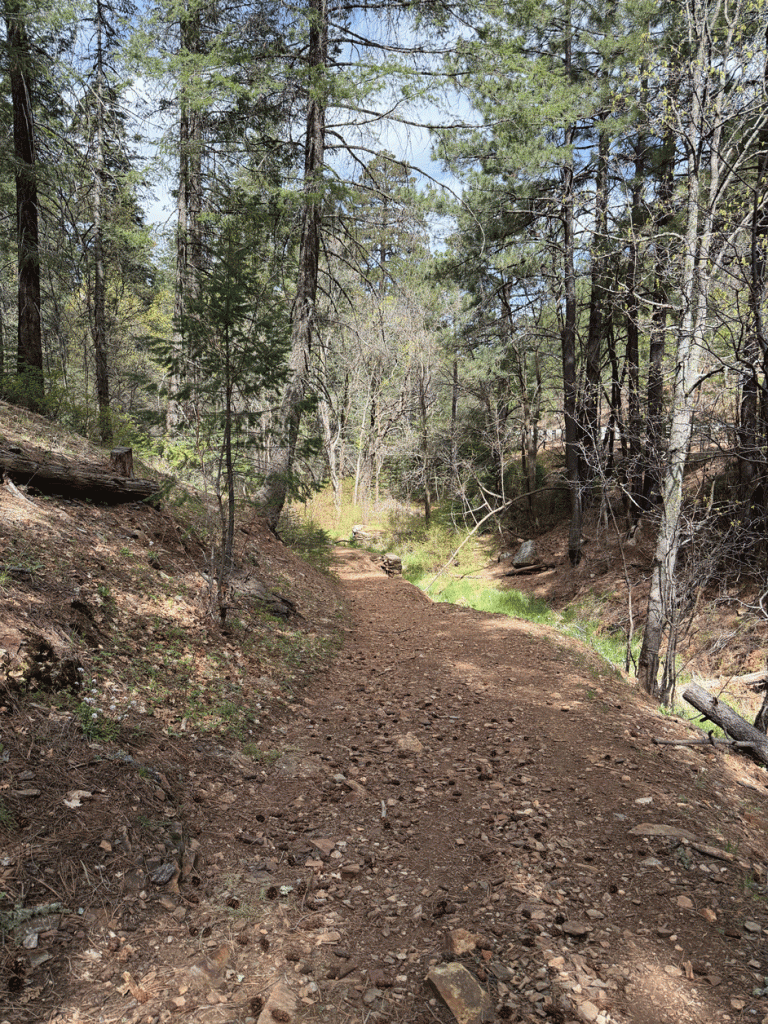
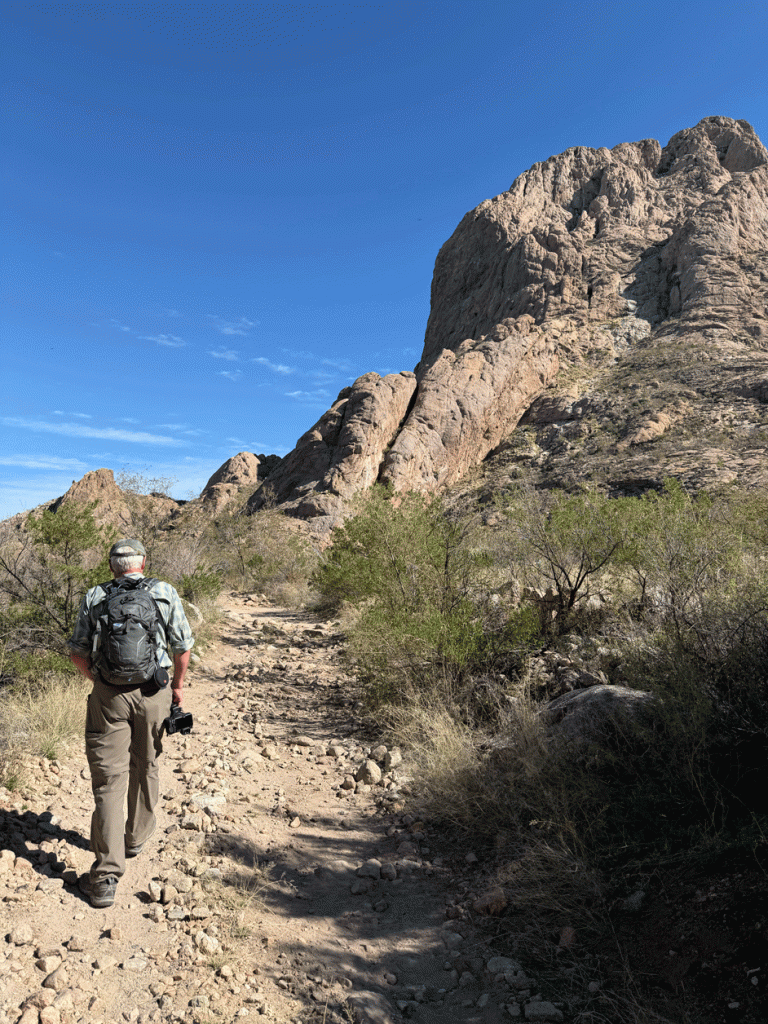
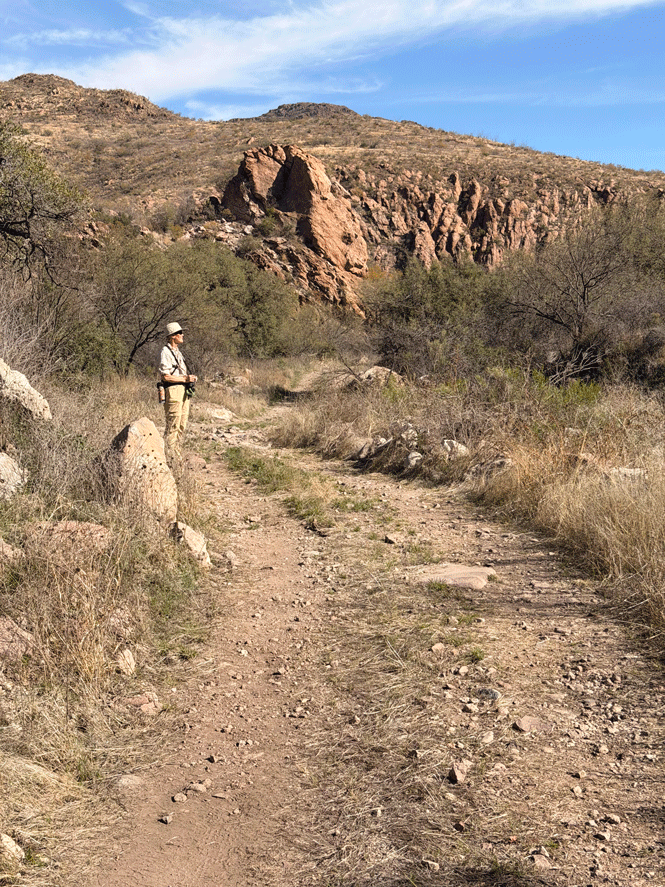
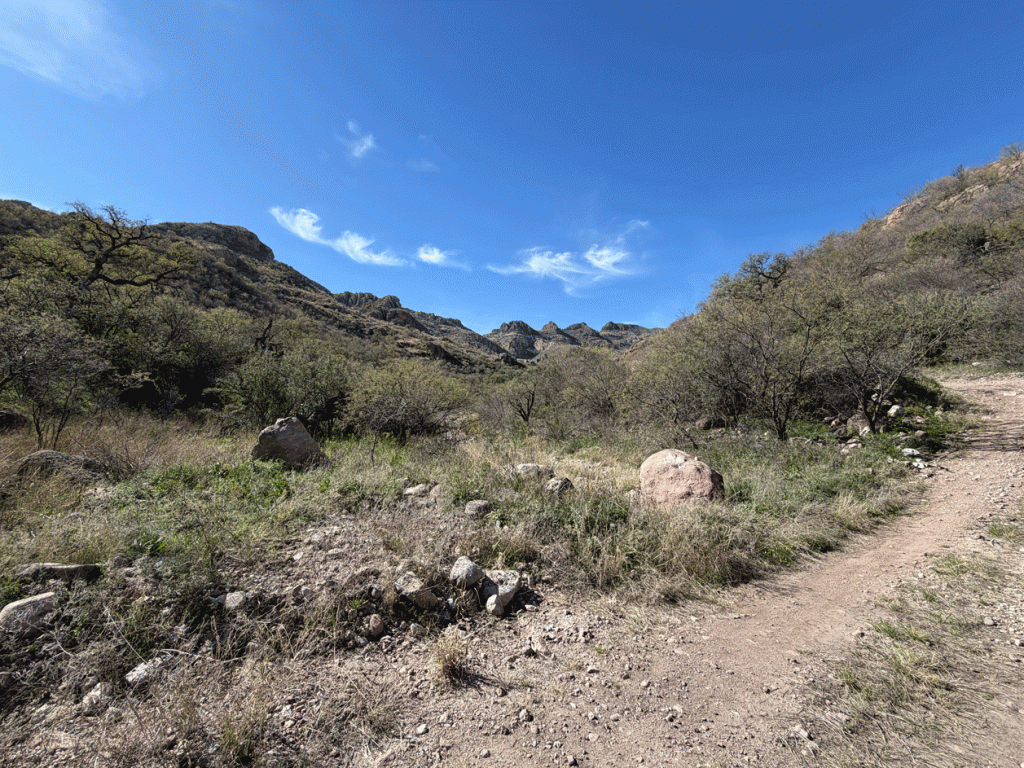
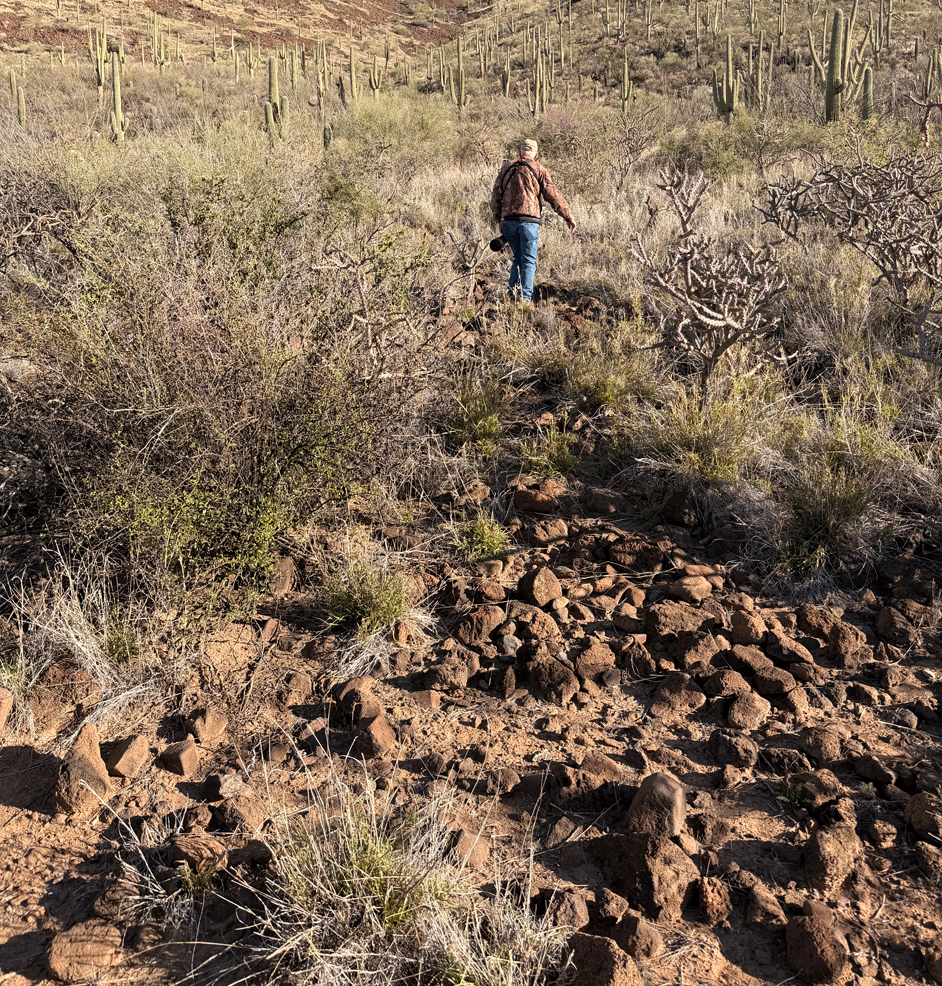
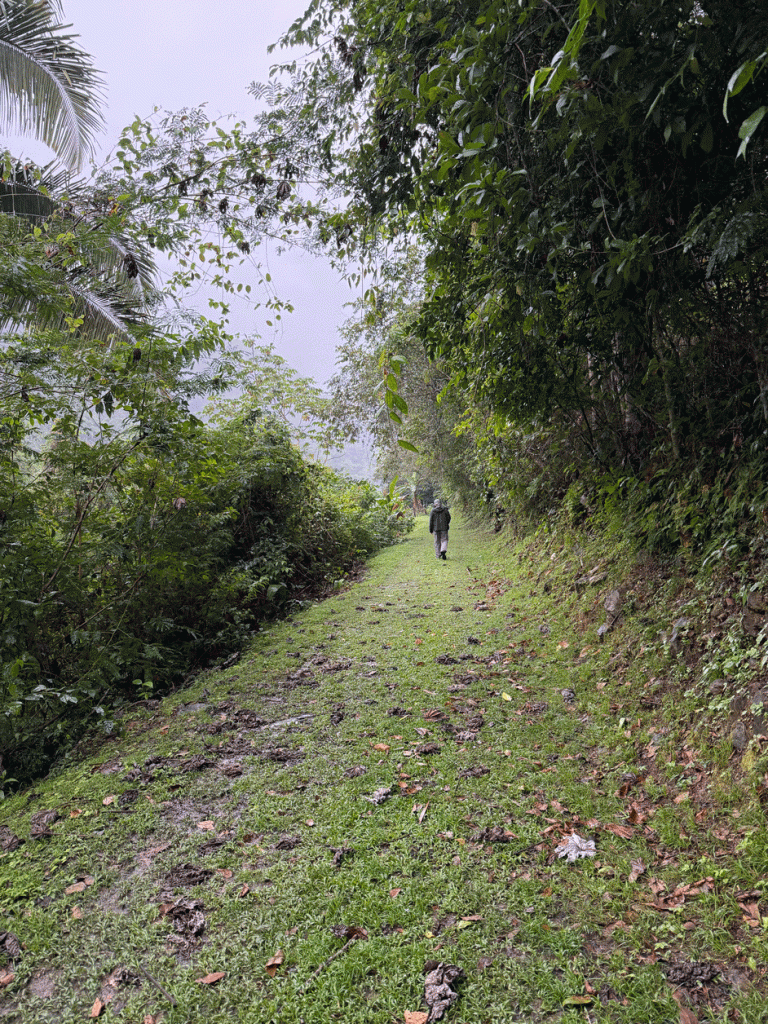
A few days later, (Dec. 22) we participated in the Madera Canyon Christmas Bird Count. We volunteered to visit two high elevation springs. We started from the Wrightson Picnic area at the end of the road (5463′). We walked up the Supertrail a short distance, then took an undeveloped trail, known as the “Pipeline Trail” because it follows a water pipeline. After we climbed up steeply, the trail levelled out and contoured the slope. The photo below shows one of the better sections of the “Pipeline Trail.”

Within an hour, we joined the regular trail which was an old mining road. It was a bit rocky, but also wide and not too steep. We reached the first spring (Sylvester Spring) after climbing 600 feet. The water in the spring runs constantly, collecting in the concrete basin and dripping over the side into the creek.

We were hopeful that birds would come down to the water, so we sat and had our snack and watched … and waited … no birds came. So we headed up the trail to the next spring.

This is Kent Spring, at 6663′, twelve hundred feet above our starting point. We found a spot for lunch and watched for birds. There weren’t any birds around this spring either.

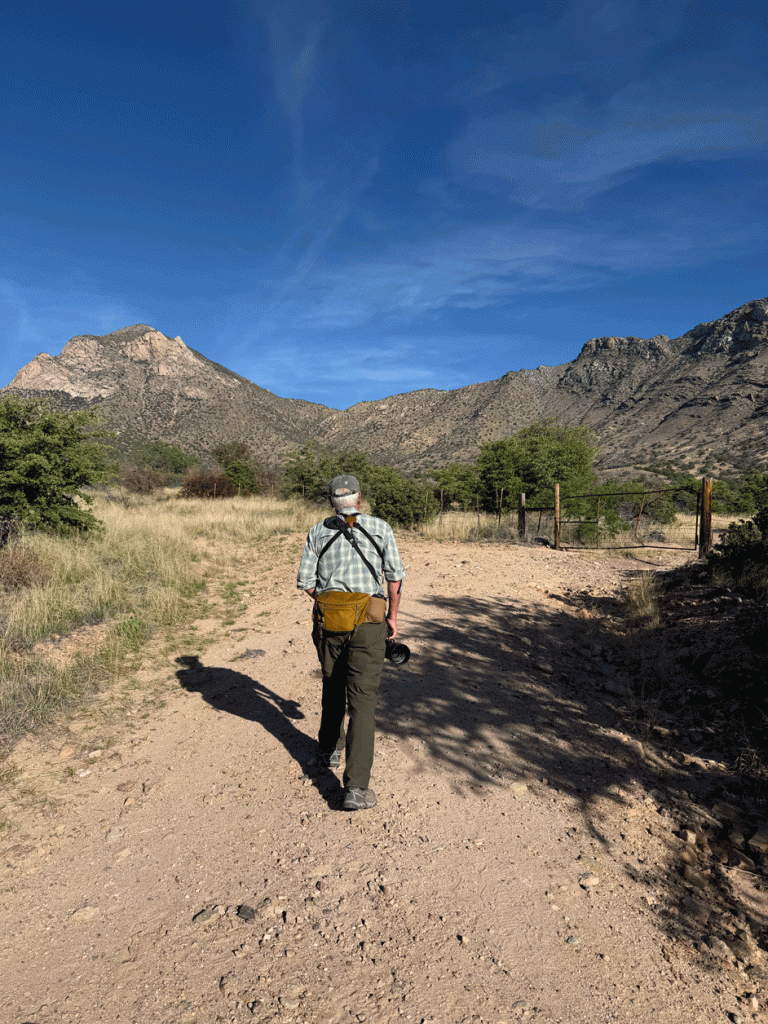
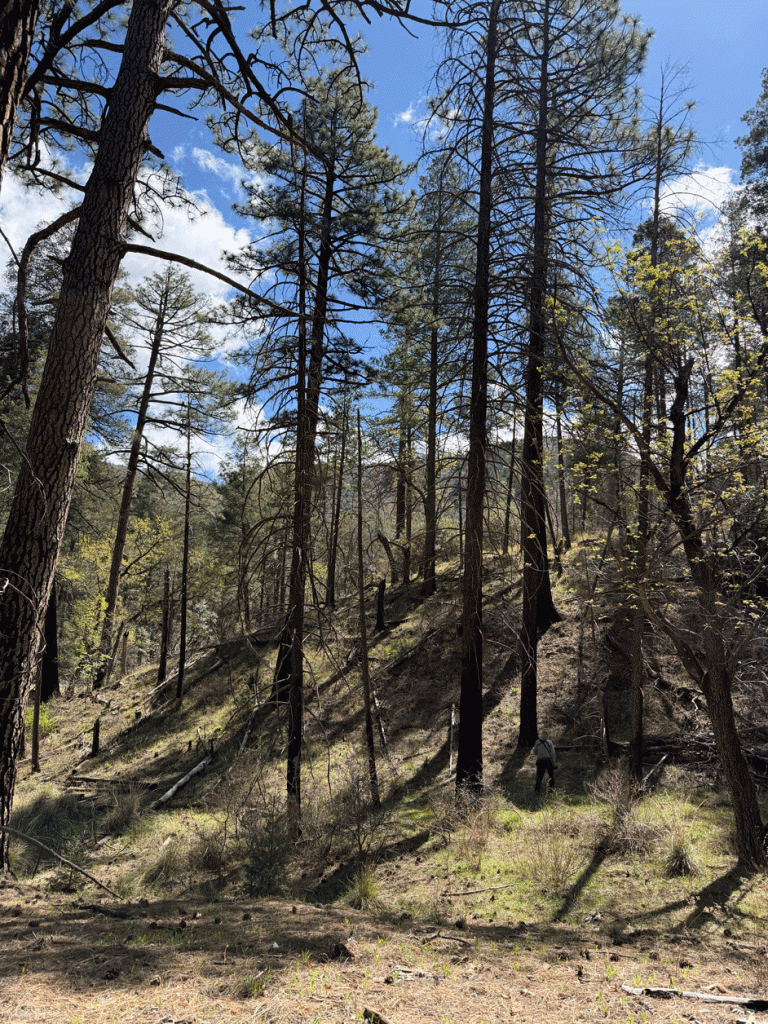
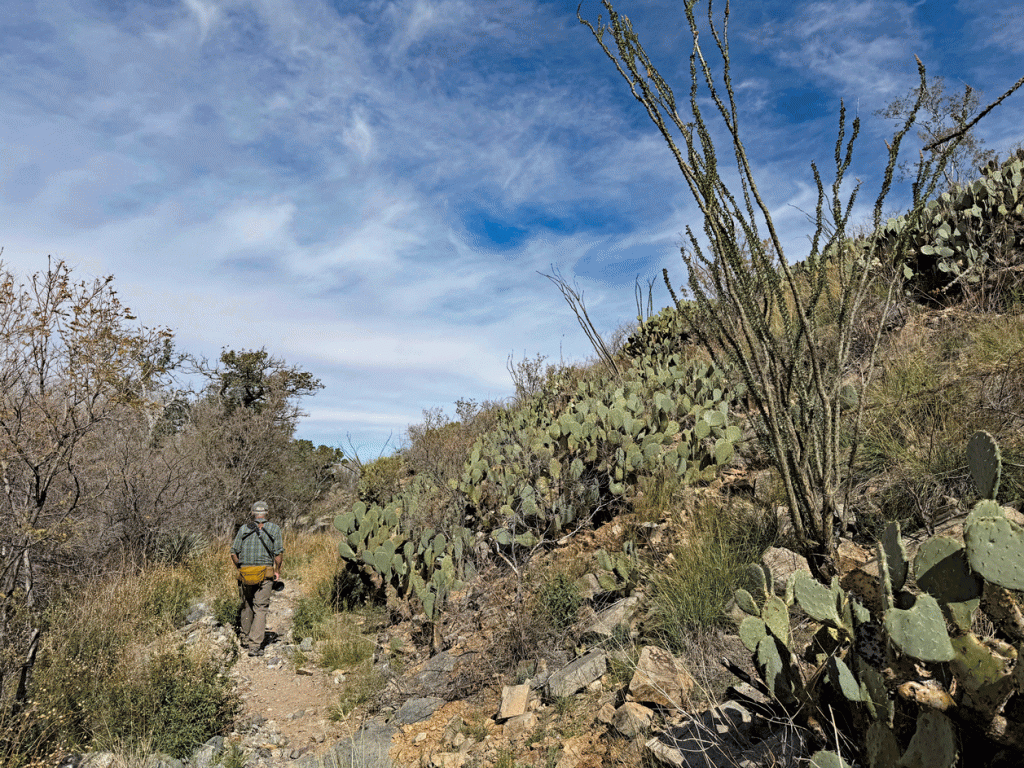
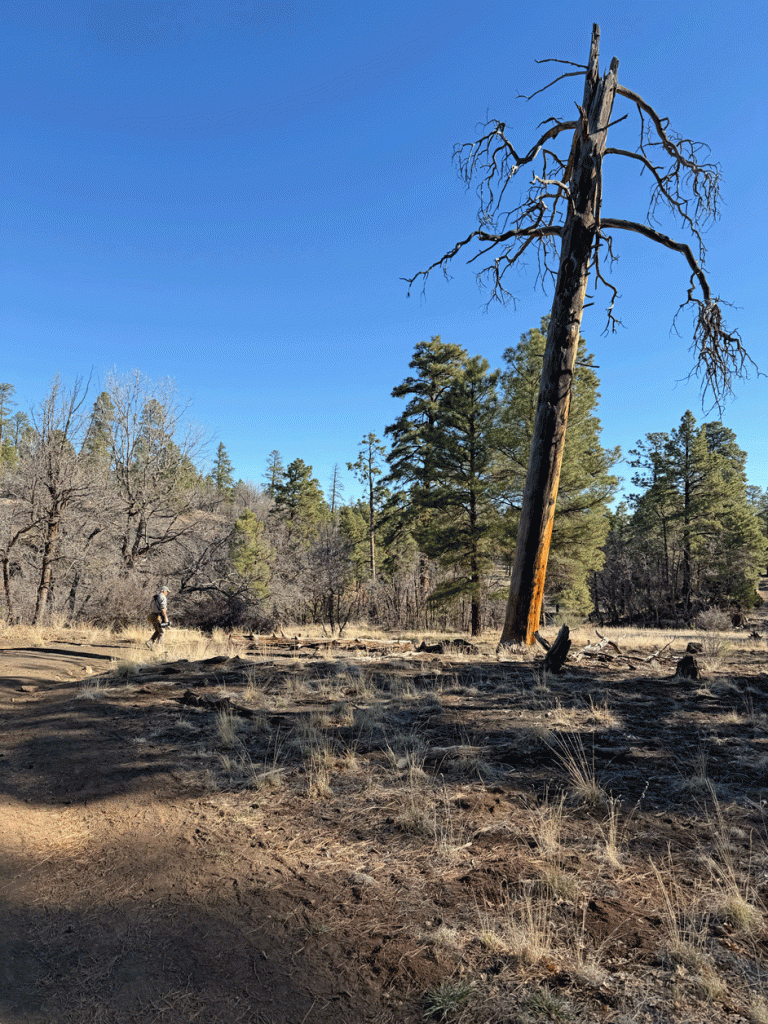
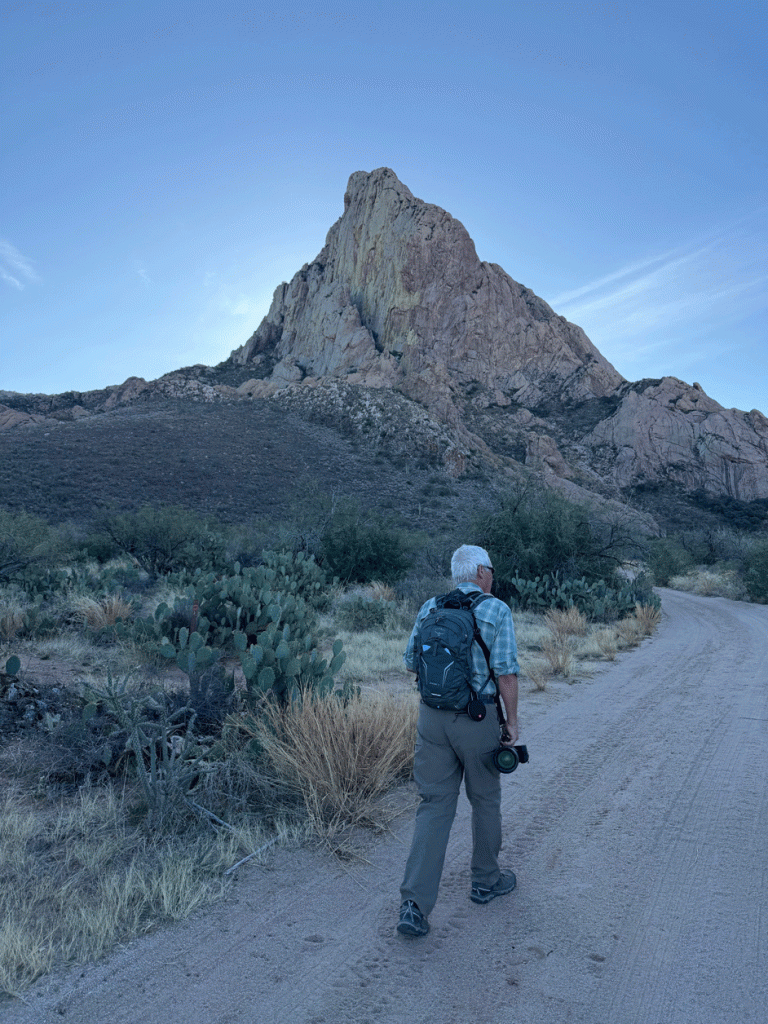
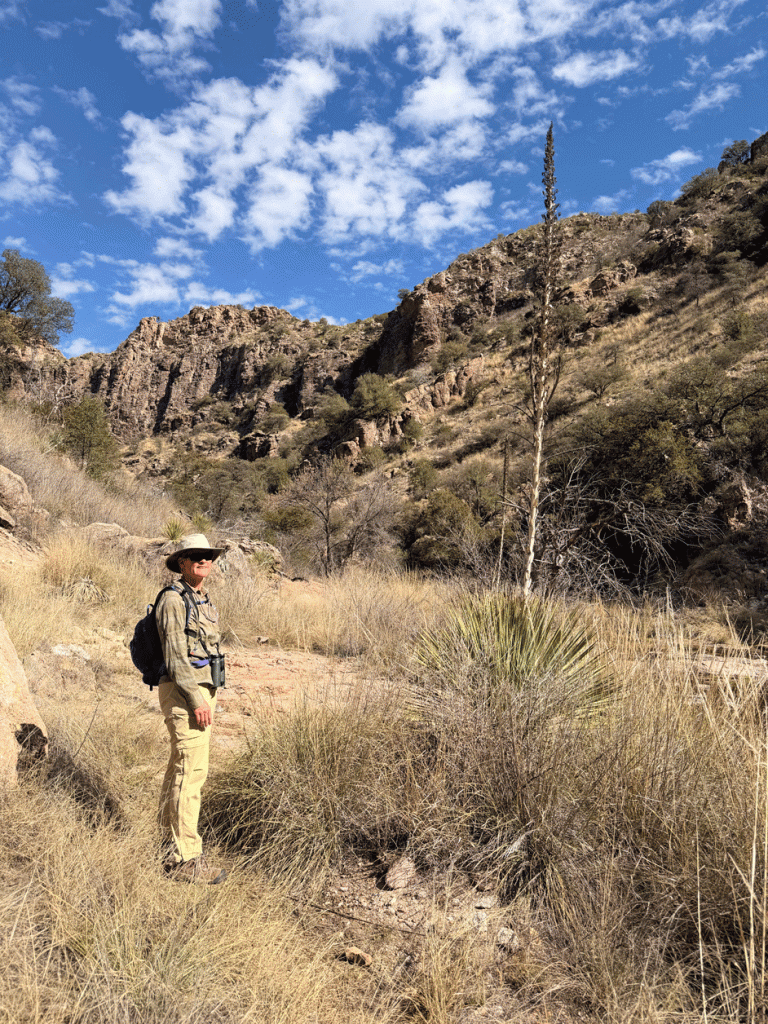
The pine trees at this elevation are really tall. Here’s a view of the trail below Kent Spring with Doug in it for scale. We chose to walk down the main trail and avoid the narrow, rocky short-cut. We turned off on the trail to Kent Spring Cabin and followed the gravel road down to the pavement. It meant that we had to walk up to the parking lot, but it also meant that we got back safely.

Over the whole day, we didn’t see or hear many birds (11 species). They were generally dispersed and not concentrated at the springs, and the hoped for “mixed flock” never materialized. But we were happy to contribute and we got some exercise on a beautiful day.

It was actually a good day to be at elevation because we were comfortable. The photo below shows the temperature of 31 degrees C (88 F) as we left the freeway on our way home. It was a few degrees cooler at our place over the mountains, luckily. Tucson set a record for the warmest December 22 ever.

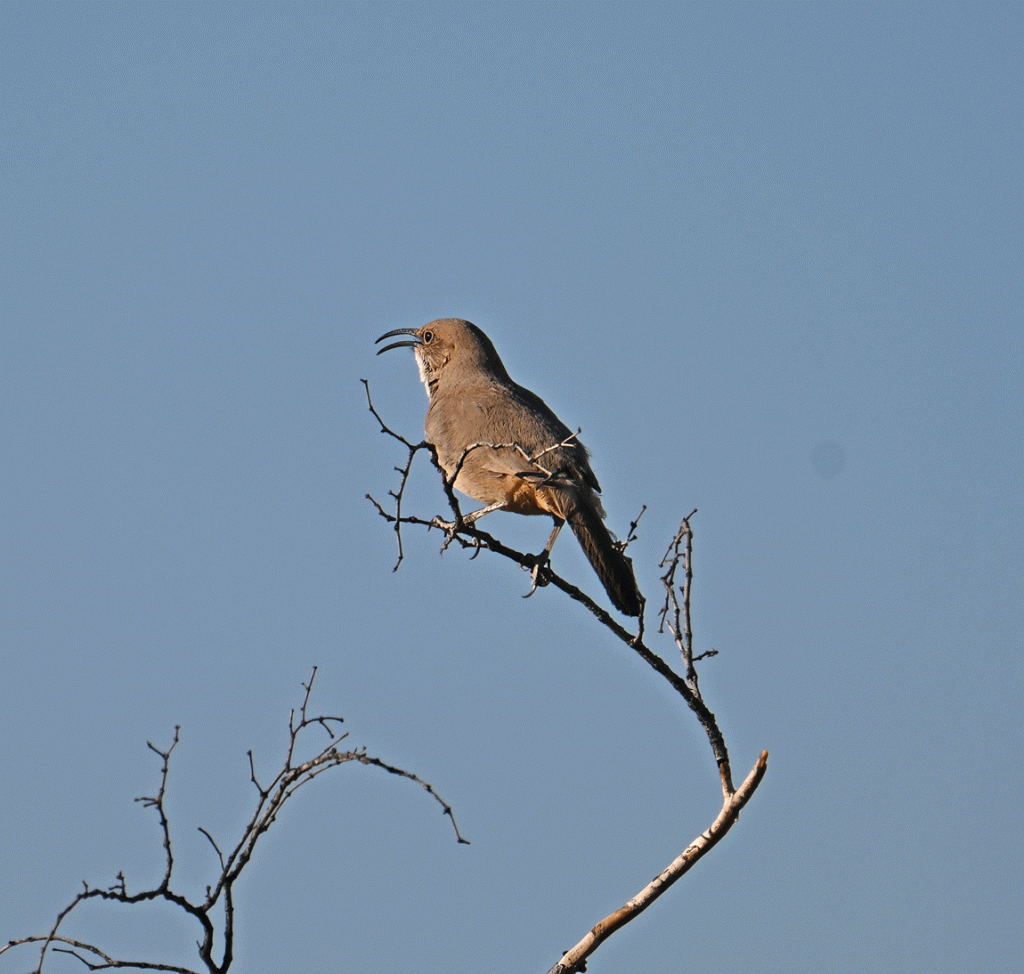
On December 23rd, we visited El Rio Preserve and saw this Loggerhead Shrike in the desert scrub area across the street. This species of shrike feeds on grasshoppers and other insects, small birds and rodents. Shrikes are “predatory songbirds” and are known for their technique of impaling their prey on thorns or barbed wire to hold it while eating.

This is Box-thorn, with the pond at El Rio Preserve and the Catalina Mountains in the background. While the scene isn’t the typical holly and berries, it has a festive vibe.

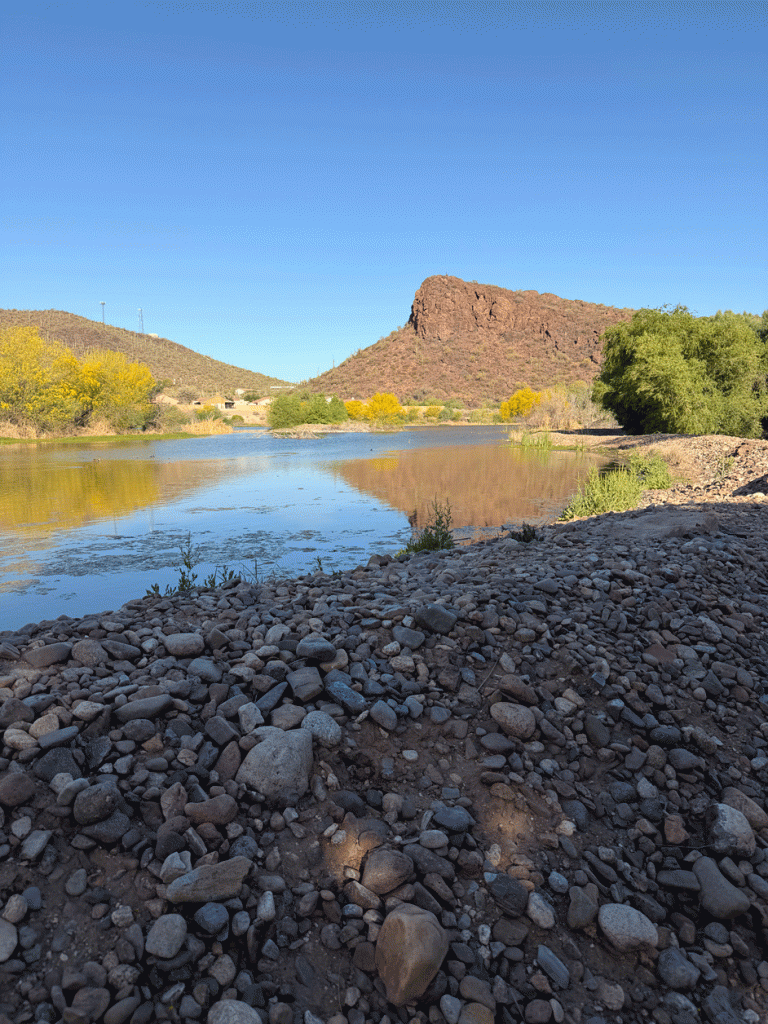
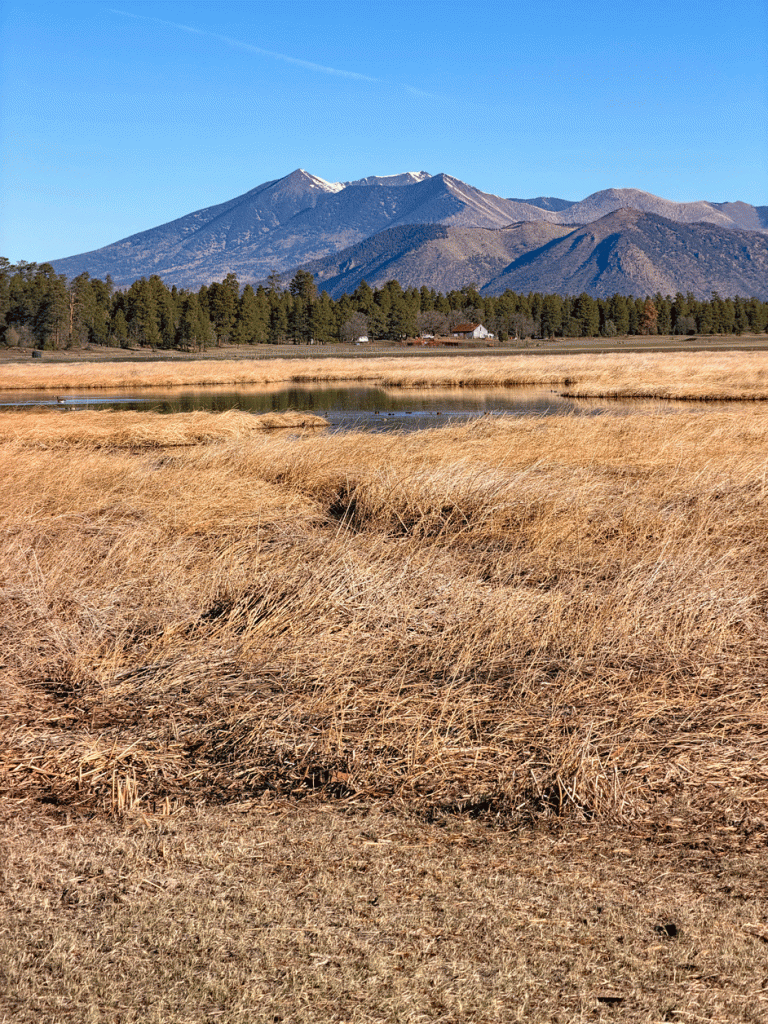
Here’s a view of Sweetwater Wetlands on Christmas Day.

This blog post had more scenery shots than photos of birds, but that’s sometimes how it goes. We enjoy everyday that we go birding and while it’s nice to see “special” birds and get good photos, the “process” (act) of birdwatching is more important than the “product” (number of species, number of rarities, good photos etc.)

And another year is over… We wish everyone a healthy and happy 2026.

December 2025 in Arizona: part 1

December 2025 in Arizona: part 1

This blog will be about our hiking and biking adventures and our visits to the Arizona Sonora Desert Museum. Part 2 will include selected bird photos and descriptions of birding locations.

We hiked in Sabino Canyon in early December. There was some rain at the end of November, so the creek was flowing. In the photo below, water is running over the dam. When the dam was first built in the 1930s, the water behind the dam formed a recreational lake. Now it has silted up so much that when there’s water in the creek, there’s a large puddle and a waterfall over the dam. Much of the time, it’s dry and sandy.

We took the trail up from the dam area to the road. The road is only open to the electric trams that people can pay to ride. Some people ride the tram but more walk the roads. We prefer the trails, and use the roads to get from one trail to another.

Here’s a view from Rattlesnake Canyon trail. We also birded along the way and saw or heard 17 species. The most prevalent bird was the House Finch.

Our next hike in the middle of December was to Catalina State Park. We took our binoculars, but the birds were pretty scarce, likely because there wasn’t any water in Sutherland Wash. This mosaic is at the start of the birding trail.

After walking the birding loop, we drove to the starting point of a short hike to “Romero Ruin.” The ruins are from an prehistoric Hohokam village which was likely occupied from 750 and 1050 AD. A rancher named Romero had his house on the same bench above the wash and the ruin came to be known as the Romero Ruin.

There is a gravel trail that skirts the remains of the village, but there are also rougher trails into the centre. Archeologists have done some excavating and there is evidence of old holes from pot-hunters, so anything of value has been found. The desert vegetation seems to be taking over. When we looked carefully we could find small pottery shards, and we dropped them where we found them which allows someone else the opportunity to find them again.

In the photo below, Doug is standing in one of the two ball courts in the ruin. This court is about 25 meters (80 feet) long and once had high berms that could have been 3 meters (10 feet) high or higher. The ball court is similar to ones in Mexico and Central America where inhabitants played a ritual ball game. It is thought that the ball games fostered cooperation and resolved conflicts between communities.

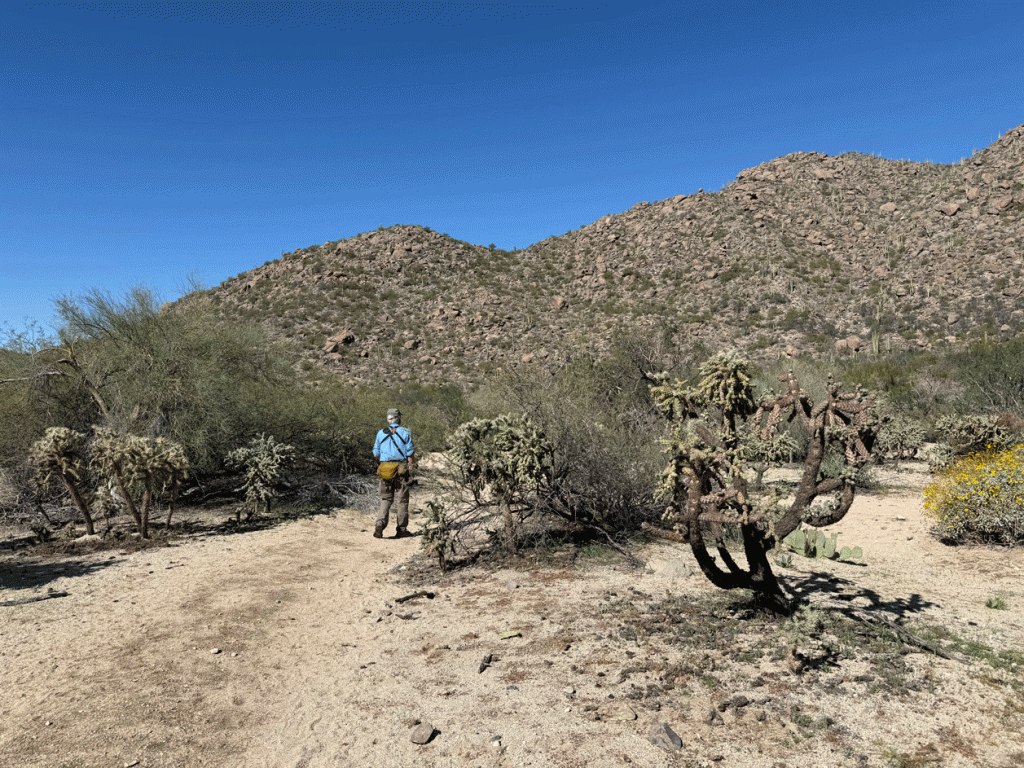
Near the end of December, we hiked from the Box Canyon parking lot off of Picture Rocks Road, a spot we drive by most days. We started down the narrow Box Canyon trail. In the photo below, the canyon has opened up, just before it reaches Picture Rocks Wash.

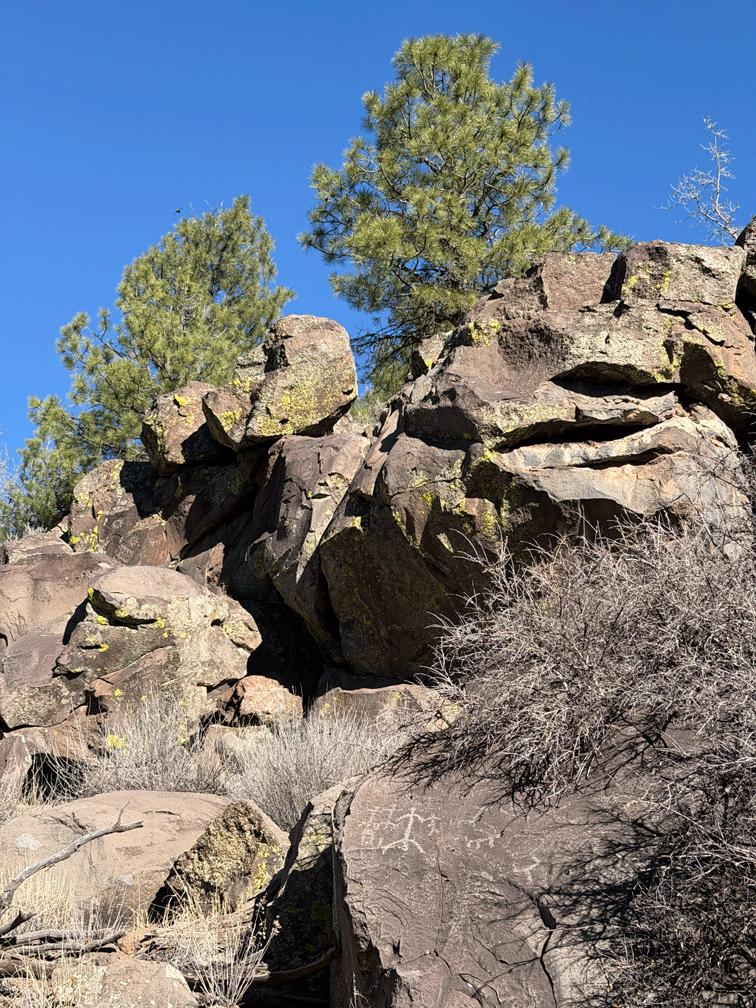
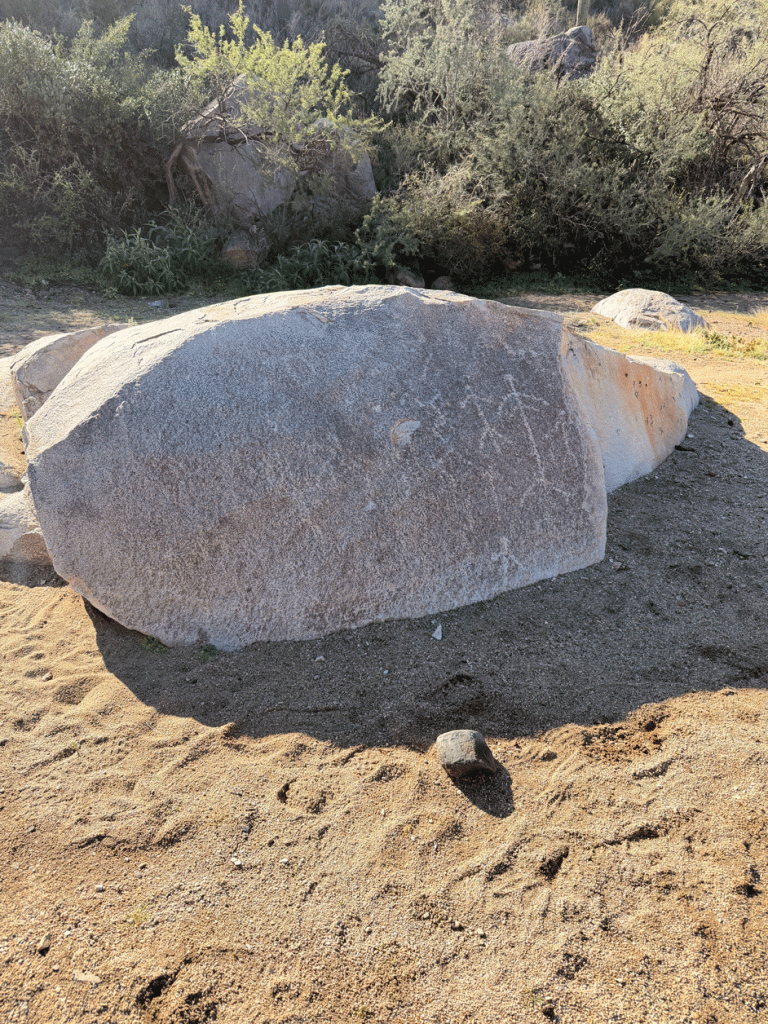
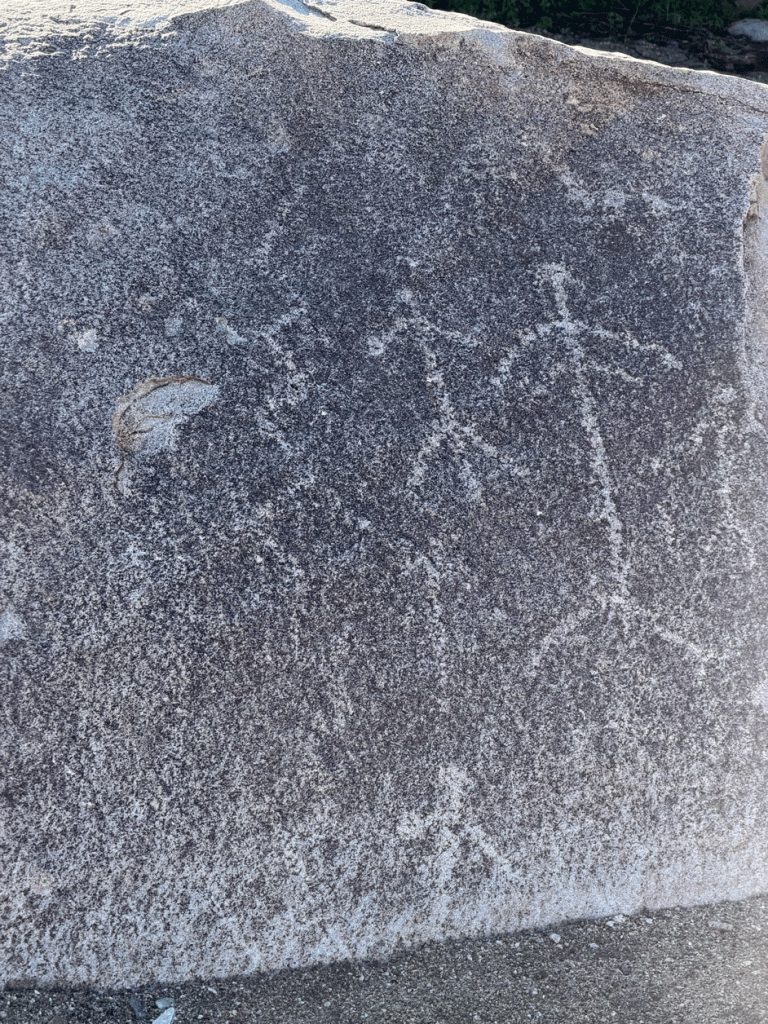
We walked along the wash and crossed over Picture Rocks Road. Within five minutes of walking, we were at the petroglyphs that give the road its name. They are on private land, but people are welcome to view them from the wash.

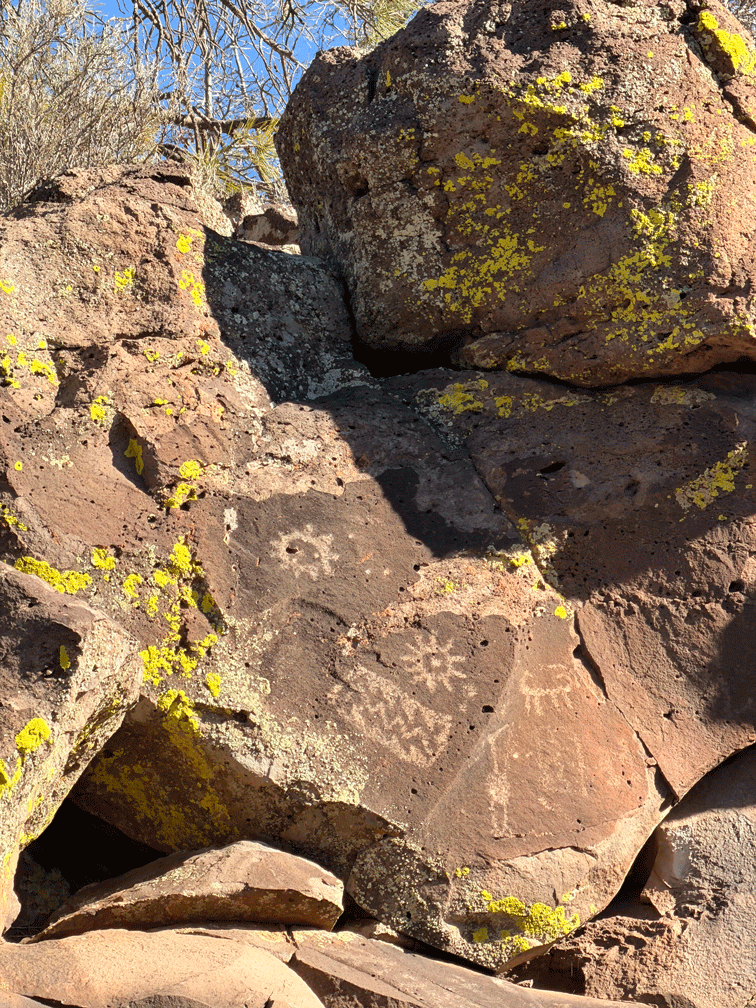
Here’s a close-up of one of the sections. The petroglyphs were carved into the veneer in prehistoric times by the Hohokum people.

We continued along the wash. This unique saguaro skeleton up on the bank caught our attention.

We had our snack on the same rock out-cropping that we’ve sat on during previous hikes.

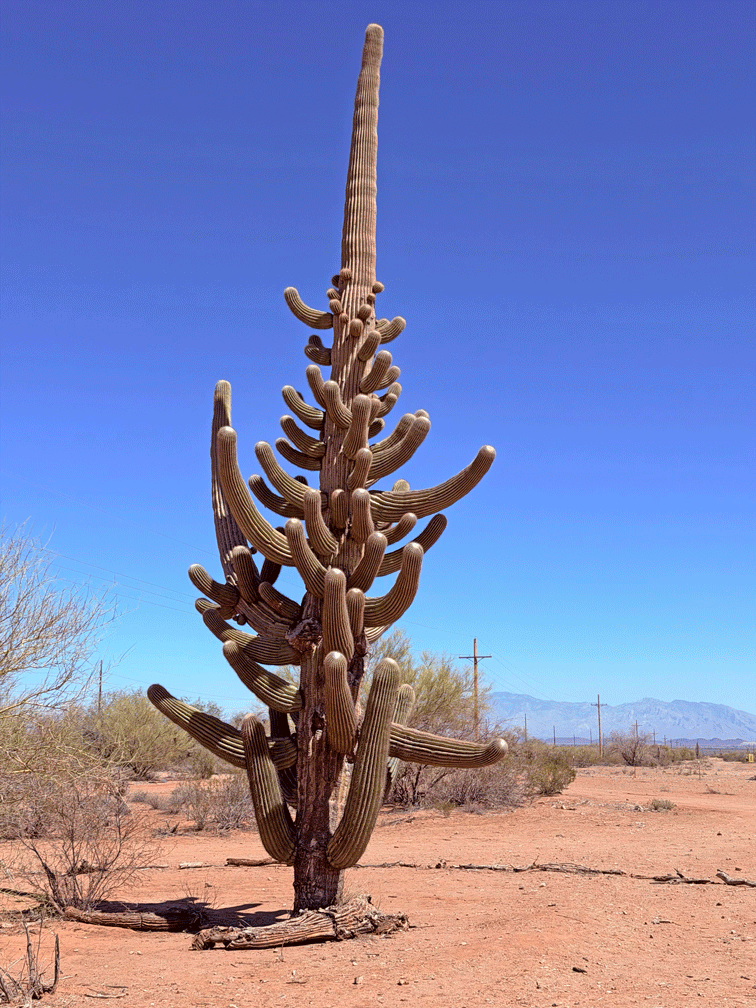
We came out of the wash on the “Ironwood Forest” trail. This remarkable saguaro is quite close to the wash. We counted over twenty arms, some which have just recently formed. The tree in the background is an Ironwood, one of the few along the trail, so to call it an “Ironwood Forest” is a stretch of the imagination.

Here’s the view a little farther along the trail looking northeast towards the pass and the start of the trail.

We did another bike ride on pavement, this one starting from El Rio Preserve and following the trail northwest to Sanders Road. Here’s a view as we came back past the preserve which is filling up with water.

We rode the desert trails in the Tortolita Preserve a couple of times. Below, Wendy is riding past the “Candelabra” saguaro. Throughout the preserve, there are various signs at special landmarks, that also include the distance from the trailhead and the elevation.

It’s not evident from the photo above that Wendy had a close encounter with a prickly pear. She fell in a sandy section after stopping to check on Doug, who was behind her. We spent at least twenty minutes removing spines from her hand, arm and shoulder. The photo below is not the same one she fell into, but a similar one. The big spines are fairly easy to remove, but the little brown ones are hard to grab hold of and often break off. She’s fine, and will try even harder to steer clear of the prickles. (The sandiest sections of the trail have now been dug out and are easier to ride.)

This next section includes photos from our visits to the Arizona Sonora Desert Museum in December. A new exhibit by the Artists for Conservation had just opened.

Here’s a view showing about half of the gallery space. It’s quite open with very good lighting, with spaces for large and small works.

This corner near the cactus garden was replanted a couple of years ago. We watched its transformation from piles of rocks to a filled-in garden. It featured the “Boojum” trees. Boojum trees are native to Baja California and Sonora in Mexico. They have silhouettes like upside-down carrots, with skinny branches. The plant’s trunk stores water and its small, scale-like leaves reduce water loss, both adaptations that help it survive in arid climates.

The inscription on the rock is a quote from Robert Frost:

Two roads diverged in a wood and I —

I took the one less traveled by,

And that has made all the difference.

We hardly ever include photos of the animals at the museum. Here’s a female Bighorn Sheep. These are the animals that the Hohokum portrayed in the “Picture Rock” petroglyphs. (Refer to earlier in the blog.)

This Lilac-crowned Amazon is a medium-sized parrot from the Sonoran region of Mexico. This one is a captive bird, and was under the supervision of a docent. We had never seen it in previous visits and the docent explained that they needed to be careful about when to bring it out, because the local (wild) Cooper’s Hawk caused it some stress.

Lilac-crowned Amazons are endangered due to habitat loss and illegal trade. They can live to be fifty years old in captivity. We think this one was about 35. There are feral populations of escaped birds in southern California.

The early part of December continued to be good for seeing butterflies at the desert museum. Last month’s blog post focussed on Monarchs and Queens. Here are a few different ones. (We’re almost at the point of needing a Butterfly Field Guide, but we are definitely not “lepidopterists.” Maybe amateur butterfly photographers is the best description.)

This is an “Anthanassa texana” or “Texan crescent.” Its range is from Guatemala north to southern California and northern Florida.

This beauty is a Red Admiral. It’s found across the Northern Hemisphere, migrating north in spring and south in autumn.

Gulf Fritillaries are quite common in Arizona, and we see them often while we’re birding. Its bright colours warn predators that it tastes bad.

Here’s Gulf Fritillary caterpillar, magnified quite a bit. The caterpillar feeds exclusively on passionflower vines.

We attended a Colter Wall concert at the Linda Ronstadt Music Hall in early December. Colter Wall is a Canadian country singer-songwriter and musician from Saskatchewan with a deep baritone voice. When Doug first bought the tickets, we knew just a few of his songs. By the time the concert came along, Wendy knew the words and could sing along (to herself) to most of them. A great concert, and a great venue!

Another cultural event for us was going out to lunch at El Charro Cafe, Tucson’s oldest continuously operating family-owned Mexican restaurant, founded over 75 years ago. The wandering troubadours were dressed for the festive season. They played traditional Mexican music as well as, surprisingly, Elvis Presley requests.

Another important social event was our landlord’s New Year’s Eve outdoor celebration. Neighbours and friends were invited for 5:00 with the hope of enjoying a spectacular sunset. Unfortunately, it was cloudy and rainy. We toasted the new year at 8 pm (New Year’s Eve in Sao Paulo, Brazil) and again at 9.

Here’s a view of the food spread (note the raindrops on the tray covering some sweets) and a cozy group under the shelter. Although it was damp, it wasn’t cold and we had a great time.

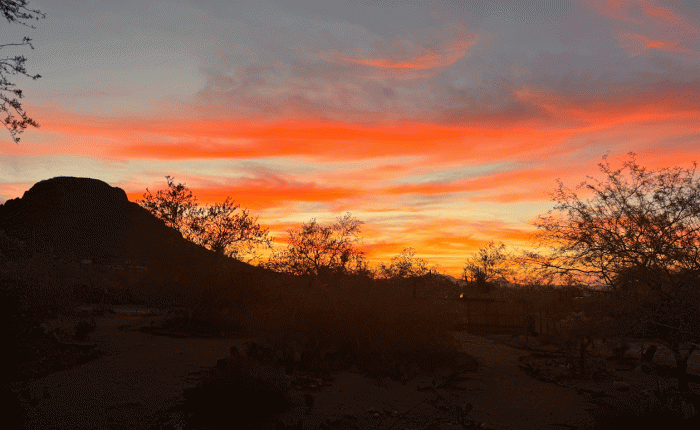
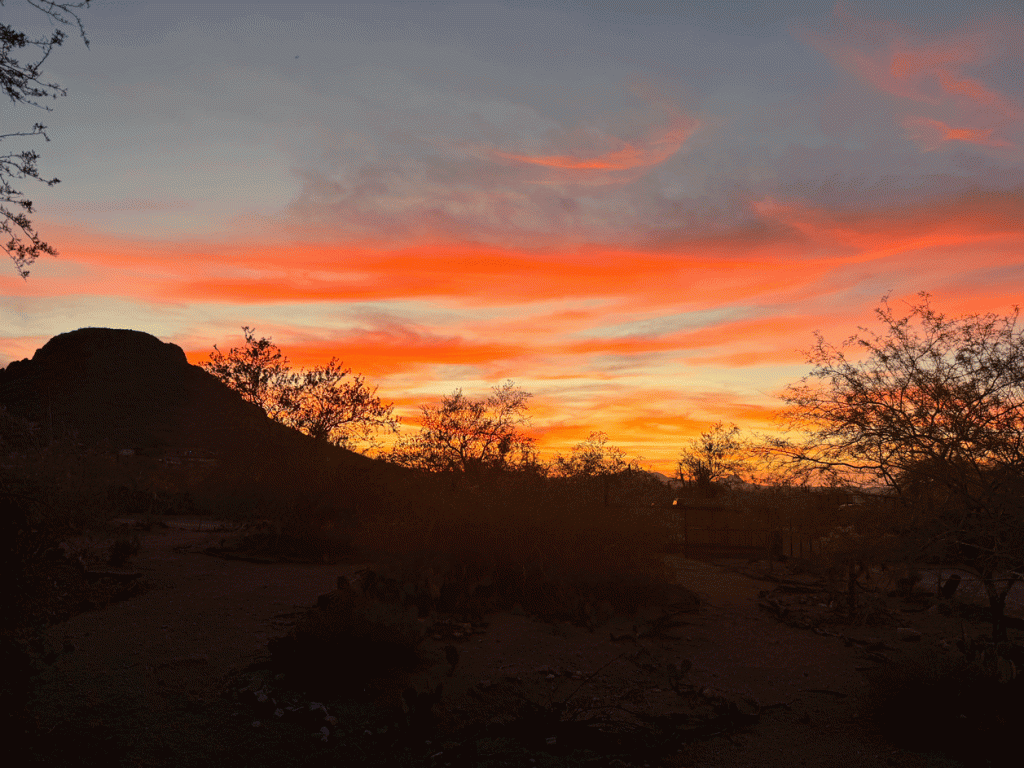
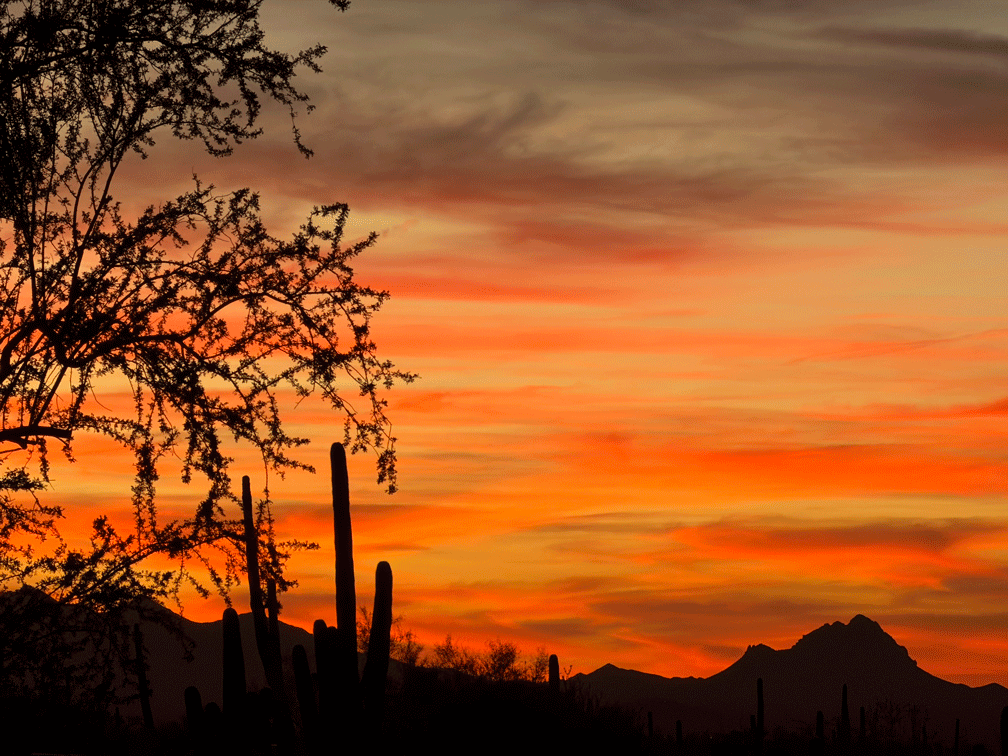
Now to our final section: Scenery. In early December Wendy went for a walk close to sunset and took an unobstructed photo of the glowing ridge.

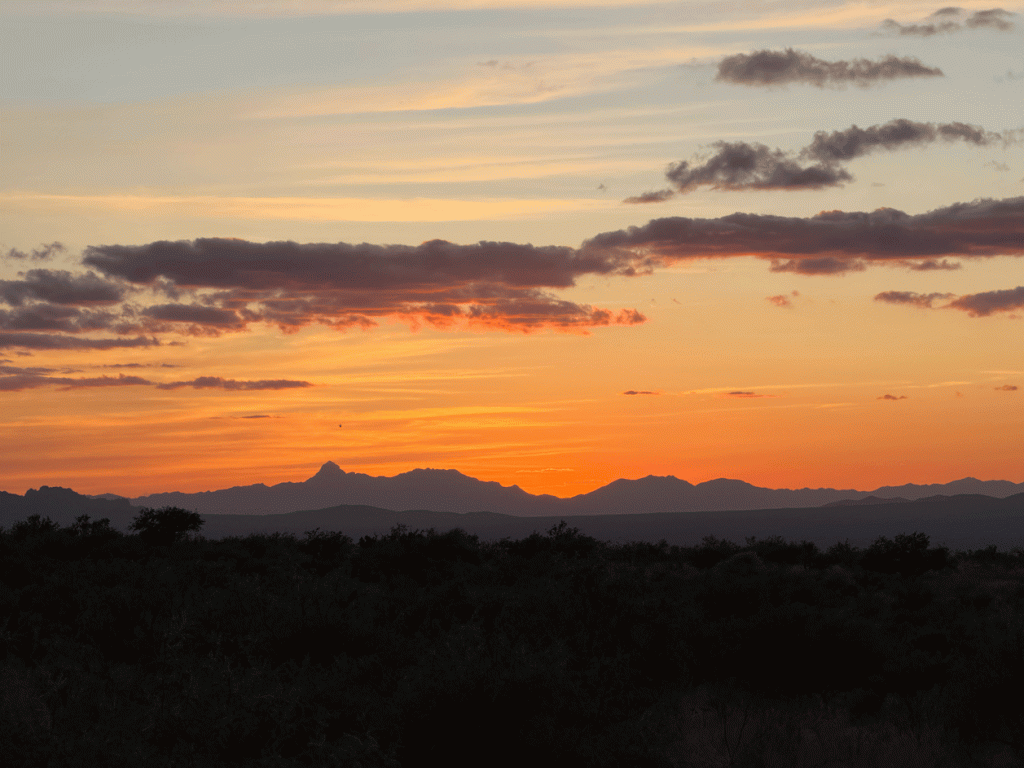
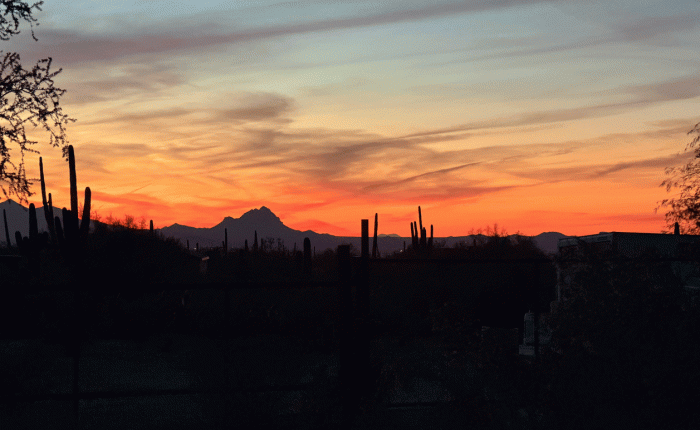
This was the sunset on December 13, from the yard.

We wish everyone a happy new year! Part 2 (birds and birding locations) will be posted soon.

November 2025 in Arizona: Part 2

November 2025 in Arizona: Part 2

This post is mainly about the birds, butterflies and flowers that we saw in November, with some artwork and scenery thrown in.

We were happy that the Black-throated Blue Warbler that had been hanging around the town of Summerhaven on Mt. Lemmon was still there on the Monday after we arrived. It wasn’t particularly easy to find, but there were two other birders there looking for it. We were all spread out but within calling distance of each other. We hurried over when we heard our friend shout, “I’m on it!” The warbler was high up in an alder tree, which made it a little difficult to see the blue head and back. Black-throated blue warblers are common in southern Ontario and Quebec in the summer. The species primarily winters in the Caribbean, so this one was a little off course.

We visited the Arizona-Sonora Desert Museum a couple of times in November. Here’s a view of the cactus garden. The tall, thin, knobbly cacti are “totem pole” cacti, a variety of the senita cactus native to Mexico. The red spiky ones in the foreground are commonly know as compass barrel cactus because they often lean to the south. They are native to southwestern US and Mexico.

The flowers of the “Yellow Bells” shrub were in good shape. It is native to the American Southwest and Mexico, and is often used as an ornamental plant. It flowers most of the year, but especially in the fall.

This is Baja Fairy Duster, an evergreen shrub that is native to Baja California. Doug captured a bee on the flower, but right before that, a Monarch butterfly was enjoying the nectar.

The Desert Museum has a dedicated “Butterfly Garden” near the entrance to the museum. They have planted all the plants, both for nectar and caterpillars, that are required, which make it an ideal Monarch butterfly way station.

Other species of butterflies also are attracted to the butterfly garden. These butterflies below are known are Queens. They are slightly smaller than Monarchs and have white spots scattered on their wings.

We met a docent that was collecting butterfly data on one of the days that we were at the museum. He was able to track a couple of Monarchs that had been fitted with solar transmitters. One of the butterflies, “Mojo”, was foraging way back in the flowers, but Doug managed to get a photo that shows the tiny transmitter, through a small opening in the foliage.

The next week, we were nearby looking at a hummingbird (see later in the post) and Wendy wandered over and watched a different Monarch being released after receiving a paper tag. The volunteer docent let go of the butterfly’s wings and it was gone in a flash. We’ve always been told that it harms a butterfly to touch its wings, but this docent has had special training to handle the butterflies to do the least damage.

Here’s a photo Doug took in December of a Monarch butterfly with a paper tag. The docent that was documenting the butterfly sightings had trouble reading the tag, so Doug’s photo helped. This one was tagged CZ515 and was tagged in early November.

The Desert Museum’s art gallery always has interesting exhibits that have some connection to nature. Dyana E. Hesson paints oversized flowers on a backdrop of Arizona scenery. The first painting in the gallery was: “Where the Heart Is” (Circle of Milkweed Vine, Red Mountain, AZ).

Here are two paintings we liked. The top one is titled,”I’ll be Back” (Brittlebush over Camelback Mountain, AZ.) The lower one is “Blue as the Skies Above” (Wild Irises, Mormon Lake and San Francisco Peaks.) All of the works were very large and would dominate a room in a regular sized house.

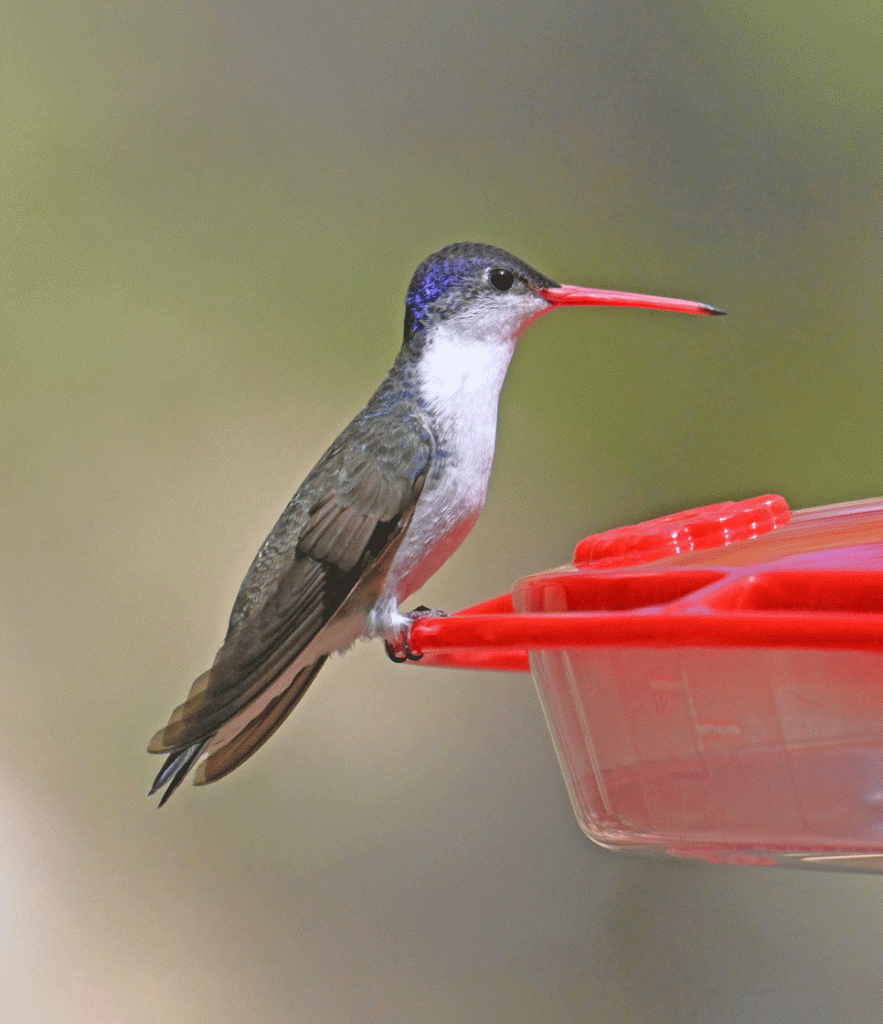
Every time we visit the Desert Museum, we see Costa’s Hummingbirds, but this one was special. This male sat with the light reflecting from his gorget and head almost perfectly. Costa’s Hummingbirds are one of the smallest hummingbirds and the male has long, flared throat feathers.

The Desert Museum’s enhanced habitat also brings rare birds. In the photo below, Doug taking a photo of a rare hummingbird in the butterfly garden.

The hummingbird was a Blue-throated Mountain Gem (which used to be called a Blue-throated Hummingbird). This hummingbird may have spent the summer in the Mt. Lemmon area. The species is known to wander to adjacent habitats in search of flowers or feeders, but the Desert Museum is over 40 kilometres (25 miles) from Mt. Lemmon and the Catalina Mountains. Perhaps it just made a side-track to the Desert Museum on the way to its winter home in Mexico. It was very happy feeding on the “Turk’s Cap” flowers.

The Blue-throated Mountain Gem is noticeably larger than most other hummingbirds and moves a bit slower. The hummingbird stayed near its favourite flowers for a long time, and it was big enough so we could point it out to other museum visitors. Its gorget appears greyish unless it catches the light at the right angle. We had to be happy that it was perching in the sunshine, but the crowd that had gathered all wished it were turn around so we could see the gorget flash.

In mid-November, we visited the Sweetwater wetlands about two weeks after the annual burn. Tucson Water burns the wetland to control the invasive cattails. The burn also provides training for wildlands firefighters and is timed to allow the native habitats to regenerate for the winter birds. We didn’t mind the cool weather and we got home just before it poured rain.

It’s nice to see a Blue-winged Teal so close to the edge of the pond. This male is in his full breeding plumage with a bright white crescent and white hip-patch. A little bit of a blue wing feather is just visible on his back. The pale blue wing coverts (or “shoulder” feathers) are obvious in flight.

On this cloudy day, the head of the Green Heron was a beautiful shade of blue-green. This one is in a typical crouched position as it waits patiently for prey.

We had brighter light the next week when we visited Sweetwater Wetlands again, and this male Gadwall was very striking standing in the shallow water. Gadwalls can be easy to overlook because they aren’t very flashy. Males have a black rear end and white wing patch and a dark bill. Their breast feathers make an interesting design.

Another day, we walked along the bike path beside the Santa Cruz River. This Great Blue Heron stood on the side of the rushing water near Ina Road for a long time. The water was very turbid because of the recent rains.

On US Thanksgiving day, we didn’t have anything planned, so when we got a message that a warbler that we had never seen before was sighted across town, we decided to try to see it. It was reported in Tanque Verde Wash, about an hour away. Here’s a view of the wash and the tall cottonwoods on the banks.

There were Sacred thorn-apple blossoms flowering, which was unusual because they usually flower in the spring.

We didn’t see the special warbler, but we did have a good view of a Plumbeous Vireo, so it was our “consolation” bird. The other consolation is that we had an enjoyable walk on a beautiful day.

Plumbeous Vireos are very similar to Cassin’s Vireos, that we have in our yard in the summer in BC. Plumbeous are greyer and have a slightly different call.

The next day, we joined about a dozen other birders at a “stake-out” for another rare bird. A “stake-out” is a specific location where a rare bird is “hanging out.” Our cell phone’s GPS can help us navigate to the spot. We were looking down into the Santa Cruz River bed and watching for a yellow bird to pop up. The vegetation is so thick here because there is water running in the middle of the channel. We stood just off the bike path, which was another section of “The Loop” which we have described in previous posts.

This is the female Orchard Oriole that caused the excitement. We saw it numerous times because we stayed around and waited for a friend to arrive. This photo was taken towards the end of our session. We also had a chance to catch up with many of our birding friends, most of which we hadn’t seen since the spring.

An Orchard Oriole is usually found in the Eastern US in the summertime. It winters from southern Mexico, throughout Central America and as far south as Columbia in South America.

At the end of November, we drove out to the fields in Marana, with hopes of seeing a Burrowing Owl. This one was sitting by the side of the road, so Doug could take the photo from the truck’s window and not disturb the owl. We also saw one other one that day.

Now we’re almost halfway through December, so we will wish you a Merry Christmas and Happy New Year with some photos of our cacti decorations.

Next post will be in January, 2026.

November 2025 in Arizona: Part 1

November 2025 in Arizona: Part 1

We’re back in Arizona for the winter. This post will describe our trip down, some hikes and a bike ride and will include some of our favourite scenery photos from November.

Here’s a view of Fisher Peak, Cranbrook, BC’s local landmark, taken just outside town. At this point we were about fifteen minutes into our over 2400 kilometre (1500 mile) journey. We had a good weather forecast, only picking up some rain showers for a few hours through northern Montana. We spent the first night in Missoula in our Redwood fifth wheel trailer, our home for the next five months.

We crossed into Utah in the afternoon of the next day. We had made good time with favourable driving conditions through Monida Pass and Idaho. That night we stayed at the KOA in Brigham City/Perry Utah.

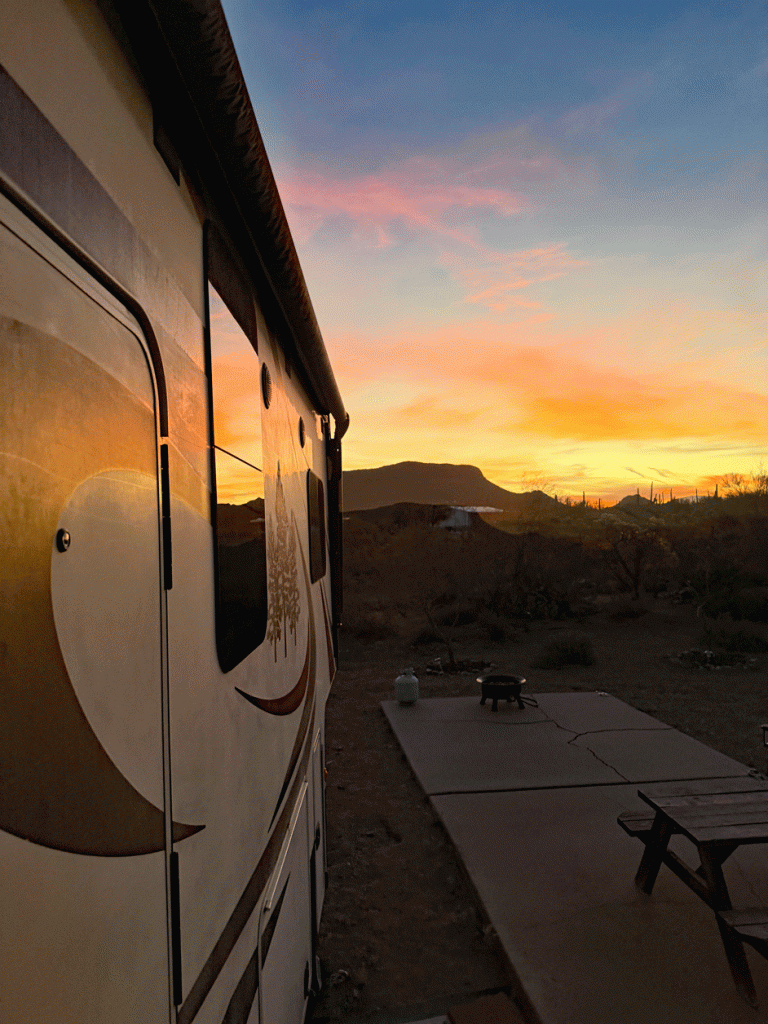
We spent the third night in Mesquite, Nevada. Here’s the view of the Redwood in the early morning of the next day as we’re getting ready to leave for the final push to Tucson, Arizona.

This spectacular sunrise was taken through the truck’s side window about 25 minutes later.

We got to our place in Picture Rocks, near Saguaro National Park around four in the afternoon on November 15, just it began to rain lightly. Luckily it didn’t last long, because at this point we still had about an hour of set-up (unhook the trailer and back up the truck, level the trailer, put the wheel covers on, put out the slides, hook up the water and electricity.) We had time to get out the BBQ so we could enjoy a steak dinner and celebrate our journey of over 24 hours of driving.

The next week we went birding and also to the Desert Museum, which will be described in the November 2025 in Arizona : Part 2.

Our first hike was the next Saturday to King’s Canyon in Saguaro National Park (West). The trailhead is about a twenty minute drive from our place. We always stop near the top of the canyon (just below the filled in dam) to look at the petroglyphs on the canyon walls.

It’s easier to see the petroglyphs with the zoom feature on the cell phone camera.

We hiked out of the canyon and over to the Gould Mine trail so we could make a loop back to the trailhead. Along the rocky trail that used to be a mine road, we noticed this tiny pink flower. It’s known as Allionia Incarnata and is actually three flowers that grow to look like one. The three sections together are smaller than a dime. It was growing in a hollow in the shade of a large rock.

Here’s the view looking west towards the Avra Valley and the mountains beyond. The clouds were the precursor to the coming rain. This photo was taken close to the trailhead which we reached about 11, giving us plenty of time to get home before the rain. Light rain started by 1:30 and continued for most of the afternoon. It progressed to full on thunderstorms in the late afternoon and throughout the night, which was an experience in itself.

A couple of days later, we did another short hike in Saguaro National Park. We made a loop by starting at the “Scenic Trail” near the Continental Reserve community in Marana. This is the same trail that we use as an approach to Safford Peak (aka Sombrero Peak). The peak is visible in the background in the photo below.

The trail is well marked although fairly rocky in sections. At the top of the pass, we met some hikers who had come up from Sanctuary Cove and they let us know that the trail was open. So we continued down and were greeted by a welcome sign at the property boundary, rather than the previous barbed wire fence. It made for an enjoyable two hour loop hike.

We got out on our bikes once in November, and chose a paved section of “The Loop” to gain some fitness before we tackle the desert. We rode on a new connector between the bike paths in Marana and the older paths that circle Tucson. The path crosses right through a mine site, under Avra Valley Rd and onto a bridge bike lane.

Here’s the view as we rode back past El Rio Preserve. Marana Parks has drained the pond and is working on strategies to reduce or eliminate the cattail growth. When they refill the pond, it will be a great birding location.

On the day after the US Thanksgiving, we enjoyed an outdoor wine tasting social hosted by some Tucson friends. Every wine was a blend that included Cabernet Sauvignon and we were challenged to try to figure out which varietal was included. Deciding on the blend wasn’t easy, but we tasted some interesting wines and discovered a few new favourites.

The next day dawned clear with no wind, so after a leisurely breakfast we decided to hike right from the house and head up to Panther Peak. We try to climb it at least once a season. Doug loves taking a photo from this same spot that shows to trail down to the wash, and Panther Peak on the far left, so if you have been reading our blog for a few years, this view may seem familiar.

Here’s a photo showing the upper section of the gulley on the approach to Panther Peak. We were surprised by how much bufflegrass has grown in this area in recent years. Bufflegrass is an invasive grass which increases the danger of wildfires spreading and affecting the native saguaro cacti. We had lunch at the summit and made our way back to the trailer by early afternoon.

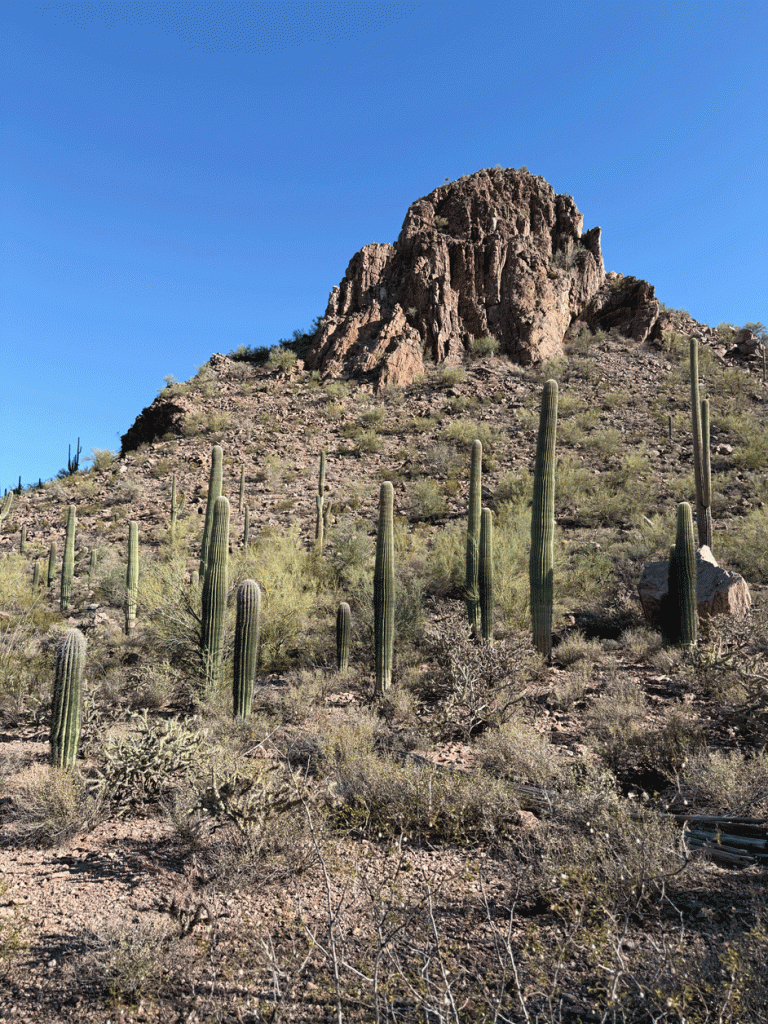
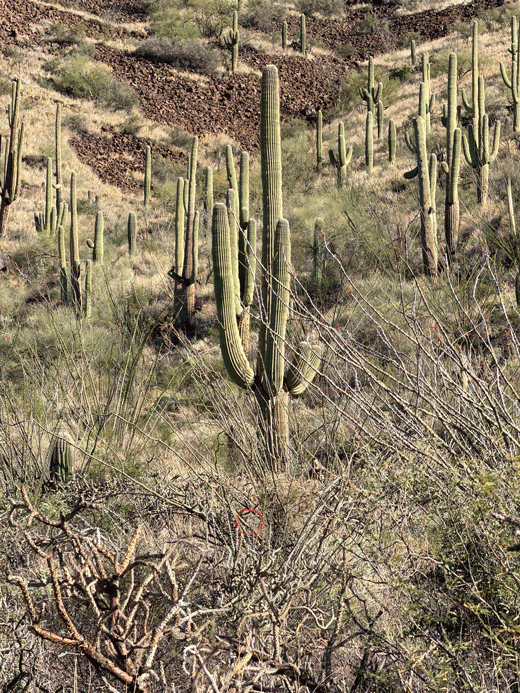
Here’s a few favourite local desert scenes to finish the blog. Notice the hug arm that has fallen off the saguaro in the photo below. There were strong winds in the summer when it likely occurred. The saguaro will probably be fine.

Here’s another interesting saguaro with the top of Panther Peak just to its left.

Here’s our favourite sunset of the month taken on the US Thanksgiving. We celebrate Thanksgiving twice, once hosting a turkey dinner with friends at home in BC in October and again with a Cornish Game Hen here in Arizona. We thankful to be able to experience both.

Part 2 of November 2025 in Arizona will include our birding adventures and more flowers and will be posted soon.

June 2025: Cypress Hills, Alberta

June 2025: Cypress Hills, Alberta

In the middle of June we took a short trip to Cypress Hill Interprovincial Park, which is on the border of Alberta and Saskatchewan. On the way there, we stopped in Medicine Hat, a city about a half hour west of the park, because a rare bird had been seen there regularly. We got information from a local birder who assured us that we would be able to turn our Fifth-wheel trailer around. Luckily, the biggest parking lot had plenty of room, so we didn’t worry about taking up ten spaces. It was hot and in the middle of the weekday, but that worked for us. The Indigo Bunting was known to hang around the smaller parking lot, so we walked the trail over to the area. As soon as we got close, we could hear it singing. Wendy spotted it on the top of tree.

It was a pretty distant view, but it definitely was a male Indigo Bunting. This species is usually found in Eastern Canada and the US in the summer.

We got to the park later that day and set up camp in the Lakeview campground at Elkwater Lake. The next morning, we birded on the “Soggy Bottom” trail, in hopes of seeing a Baltimore Oriole. We didn’t see one there, but we met a naturalist who had seen one at another part of the lake. On our way back to the truck, we had a short view of an American Bittern flying, something we had never seen before. Usually bitterns stay hidden in the reeds.

Here’s a view of Elkwater Lake from the West Central Day Use area, where we went next.

There were several Red-necked Grebes in the lake, and this one happened to be quite close to shore. Red-necked grebes build a floating nest of plant material, and we saw some nests with our binoculars.

There was also a pair of White-winged Scoters that came close to shore. The male is on the left, with a knob on his bill and a pink bill tip. The photo doesn’t show the white patch on the wing very well, but when they fly it shows up from a long distance. We didn’t see an oriole, however. So we left to go somewhere else.

We drove to Reesor Lake, where we saw the expected American White Pelicans and some Canada Geese. (no photos) We worked our way back, birding in other areas and seeing nothing special, and then looked again at the West Central Day Use area on Edgewater Lake for the elusive Baltimore Oriole. The skies darkened and we just made it back to the truck before the downpour.

It was really comfortable to wait out the thunderstorm in our Redwood for the rest of the afternoon. After dinner we walked from our campsite to the boardwalk.

The next day, we went looking for grassland birds, up on the plateau on Township Rd 80, which is one of the borders of the park. We heard several Sprague’s Pipits and caught a few in our binoculars at a great distance. Sparrows (Savannah, Baird’s and Vesper) would pop up onto fenceposts or bushes, but as you can see in the photo below, the bushes were small and a long way from the road.

The local birder that we had been in contact with gave us directions to his “secret spot,” at the headwaters of Battle Creek. The small cliffs of conglomerate were interesting, but coming from mountainous BC, we were underwhelmed. It was a unique spot, however.

Here’s a view looking east. We had hoped that the water might have attracted some interesting birds, but the only shorebird was a Killdeer.

There were some wildflowers, including this purple Speedwell.

After that short walk, we drove to Spruce Coulee. We wandered the campground hoping to see or hear the Ovenbird that had been reported, but no luck. As we were leaving the parking area, starting our lunch, a Sharp-tailed Grouse crossed the road right in front of us. We scrambled for our binoculars and camera, but it disappeared into the underbrush, so there’s no photo of our “life bird.” While we were out of the truck however, we could hear an Ovenbird singing loudly. We never saw the bird, but we got a good recording of its song.

Next, we drove back to Elkwater Lake, past our campground to the Firerock Campground that is closer to the lake. We pulled into an empty site and looked into the bay. When we first arrived, we could see plenty of birds, especially Canada Geese and White-winged Scoters. This photo was taken after a jet ski disturbed them all and they tucked themselves in closer to the opposite shore.

There were a couple of American Goldfinches perched in the bushes near the shore. This is a photo of a male.

A half dozen American White Pelicans flew over.

We got a good view of a Black Tern. We saw several flying over the lake in the time we were there, but this one was the one of the closest. Its grey wings look silvery in the afternoon light.

One Caspian Tern flew over the point, and luckily it kept circling until Doug could get a good photo. We had missed seeing one when we were in Texas where they winter, so we were happy to see one in migration. Caspian Terns are the largest tern in North America and are about the size of a Ring-billed Gull. The photo clearly shows its dark red bill with a dusky tip.

On our last full birding day in the area, we covered a lot of ground. We started the day heading down Highway 41 towards the US border crossing at Wildhorse. It’s a pretty lonely highway, so it was fine to stop by the side of the road when we saw birds. At one spot there was a coulee (a gentle ravine) and a Northern Harrier and Short-eared Owl were hunting there. We had seen a Short-eared Owl once before in Hawaii. The Sibley Guide to Birds says, “…essentially the nocturnal equivalent of a Northern Harrier. Often seen in daylight, especially early and late.” It was interesting that we saw the two species hunting in the same area.

We continued down the highway almost to the border and turned onto an unpaved road. There was a bushy section around a communications tower that was full of birds, including a Brown Thrasher. We heard it singing, then it popped out for a just a moment so we got a good look at it. It wasn’t a rare bird for this area but it was important to us because we had tried at least six times to see this species in Arizona where it had been reported. Our “nemesis bird” was finally found! It was also a “life bird.” We birded the fields nearby and saw other typical birds for the region: Western Meadowlarks, Yellow-headed and Red-winged Blackbirds and Common Grackles; nothing spectacular.

It was still early in the day, so we drove about an hour and a half east and then north to Pakowki Lake. Pakowki Lake is an endorheic lake (also known as a sink lake.) Water collects within the basin with no evident outlet. The water levels in Pakowki Lake can vary greatly from year to year, depending on precipitation levels. We birded near the causeway where Highway 885 crosses an “arm” of the irregular shaped lake.

There were many species of ducks: Blue-winged and Cinnamon Teal, Northern Shovelers, Redheads, Mallards and Ruddy Ducks as well as other species that enjoy the shallower water: Black-necked Stilt, Wilson’s Snipe, Willet, Greater Yellowlegs and White-faced Ibis. Here’s a flying White-faced Ibis. The white on its face is just a border around its reddish face, and the facial colouring develops only in breeding season (March to August).

We saw a Franklin’s Gull and a Ring-billed Gull, and three species of terns: Black, Caspian and Forster’s. Here’s a view of a Forster’s Tern, a tern is quite a bit smaller than a Caspian. The large orange bill with a black tip is distinctive.

We got back to our trailer by mid-afternoon, and Wendy decided to go for a walk to try to see the elusive Baltimore Oriole nearby. She started up the road towards the Beaver Creek Campground and saw an interesting bird perched high in a fir tree. A male Rose-breasted Grosbeak! She phoned Doug and kept an eye on the bird. Luckily it hung around in the area, even moving closer when Doug arrived with his camera. We had only seen the species before in the tropics.

We walked a little farther to the lower slopes of Mt. Baldy. No oriole but beautiful views of this small species of geranium.

The next day we headed home keeping our eye out for Gray Partridges. Gray Partridges were introduced from Europe for hunting and are well-established, especially in agricultural fields and edges. A pair flew across the road in front of us and their bright orangey tails helped us make the identification. Another life bird for the trip!

It’s now September as this post is being published. The rest of the summer has been busy enough that there seemed to always be something more interesting to do than work on the computer. No promises when there will be another post… maybe this September, maybe not until December. Until then, keep smiling.

April 2025 in Texas – Part 2

April 2025 in Texas – Part 2

This is the continuation of our adventures in Texas in the middle of April. On our fourth day in Texas, we went on a guided trip to Santa Margarita Ranch. Last year we went with the same guide, Simon Kiacz, but with a large group. This time, it was a more positive experience with our group of five and only three other clients. Here is a view of Simon, Wendy and Mary looking across the Rio Grande River into Mexico. We saw a wild Muscovy Duck near the island below us.

Mary took this photo of most of the group. We spent a couple of hours on the bluff, hoping to see rare hawks. The most plentiful birds were Great Egrets. A Painted Bunting visited us on the bluff for a few minutes.

Here’s another of Mary’s photos of some of the group walking back up to the vehicles.

Rich took this photo of the border wall as it was sliding open to let us through. Our guide had a code that activated the gate. Our vehicles are parked just on the other side.

We drove to another section of the ranch, through a gate and down to a bench above the river, where we parked in a clearing. As we were walking towards the feeding station, Simon noticed a non-venomous snake and quickly grabbed it so we could see it. It was a Texas Blue Indigo, one of the largest snakes in North America. It kills its prey by overpowering it and using its powerful jaw strength.

The guide refilled the feeding station with oranges, seeds, peanuts and mini-marshmallows. This Green Jay was one of the first to show up. They live year-round in this part of Texas.

While common in Mexico, the Brown Jay is a very rare bird in the US. Santa Margarita Ranch is one of the few places that they are found. A pair nested on the ranch last year, and we also saw this year’s nest.

This is an Altamira Oriole, which is only found in the US along the Rio Grande in open shrubby woodland. They will visit fruit feeders.

This chicken-like bird is a Plain Chachalaca. They “sing” their name, which is more of a cacophony than a song.

Olive Sparrows are known to be quite secretive, but this one came to the feeding station.

We got a good view of a Golden-fronted Woodpecker. We saw or more likely heard over twenty throughout the day. Their call reminded us of a Gila Woodpecker that we know from Arizona, but the two species live in different parts of the country.

We walked close to a backwater of the Rio Grande and took a moment to take some posed photos. Here are our friends Mary and Rich.

Here’s one of us. This spot was very close to the place that we saw a Morelet’s Seedeater. We were lucky to see the very rare bird for the US, but our best views were through the guide’s scope, because it was so far away. It’s a fairly common weed-eating bird in Mexico.

This female Rose-throated Becard was adding more “soft stuff” to her large, globular nest hanging high in the treetops. Notice the hawk feather on the edge. This is another species that is easier to see in Mexico or Central America than in the US.

Our day at Santa Margarita Ranch was like a “mini” birding trip to Mexico without actually going to Mexico, since we saw so many birds that are found more easily in that country.

It wasn’t yet two in the afternoon when we left the ranch, so there was still time to go somewhere else. Falcon State Park was fairly close to Santa Margarita Ranch, so we headed there. We got a good view of this Brown-crested Flycatcher near the Butterfly Garden at the park. We also went down to the reservoir, which is a dammed section of the Rio Grande. There we saw a Gull-billed Tern, a bird that we had hoped to see when we were at the ranch.

One of the birders that we met at the ranch told us we could see Fulvous Whistling-Ducks at Delta Lake in Hidalgo County. It was an hour and a half drive somewhat in the direction of our casita. We arrived about 5 pm and got good views of the dark-billed, long-legged ducks before they flew away. We had never seen that species before. We got back to our casita that evening at 6:30, a long but fulfilling day.

On Wednesday, we decided to stay a bit closer to home. We started by walking about ten minutes from the casita to Bentsen – Rio Grande State Park. Here’s a photo of Doug taking a photo of a Broad-winged Hawk.

And here’s the photo of that bird. It was a long way up in the sky, but the white band on the tail was visible. Broad-winged Hawks migrate over this area and are one of the species that the observers at the Hawk Watch tower watch out for. We didn’t see large numbers of hawks for the short time we were at the tower. The volunteer at the tower thought that the migration was slower this year than usual.

We saw our first ever Ruby-throated Hummingbird near a feeder in the park. The light didn’t catch the gorget at the right angle so it doesn’t appear very red. The Ruby-throated Hummingbird is the Eastern counterpart of the Black-chinned Hummingbird that we see in BC in the summer.

Wild Turkeys in year-round in BC, and we’ve even seen them in our yard, but we’ve never seen them displaying. These two toms were perfecting their struts, accompanied by loud “gobble-gobble” vocalizations. The females that were nearby ignored them.

When we were leaving the park, we spent some time around the Visitor Center, hoping to see a Buff-bellied Hummingbird. Instead, we got good views of a Clay-colored Thrush. This secretive thrush is basically a drab coloured robin. The Clay-colored Thrush is a rare but regular visitor to this part of Texas, so it was a nice bird to see.

We also noticed a Diamondback Rattlesnake on the pathway. We notified the park ranger because it was very close to the bus stop. They said they planned to put up a warning sign to alert visitors.

This Long-billed Thrasher also saw the snake. Thrashers will attack snakes, especially if they are defending a nest. Long-billed thrashers are very similar to Brown Thrashers, except for their ranges.

After lunch in our casita, we drove about a half hour east to Estero Llano Grande State Park. We saw this Least Grebe almost hidden among the vegetation in one of the ponds. The Least Grebe is much smaller than a Pied-billed Grebe and has a small, dark bill and yellow eye.

We were happy to see an adult Yellow-crowned Night Heron, because they are generally only active at night. It had quite a bold head pattern with white cheeks and a very thick bill.

The pink legs on this White-tipped Dove seem more obvious than the white corners on its tail that are visible when it flies. The Sibley Guide to Birds describes it having a “bemused expression.” We saw this individual while we were waiting at a bird blind in hopes of seeing a Buff-bellied Hummingbird.

The Buff-bellied Hummingbird did eventually show up to the feeder. It’s another one of those birds that can only reliably be seen in South Texas or Mexico, so we really wanted to see one on this trip. The Buff-bellied Hummingbird looks similar to a Berylline Hummingbird, with its entirely green head, rufous tail and red bill, but the two species don’t live in the same areas.

After dinner that evening, we walked over to the Bentsen-Rio Grande State park again. The Elf Owl that we saw last year was still nesting in the same power pole (the one on the right with the transformer).

Here’s a low-light distant photo of the Elf Owl. It first poked its head out at 8:01, before the guided birding group got there. It looked out for longer at 8:07. We didn’t wait around to watch it fly out because the mosquitos were annoying. Elf Owls are the smallest owl; less than 15 cm (6″) long, with a wingspan just a bit over double that. One day we hope to see one in Arizona where they will roost in Saguaros.

On Thursday, we started at the Sugar House Pond. The photo below shows the “pond” which is more like a flooded field. It was actually taken on the windy Wednesday afternoon. We were looking into the sun, so we figured it would be better to come back in the morning when the light was better.

Many of the birds were too far away for good photos. Our scopes helped us make identifications. We saw over 50 Fulvous Whistling-Ducks on the far edge of the pond. This Stilt Sandpiper was much closer. It’s a medium-sized sandpiper with long legs and bill. The white eyebrow and orange cheek and barring on its body are all indications of breeding plumage. We saw at least ten of this species at the pond.

The Baird’s Sandpiper isn’t very big (about 18 cm / 7″ long). It has long wings and dark legs. The species is on its way north to breed in the Arctic. During migration in the fall, we can see them where we live in BC, as they work their way down to South America.

The light was shining on this Eastern Meadowlark, and it kept singing, almost begging to have its photo taken.

Our next stop was at La Sal Del Ray, a section of the Lower Rio Grande Valley National Wildlife Refuge. Black-necked Stilts, Killdeer and Snowy Plovers nest here.

La Sal del Ray is a hyper-saline lake, ten times saltier than the ocean. Historically it was a valuable source of salt for Native Americans, Spanish explorers and settlers. Now it’s important to wildlife and especially for migrating and nesting shorebirds. In the photo below, we are looking at Snowy Plovers, way out on the salt flats.

Doug walked a little closer to get this photo, but he still stayed a long ways back, which is obvious by the distortion in the image.

We happened to see a Scissor-tailed Flycatcher close to the parking lot. We saw several of these beautiful birds throughout our visit to Texas, but usually as they flew over fields while we were driving. It is the longest-tailed songbird in North America.

It was only mid-morning when we left the Wildlife Refuge so we had time to visit a few other birding hotspots. We drove to the Hanka Sod Farm where shorebirds had been sighted on their flooded fields. It’s a private working farm, but they allow birders access as long as they stay on the roads. We first went to the farthest field where our friends had seen a variety of shorebirds.

Here is an American Golden Plover, although not in breeding plumage. In breeding plumage, there are gold coloured flecks on its dark back, hence the “golden” in its name.

We noticed birders in another vehicle across the field from us, with plenty of birds nearby, so we drove over on that road. It turned out that it was our friends from Arizona, Leo and Jenny. Jenny helpfully pointed out the Buff-breasted Sandpipers, a species we had never seen. We were really lucky because they were quite close to the road. Buff-breasted Sandpipers are found in the central US in migration only, as they make their way to their Arctic breeding grounds.

This Pectoral Sandpiper was about 50 metres (50 yds) out in the flooded field, so the image is not as large. When Doug takes a photo from that far off, he first finds the bird in the scope, then tries to see some sort of marker in order to know where to aim his camera. The bird in this case looked like a speck in his viewfinder. When he works with the photo on his computer, the next challenge is to find the specific bird in the image, because it could be in a mixed flock. Then the image is severely cropped, which reduces its size.

A Pectoral Sandpiper is smaller than a Killdeer (a bird that is so common that it is used as a size descriptor) and resembles a very large Least Sandpiper. This photo shows a glimpse of its densely streaked breast that contrasts sharply with its white belly which is the “pectoral” reference in its name.

On our way back to the casita, we stopped at the National Butterfly Center. The woman in the visitor center described where we could see an Eastern Screech-owl. In the photo below, follow where the camera is pointing and the nest box will be obvious.

The Eastern Screech Owl poked its head out, although it looked a little grumpy. This one was part of the Mexican group (McCall’s), which we noted in our observation on eBird. That information will be important if the experts decide at a later date that it is a distinct species.

Another sleeping bird had been reported on the property. The center had cordoned off a section of their overflow parking lot to make sure the Lesser Nighthawk was not disturbed. Nighthawks forage mainly at night and roost on loose gravel on the ground.

The next day we headed back to Arizona, staying in Van Horn, TX overnight. We drove through a dust storm, where visibility was limited for about a half hour. Now that we’ve had a taste of what a dust storm is like, we don’t need to experience it again.

We returned to our place outside of Tucson the next day. The descriptions of our adventures for the rest of the month were part of our April 2025 in Arizona blog that has been previously posted.
Now that we are home in Canada, we don’t travel as much with our fifth wheel, so we likely won’t be posting until we go down to Arizona in the fall.

April 2025 in Texas – Part 1

April 2025 in Texas – Part 1

We took a ten day trip to Texas in mid-April to pick up some new birds for the year. On our first day, we took a short detour to Portal, Arizona. This is the view at Cave Creek Ranch just outside of Portal. We saw the resident Blue-throated Mountain Gem, a beautiful hummingbird. We saw it at a shaded feeder, so no photo this time. In the photo below, Wendy is looking for the oriole we had just heard.

That night we stayed in Las Cruces, New Mexico. The next day we drove about seven hours to Junction, Texas. That afternoon, we visited South Llano State Park which was just a few minutes out of town. We saw some interesting birds, but not the Black-capped Vireo which is only found in that part of Texas. Our friends arrived a few hours after us, and saw the vireo. So we went back to the park after dinner to see if we could see it too. Here we are with our friend Teri. (Mary took the photo.) We didn’t see the vireo that night, but we did see it early the next morning. It stayed mostly hidden in the bushes however, so no photo again. Instead, we’ve added a photo of the magnet that we bought at the visitor centre. The Black-capped Vireo brings visitors to the park so it is featured on the souvenirs that they sell.

We got a good view of a Woodhouse’s Scrub-Jay at one of the bird blinds in the park.

And a Black-chinned Hummingbird also made an appearance.

Next, we headed to Lost Maples State Natural Area. This is a wide spot in the river just past the Visitor Center, and about as far into the park that we got.

The “special bird” for the area was the Golden-cheeked Warbler, and we saw several around the Visitor Center. While they were pretty common in the park, the species breed in a small area of central Texas, and winter in Central America.

Carolina Chickadees lived there too. They are found in any wooded area throughout the southwestern US. They look almost identical to a Black-capped Chickadee, but their ranges hardly overlap.

It was about a five hour drive to our place for the next five nights. Our casita was part of the Bentsen Palms RV Resort.

Here’s a view of the inside.

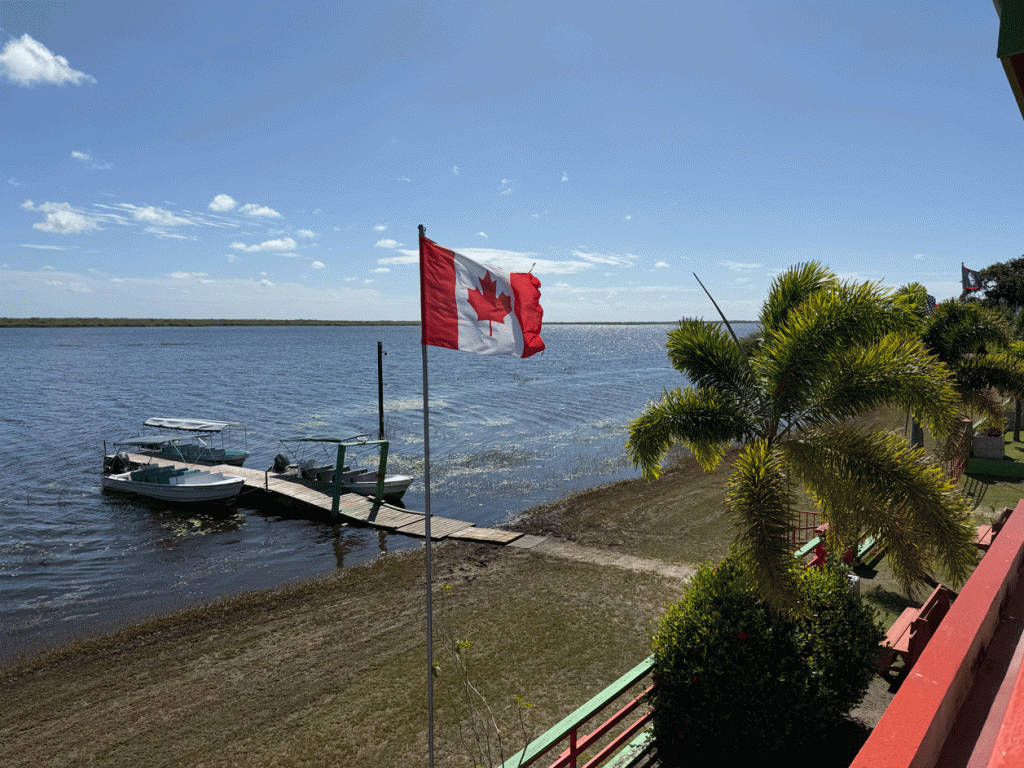
Most of the winter residents of the park had headed to their summer homes, so when the office set out the Canadian flag, we knew it was just for us.

The blue dot on the map below shows our location close to the Rio Grande which is also southern border of Texas. We could see the border wall from the RV park grounds.

The next day we went to South Padre Island. We started at the World Birding and Nature Center, especially because a rare bird had been sighted there.

It didn’t take long before we saw the Flame-coloured Tanager, right at the parking lot. Then there was time to get a really good photo. Doug, Mary and Rich all had their cameras focused on the tanager in the photo below.

Here’s the best of several shots that Doug got of the Flame-colored Tanager, a year-round resident of Mexico. This one is a female or an immature male. A mature male has a bright orange head and neck.

Then we went in and paid our admission, so we had access to the center’s boardwalk.

This Roseate Spoonbill flew when someone got too close as they tried to get a photo with their cell phone.

This is a Tricoloured Heron. Its bill turns blueish in breeding season from February to July. Its bill is yellow the rest of the year. It always has a dark breast and light belly.

This juvenile Yellow-crowned Night Heron was perched in some bushes across the channel from us and was difficult to see when it was stationary. Luckily one of our party saw it fly in.

Next, we drove about 5 minutes north to the mudflats beside the Convention Center. We walked out to be a little closer, but you can see the tire tracks of other vehicles that drove right out to the water’s edge.

We studied the many shorebirds to try to identify as many species as we could. Here are photos of some of the species in order from smallest to largest.

First up are Sanderlings that are about 20 cm (8″) long, with a short bill. The small flocks run rapidly up and down the beach. They breed in the high arctic. This female is approaching breeding plumage.

A Dunlin is about the same size as a Sanderling with a long, slightly drooping bill. Like the Sanderling, the species is also common along the coasts on sandy beaches. It also breeds in the Arctic, but not as far north as Sanderlings.

We saw two kinds of plovers. We were lucky to see a Wilson’s Plover because they are usually solitary when they are foraging. There are less than ten thousand in North America. This plover is also about the same size as the two previous species. Its bill is long, thick and always black.

We saw several Black-bellied Plovers, but not all of them were as close to full breeding plumage as this one. They only have a black belly in breeding plumage, but they always have black under their armpits. They also breed in the Arctic. They are the largest plover at 29 cm (11.5″) long.

The wind was behind us in the photo below. Rich is pointing out a special tern to us.

The Least Tern is unique with its yellow bill with a black tip and white forehead. They are only found in the US in breeding season, wintering in the Caribbean and along the northern coast of South America. As its name indicates, it is the smallest tern in the world (about 23 cm or 9″ long).

These two fellows sitting into the wind are Sandwich Terns. For a positive identification it’s good to be able to pick out the pale tip on their black bill. They were hanging out with Royal Terns which are a bit bigger and have bright orange-red bills.

A Black Skimmer has very long wings and its lower mandible is longer than the top which allows it to gather food by skimming the top of the water. Doug took several photos in order to catch one in action.

This pale bird is a Reddish Egret; the white morph version. In breeding season they have a bicoloured bill.

After the mudflats, we went to a rockier shoreline at the “Shrimp Basin Bridge.” We wanted to see species that prefer that habitat.

We were happy to see a Ruddy Turnstone, which since it was developing its breeding plumage, was quite ruddy coloured. It was flipping over pebbles and stones to find food.

We had seen Willets at the other beach, but this one was doing a mating display, which showed off the underside of the wings, warranting a photo.

We had to walk under the low highway bridge to access another beach. Once on the other side, we good a view of an American Oystercatcher. It is a crow-sized bird that sounds almost the same as a Black Oystercatcher, which we see on the Pacific coast of BC.

On the way back to our casita, we stopped at the Pintail Lakes in the Santa Ana National Wildlife Reserve. It was really hot and humid, but we also wanted to protect ourselves from stinging insects. Recent flooding seemed to have affected the number of birds (there were fewer than last year), but we did see an uncommon Groove-billed Ani. Here Rich and Mary are trying to get a good shot.

You can make out the huge bill on the disheveled-looking Groove-billed Ani, which never came out of the brushy tangle. The species only comes up into Texas from Mexico in the summer.

The next blog post will cover the last three days of our birding adventures in Texas. Coming soon!

April 2025 in Arizona: Birds and More

April 2025 in Arizona: Birds and More

April was a big month for birds for us. This post will be about the birds we saw in Arizona along with some flowers, reptiles, sunsets etc. There are lots of pictures with fewer words this time.

We also went to Texas in April, to look for more birds, of course. We saw so many and got so many good photos that there will be several Texas birding posts.

Here’s a view of the Santa Cruz River at the Santa Gertrudis Lane crossing. It’s harder to see the warblers in the full foliage, but it’s wonderful to see everything green up in spring.

This Bridled Titmouse was bathing in a pool in Madera Canyon, beside last year’s fallen leaves. We see these little chatterboxes every time we visit Madera Canyon, but we don’t often take photos of them.

This Hammond’s Flycatcher was also in Madera Canyon. This photo was taken April 1. Soon it will be migrating north. They breed throughout most of British Columbia.

On April 2 we made our annual visit to Ash Canyon Bird Sanctuary near Sierra Vista. We made a donation to view the feeders in the private property. There’s a new bird photo blind which can be booked for a fee. The owner invited us to check it out. We saw some birds from this spot, but we only stayed a short time. Most of the photos from that day were taken in the gardens and other viewing areas open to the public.

This is a Broad-tailed Hummingbird.

Rufous Hummingbirds are in Arizona only in migration. Soon they will be up in British Columbia and some will visit our feeders at our house in BC.

Calliope Hummingbirds also migrate to the East Kootenays where we live. We love their streaked gorget.

The Lucifer Hummingbird was the bird we had come to see, because they only come into southeast Arizona in the summer. It’s a small hummingbird with a strongly curved bill. Unfortunately we never saw it feed at a flower.

Scott’s Orioles breed in Southwestern US. The male is distinctive; yellow with a black hood.

On April 4, we visited Sweetwater Wetlands. We’ve included several photos of Snowy Egrets in previous blog posts, and this time, the egret is flying which allows a good view of its dark legs and yellow feet.

This Long-billed Dowitcher was probing the mud and shallow water for larval flies, worms and other soft-bodied invertebrates in a “sewing machine” motion.

There was only one White-faced Ibis at the wetlands that day, which is unusual because they are usually found in large flocks. They migrate through the Tucson area at this time of year. Its iridescent feathers were shimmering in the sunlight.

The next day we went to Florida Canyon again.

Doug took this photo of a Columbine flower with his long lens because it was below us in the moist areas of the canyon.

We got a great view of a Greater Pewee. This species is very similar to an Olive-sided flycatcher, but unlike that flycatcher, we’ll never see them in BC. They are residents of Mexico and some make their way into Arizona in the summer.

We caught a glimpse of a MacGillivary’s Warbler that was on its way north. Their bold white eye-arcs are distinctive.

We rode our mountain bikes at Tortolita Preserve on April 6. Of course, we also submitted a bird list of the eighteen species we saw or heard as we were riding.

The next day, we travelled two and a half hours north to San Carlos Lake, in a part of Arizona that we’d never seen. San Carlos Lake was formed by the construction of the Coolidge Dam built between 1924 and 1928. Water is released when farmers downstream on the Gila River need it. It’s part of the Apache Indian Reservation.

The birds we were trying to see had been spotted on a narrow bit of land close to shore, that became known as “Gull Spit.” American White Pelicans were the predominant birds.

Luckily for us, an experienced birder had been looking at the flock for a while and could point out the species that we were interested in. He could not only distinguish species of gulls in adult plumage, but he also could identify the various plumage phases; something that we struggle with. The biggest gull there was a Glaucous Gull. The photo below shows it coming into land beside some smaller Ring-billed Gulls. It’s very unusual for this gull to be this far inland. In the summer, the species breeds in the Arctic. We had never seen one before.

This is an American Herring Gull. It was a distant shot, but the pink legs can be made out. Before 2024, the American Herring Gull used to be known as just “Herring Gull.”

There was also a Lesser Black-backed Gull on the spit, which was a new species for us.

On April 8th, we drove a short ways north of Oro Valley to Saddlebrooke Ranch, a 55 plus active adult community. A Pacific Loon had chosen to visit their golf course pond. Luckily the pond was right near the parking lot, so we could view the loon from the sidewalk. We’d only ever seen one before, and never one this close.

We met our friend Rich at Madera Canyon on April 9th, and had an enjoyable time watching birds from above a pool that is close to the main picnic area. The best photo of the day was of this Broad-tailed Hummingbird.

On Thursday April 10is was predicted to get up to 35 degrees C (96 F), so we got up early and were riding our bikes by 8 am. We did a shorter ride and it was 27 degrees by 9 am. We spent the rest of the day organizing and packing to drive to Texas. We left by 6 am the next morning, so we actually missed the record “earliest first 100 degree day.”

We were gone on our trip from April 11 to 19. The “Texas Birding Blog Posts” will be written eventually. We saw so many birds!

On our first day back from our long drive, we went to the Arizona-Sonora Desert Museum. We followed our same pattern of being at the museum for their 8:30 opening. It’s usually quiet and not too hot.

The Prickly Pear were in full bloom.

The Violet Prickly Pears were also in bloom. It’s interesting how their blossoms are pinkish when they first bud, and gradually change to yellow. The Violet Prickly Pear also has a purple tinge to its pads.

We were happy that our last day at the Desert Museum was also a “No Roar” day for the animatronic “Dinosaurs in the Desert.”

We noticed this Verdin at its nest.

We enjoyed seeing a male Lazuli bunting perched on an ocotillo.

The white eye ring stands out on a Nashville Warbler. We were lucky to see it at the top of a tree.

We’ve probably posted several Wilson’s Warblers in previous blog posts, but we can’t resist putting in another one.

We saw this Clark’s Spiny Lizard on a wall in the desert garden near where we saw the two warblers. The photo makes it look quite big. It’s about 14 cm or 5 1/2″ long. Dark cross-bands on the legs and three ear scales are its distinguishing features.

Doug saw this Western Diamondback Rattlesnake on the road near our place, one day when he was out for an errand. He took the photo from the safety of the truck.

When we drive a couple of hours to go birding, it means we often leave before dawn. The moon and Venus show up in this photo taken from the gate at 5 am. The awning lights are still on which lends an interesting glow.

Pinery Canyon is in the Chiricahua Mountains and about a two and a half hour drive away. We stopped along the road in a random spot because we caught a glimpse of some birds. Here Teri, Wendy and Mary are all listening, checking the Merlin app on our phones and watching for movement. The Chiricahuas are known for having interesting rock formations. The photo below shows just a glimpse of the mountains.

We saw our first ever Mexican Chickadee. This species is very similar to a Black-capped Chickadee, but with a larger black bib and greyish flanks. It was high up in a pine.

One of the target birds of the day was a Buff-breasted Flycatcher, so when we saw a flycatcher by the side of the road, we stopped to check it out. It was a Gray Flycatcher, which was still nice to see.

We continued up the Pinery Canyon Road and stopped near a primitive camping spot. We searched the tall pines for the elusive Buff-breasted Flycatcher but it must have been too early in the year because they hadn’t arrived yet. But we had another flashier bird to look at and take photos of.

It was a Red-faced Warbler! It was also a bird that we hoped to see before we had to head north. Red-faced warblers are primarily a Mexican species but they will breed in the pine and oak of the Chiricahua Mountains.

We saw this Spotted Owl roosting close to the same spot.

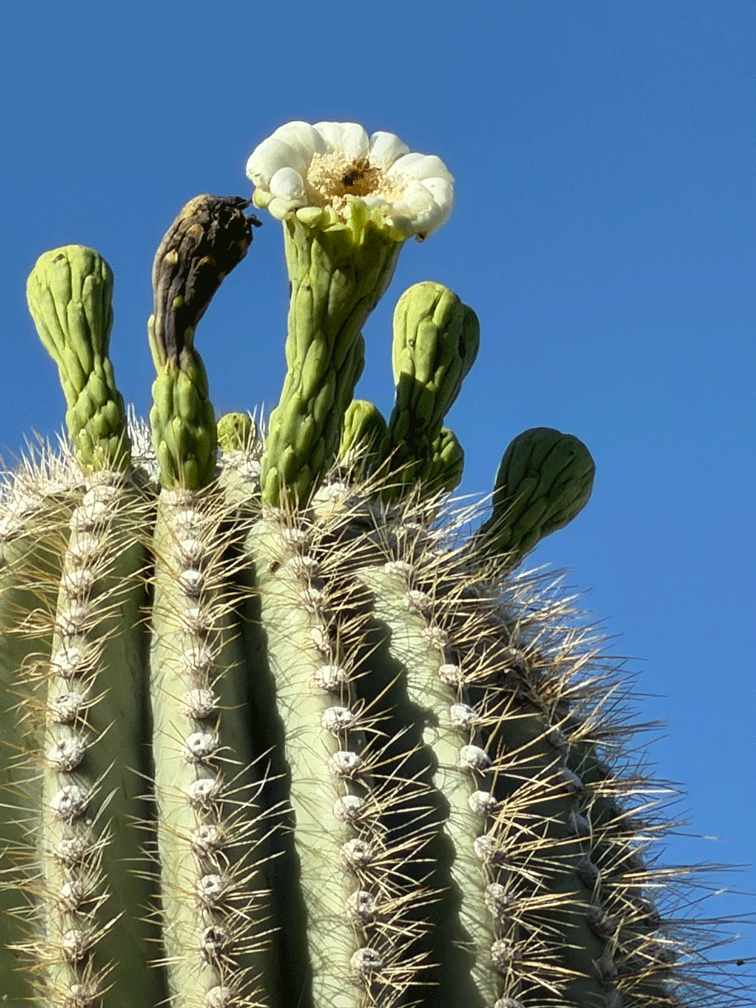
Back in the desert of Saguaro National Park, we watched the progress of the Saguaro blooms. Only a few cacti had full blossoms, but in a few more weeks they would all be fully open.

The day before we left, we did one final walk on our favourite trail near our place. We met a neighbour who was out for an early morning walk at the same time and invited him to join us. We were happy to show him a different route. When we got back, we spent the rest of the day organizing the fifth wheel for travel.

Here are two photos of the sunset on April 5, taken just a few minutes apart. The mountains to the east seemed to be glowing.

This is the view of our empty spot through the gate at 8 am as we were leaving. That day we drove to Kingman, AZ. The next day was a long one of close to twelve hours of driving to a campground near Brigham City, UT. From there, we drove to Deer Lodge, Montana for our third night. That left us with a six hour drive to get home to Cranbrook, BC on our final travel day.

And now we are home and look forward to seeing hummingbirds at our feeders. (As of today, May 15, we have seen all the expected hummingbird species: Rufous, Calliope and Black-chinned.)

The next few posts will be all about our trip to Texas and will be posted eventually. Life is too busy to sit in front of a computer!

March 2025: Part 2: Birding

March 2025: Part 2: Birding

On March 6th, we got up early so we could be at Christopher Columbus Park just at sunrise. It was a calm scene. There were so many American Coots. Wendy wondered how many were there, and one way to know was to take a photo and count them from the photo. The photo below is the result. She actually didn’t bother to count them all; one of our friends counts every coot, at least once a week, so it wasn’t necessary. But we got a nice photo anyway.

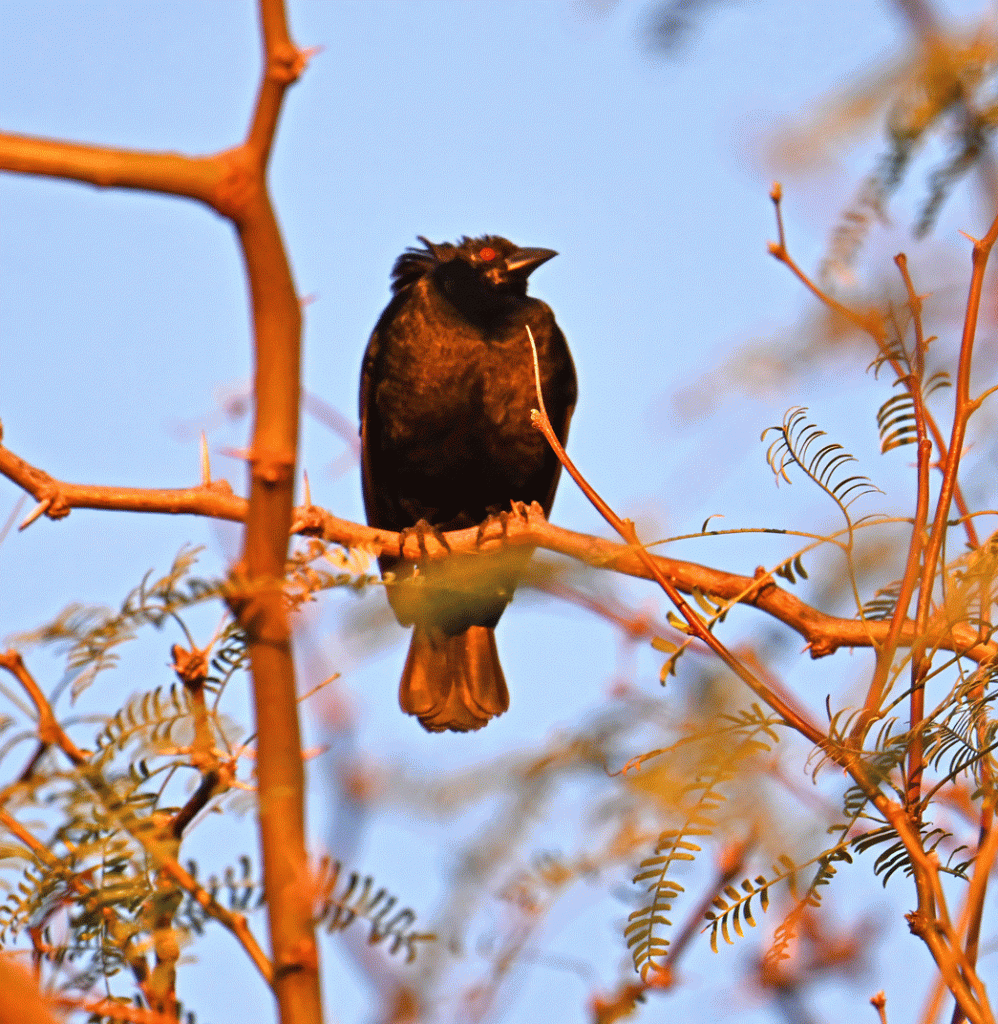
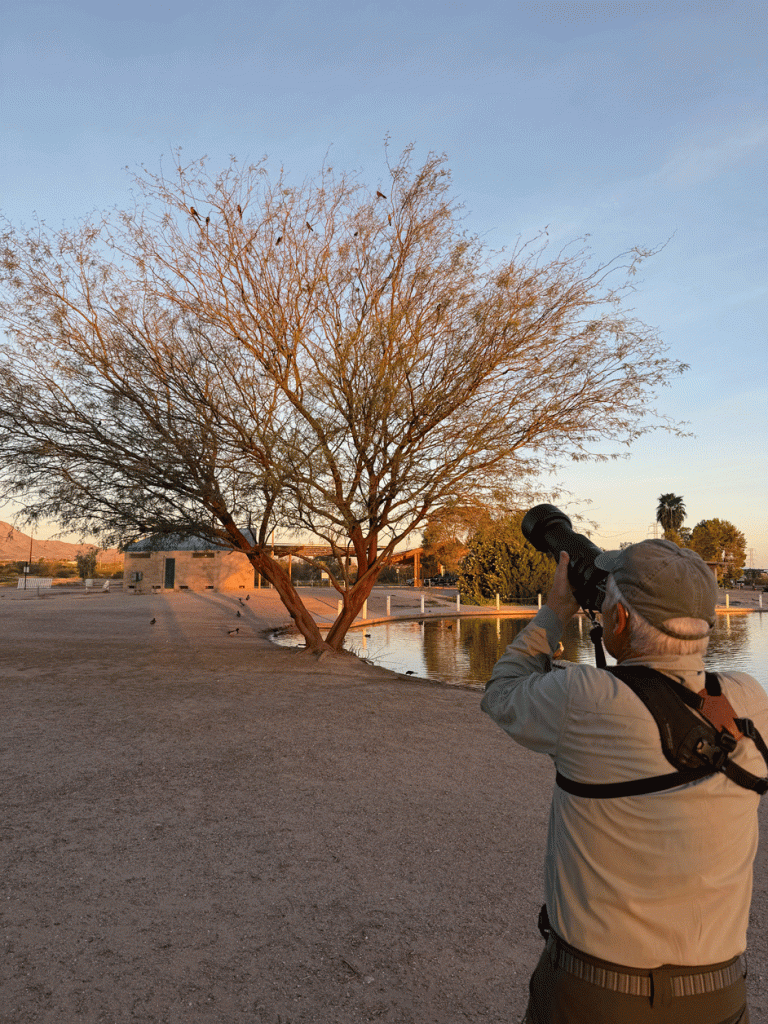
We didn’t come especially for the coots. We were hoping to see a Bronzed Cowbird. The trees were full of Red-winged Blackbirds, with a handful of Brown-headed Cowbirds mixed in. Among the multitude were a couple of Bronzed Cowbirds. They look hunched when they sit because of their thick necks, and they stare out with beady red eyes. We were really happy to be able to pick them out. We made the effort to get there at sunrise, because shortly after, the flocks take off to parts unknown. Our friend had told us that he sees them most mornings.

There was a male Common Yellowthroat foraging at the water’s edge. It was probably easier to see him early in the season before the grasses grow high.

Since we had started so early, we had time to go to another location to look for birds. A Hermit Warbler had been reported a few days earlier somewhere on a 1.5 kilometre (1 mile) section of the bike path along the Santa Cruz River. We were surprised that we spotted it on the cool and windy morning. This one was a female and may have over-wintered here. We shared the specific location through GPS coordinates so that other birders could find it more easily. Over thirty birders went to see it in the next week.

We saw this Greater Pewee in Madera Canyon, near the main picnic area a few days later. The Greater Pewee is similar to the Olive-sided Flycatcher that we have in BC, but drabber. The orange lower mandible on its long bill stands out. It’s native to Mexico with a limited range in the US.

An American Avocet in non-breeding plumage is not as colourful as in the summer, but its upturned bill is unmistakable. This was the only one at the Avra Valley Water Treatment Plant when we visited on March 12. Usually we see them in groups of several to hundreds.

We also saw our first Greater Yellowlegs of the year. Unfortunately the photo doesn’t show much of its yellow legs.

The same day, we drove to a flooded field to see more Greater Yellowlegs. Among the Greaters, there was one Lesser Yellowleg. We needed our ‘scopes to be able to distinguish the two species. When we saw them walking together, we could tell that the Lesser Yellowlegs was smaller with a shorter, straighter bill. All the birds were too far away for a photo.

While we were there, the rancher who owns the land came by to chat. He told us about how he manages the fields without plowing, which protects from soil depletion. The field on the west side of the road was flooded on this day; on other days he would flood the other side of the road.

At the end of March, on the same day that we hiked at Pima Canyon, we came back to this location. We saw two rarities that day on the other side of the road: an Upland Sandpiper and a Glossy Ibis. No photos however, because Doug only had his iPhone camera with him.

On March 14, we went to the Green Valley Water Reclamation Facility to look for other shorebirds. There were many Least Sandpipers and one Western Sandpiper. Since the Western Sandpiper breeds in the high Arctic we might not see it when it passes through BC in migration. We also wanted the challenge and the practise with our ‘scopes. A Western Sandpiper in non-breeding plumage has similar colouring to a Least Sandpiper, but it has dark legs rather than light greenish legs. The Western is bigger than a Least, but only by less than 1.3 cm (0.5″). We were able to find it foraging on the shore and Doug was also able to get a distant photo.

Another reason for us to go to Green Valley that day, was to be “in place” in case a rare bird had been blown off track in the heavy winds of the night before. Our strategy worked for us, because a Red Phalarope dropped in to Amado Water Treatment Plant around noon. We were able to get there within a half hour. A Red Phalarope and a Red-necked Phalarope look very similar in non-breeding plumage. Experts looked at all the photos that everyone submitted and determined it was a Red Phalarope. Doug’s photo shows the thicker bill, but we’re glad the experts can decide if the back was paler or streaked. We were happy that it was a “Red,” because we had never seen one before.

A Western Cattle Egret was seen at Christopher Columbus Park the same day, so we stopped by on our way home. (Photo on the left). Later in the month, we saw another Western Cattle Egret at El Rio Open Space Preserve. We’ve put them side by side in the blog, so it’s easy to compare them. It looks like there are two different birds, not just one that stayed in the area.

In the middle of March, we walked on both sides of the Santa Cruz River near Sunset Road. It was a cool and cloudy day, but when the sun came out for a few minutes this male Lawrence’s Goldfinch practically glowed. Lawrence’s Goldfinches have been plentiful in the area this year. It’s know as an “irruptive year,” which means that large flocks have come to the area in winter from California, perhaps due to a food shortage. They’re nearly always in small flocks feeding on weed seeds.

On the same walk, we saw our first Warbling Vireo of the year. All summer we will hear their warbler-like song, back in BC, but we don’t often see them as they usually stay pretty hidden in the foliage.

We went to the Hawk Watch in Tubac on Monday March 17 this year. We heard that there were over 200 people at the field at Ron Morriss Park the day before. Too busy for us! The Hawk Watch is organized by HawkWatch International (hawkwatch.org), and runs from Feb. 15 – Apr. 30. There are professional counters that collect the official data, and there are also lots of other people that will call out when a bird is sighted. Sometimes the raptors are so high up that they are almost specks and it’s tricky to find the bird in your binoculars. Here’s a view of our little group that included some people that we knew already and some that we had just met.
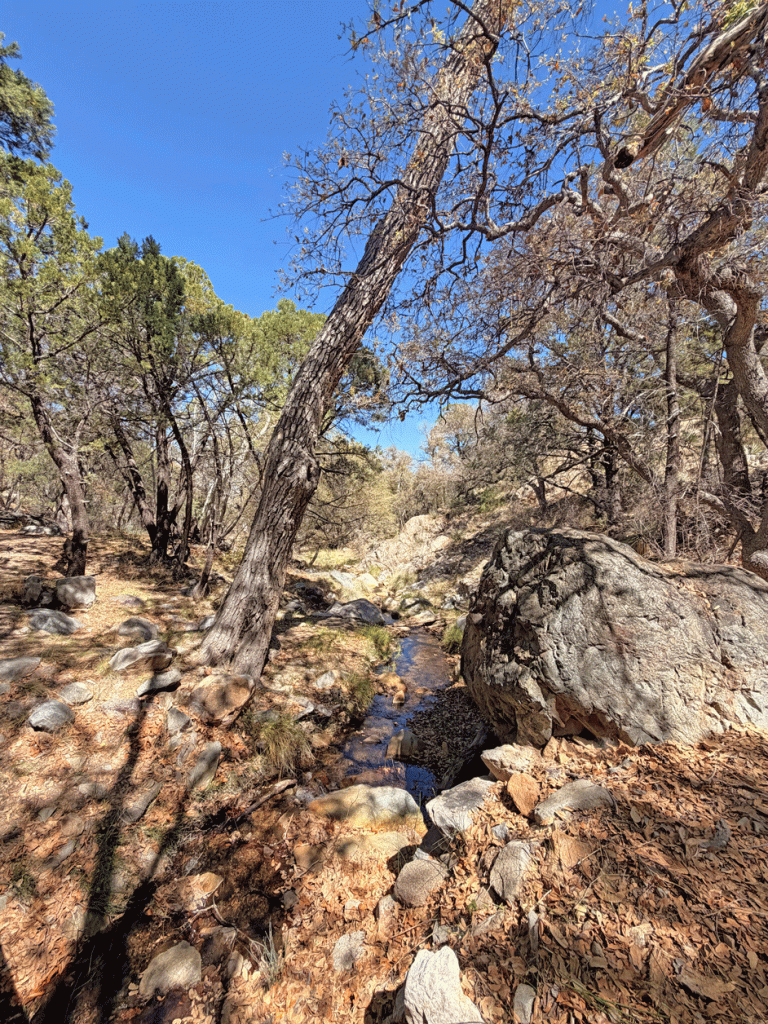
Common Black Hawks were plentiful the day we were there, but they are not very common in North America with fewer than 300 nesting pairs. They are found in mature cottonwood forest along permanent streams.

We only saw one Zone-tailed Hawk that day. Their preferred habitat is foothill canyons with permanent streams and open woodland. According to The Sibley Guide to Birds, the US population in only about 300 nesting pairs. In flight, they look extremely similar to a Turkey Vulture, and when they are perched, they look a lot like a Common Black Hawk.

On March 22, we birded in a new area for us: Cedar Canyon near Arivaca Lake. We drove about two hours on pavement, then turned off on to a dirt road. Friends had explained the route to us, but it was still a bit of an adventure. In the second photo, Doug is taking a photo of a Yellow Warbler in a cottonwood near a marshy area. We walked along the road until we came to the dam that holds the water back that forms Arivaca Lake.

We had come to see a very special gnatcatcher: a Black-capped Gnatcatcher. Black-capped Gnatcatchers are only rarely seen in Arizona. We had read reports of a female bird from about five people and we were hopeful that it might be in the same trees that they saw it in, right below the dam, near a pool of water. After watching the trees for a while, we spotted a gnatcatcher and Doug was able to get a few photos. Because it was a female, its features are very similar to a more common Blue-gray Gnatcatcher. We thought it was a Black-capped, but we needed to examine the photos carefully in order to be sure. In the photo below, notice that the outer tail feathers (the ones in the middle from this view) are shorter than the rest, which is a distinguishing feature of a Black-capped Gnatcatcher.

We visited the Arizona-Sonora Desert Museum several times in March, so all the bird photos from that location are in this section. On March 5, we saw this Orange-crowned Warbler on the ground, which is unusual because they are usually gleaning insects in trees and bushes.

This Rock Wren’s colouring is very much like the rock it is perched on.

On March 18 we saw our first Bullock’s Oriole of the season. Perhaps this one is going to stay in the area, or maybe it’s on its way north. Bullock’s Orioles breed throughout most of the western US, as well as our part of BC.

We often see a Northern Cardinal, and Doug has many photos of them. This male had such an interesting expression that it was hard to resist taking and posting another photo.

This is a Blue-gray Gnatcatcher. We can tell that it’s a male because it has a black forehead.

On March 30, we saw this Ash-throated Flycatcher eating berries. As its name implies, it also catches insects.

A Desert Museum docent pointed out this Costa’s Hummingbird on her nest. While we watched we could see her feeding her young. This hummingbird is very small (8cm / 3″ long) and her nest is tiny, 2.5 cm / 1″ deep with a diameter of 3 cm / 1.25.” The nestling period is 20-30 days, so maybe next time we’re back we will see the baby birds.

This next section shows the photos of the birds that we saw at Sweetwater Wetlands. On March 6, there was a lone Long-billed Dowitcher. They are rather drab coloured when they are in non-breeding plumage. The name “dowitcher” is probably of Iroquoian origin.

By March 13, we saw our first Lucy’s Warbler. Over the next couple of weeks, more and more arrived. This drab warbler has a beautiful song and breeds mostly in Arizona.
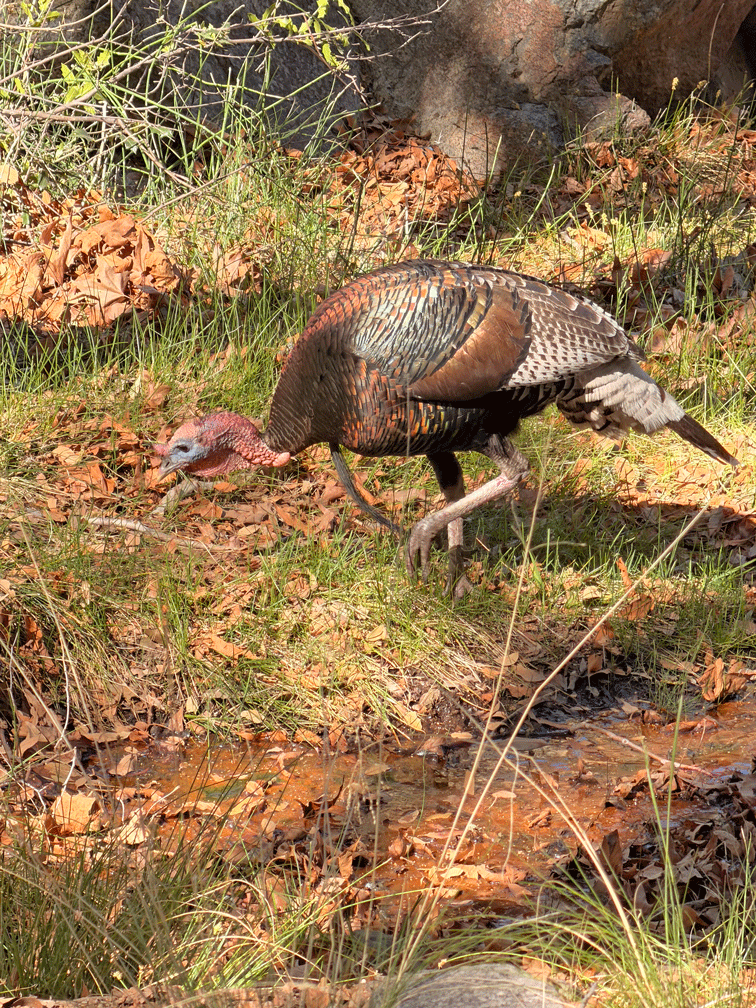
We often hear the Marsh Wren’s gurgling, rattling song but it is usually difficult to see one. It’s even more special to see one that isn’t obscured by reeds.

We have seen many Snowy Egrets this month. This photo shows their distinctive yellow feet.

We could have used this photo as a quiz: “Find the Least Sandpiper,” because their colouring is so close to their mudflat surroundings. However, in real life they scurry here and there, so it’s easier to see them.

We’ve posted a number of photos of Wilson’s Snipes in this blog, and here’s another one with a reflection. This species has a boldly striped back. Notice the bold bars on its sides.

Wilson’s Warblers have been plentiful this spring. Here’s a photo of a male with his cute little black cap.

This male Yellow Warbler has reddish streaks on his breast. On March 28th, we heard eight of them singing, but only saw a couple. The continuing puzzle for us is: “How is it that we can’t see a bright yellow bird in a tree?”

Here’s a Greater Roadrunner photo, one of several that we have posted over the years. Roadrunners often raise their tail high then slowly lower it.

Swainson’s Hawks are migrating and we were lucky enough to see one fly overhead while we were at Sweetwater Wetlands. This is a light morph adult.

We saved what we believe is the cutest bird photo for the last. It’s the first photo that Doug has of a Burrowing Owl that shows the bands on its legs. This one was living alongside a road beside a field in Marana. The others that we saw the same day we perched beside man-made burrows on another road about 800 metres (half a mile) away. The leg bands are used to monitor the birds.

March was another busy month for bird-watching for us. We submitted over fifty checklists to eBird – at least one a day.

April is shaping up to be a busy month as well. More migrating birds are arriving and we are also making a road trip to Texas to see even more birds. Our next blog will be available sometime in May.

March 2025 in Arizona: Part 1: hiking etc.

March 2025 in Arizona: Part 1: hiking etc.

We did four hikes in March although we also did a lot of other walks. The difference between a “hike” and a “walk” for us is whether or not we’re wearing our packs. It used to be that a hike didn’t involve much birding, maybe only by ear, but that has changed, and now we bring our binoculars on every hike, because we never know when a “good bird” will show up.

Early in March, we did one of our favourite loops in Saguaro National Park (West). We climbed up the steps of the western start to the Hugh Norris Trail.

Once we reached the ridge, the trail is more gradual; flat sections with some ups ands downs. The area where we live in the winter is in the background, to the right of Wendy, between the wedge-shaped Panther Peak and the small hill.

Because we had our binoculars, we could pick out a windmill from the ridge. We were intrigued. We started down the Sendero Esperanza, then went off trail into the wash that we figured would lead us to the windmill. We found the windmill in working order. We researched it when we got home and found out that it was developed in 1937 as one of the projects of the Civilian Conservation Corps (CCC), a voluntary government work relief program. It was meant to supply water to game animals and birds. We couldn’t see any water however.
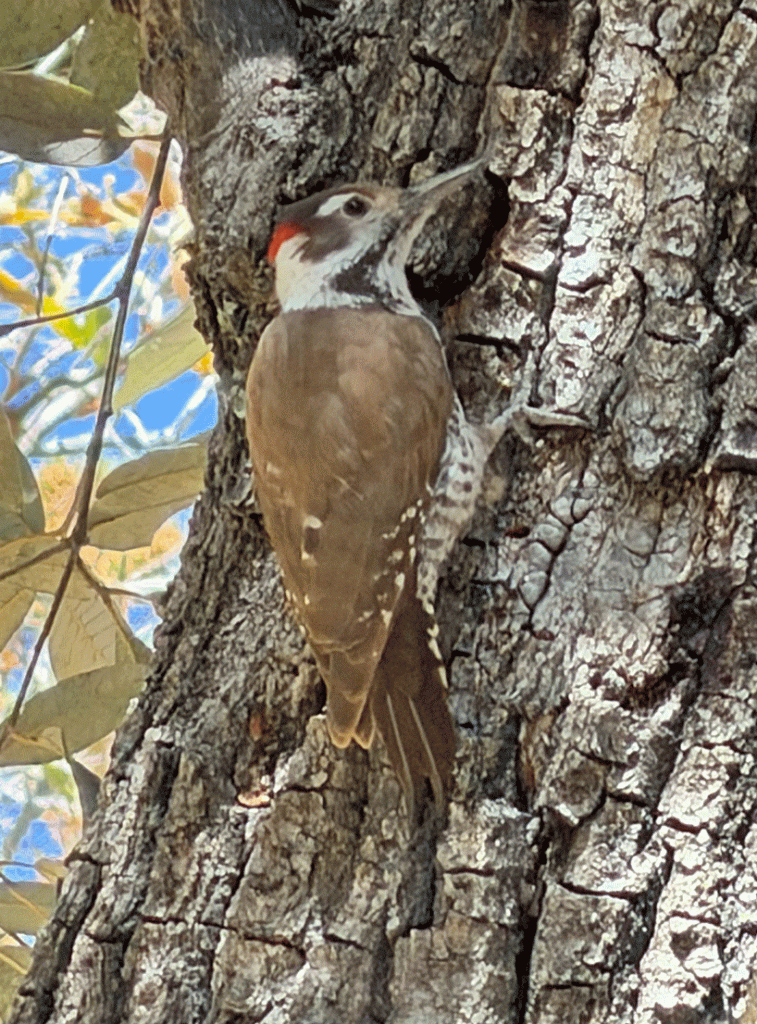
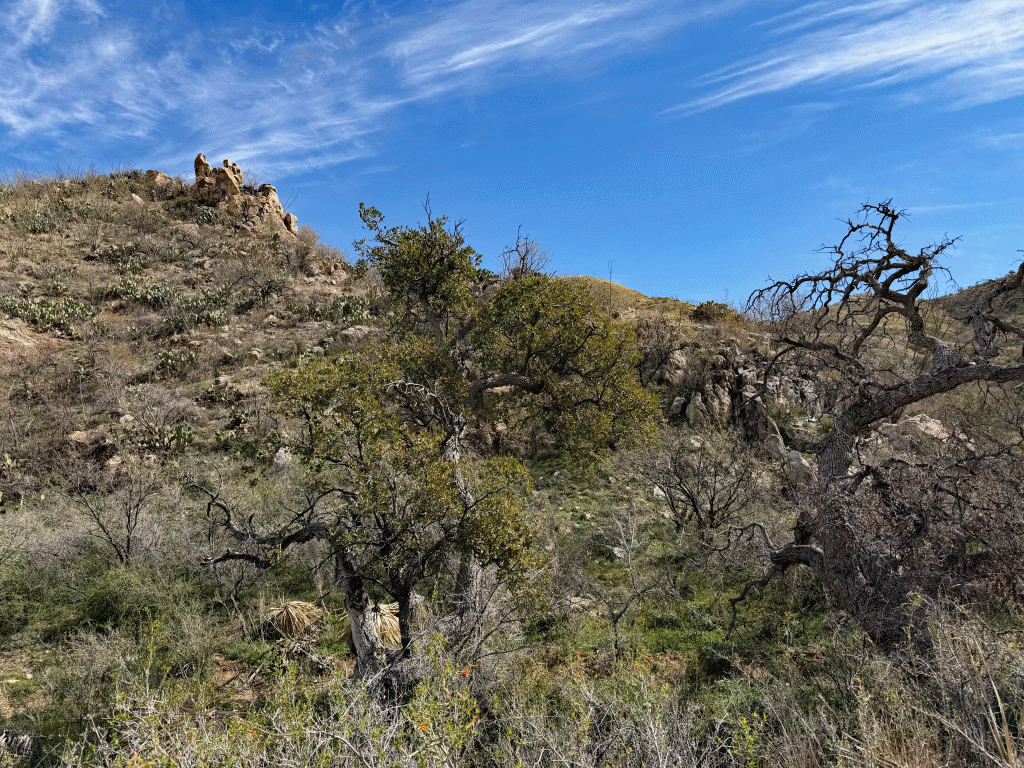
We continued down the wash. When we were almost at the regular route for Dobie Wash, Doug saw a gray bird dart into a bush ahead of him. There was a Verdin calling nearby, so Wendy assumed that was what he saw. When we got our binoculars on the bird and realized we were looking at a Gray Vireo; which is a rarity, and meets our definition of a “good bird.” It moved around a bit, but Doug was able to capture a photo of it with his cell phone. The other photo is of Wendy looking at the bush that it had perched in, to give you the idea of how close it was and the kind of scrubby bushes it liked.
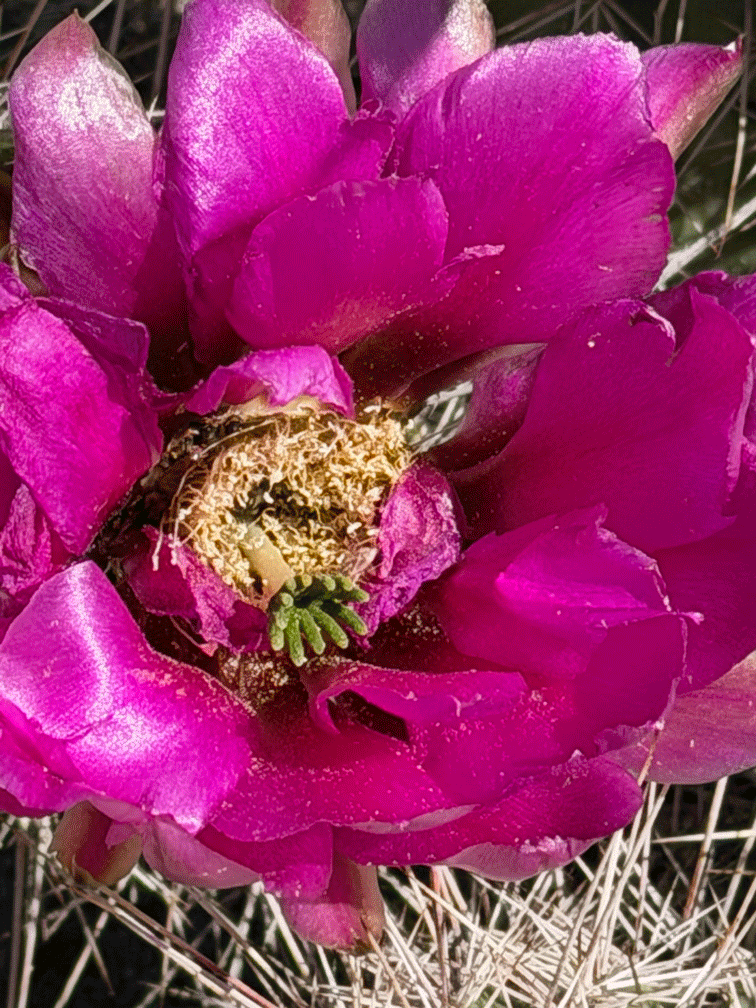
Gray Vireos are uncommon in rocky arid hillsides with widely scattered bushes, and are often solitary. This was the kind of habitat we were in, but it was not a place that many people go to find birds. When we wrote the explanation of our discovery, we stated, “Three hours into a five hour loop hike…” The eBird reviewer sent us an email thanking us for the observation. “Your observation … is now an important part of the overall picture for this species.” So, that’s the long version of why we take our binoculars on our hikes. Besides, stopping to look at a bird allows us time to rest!

We continued down Dobie Wash, crossed the road and found the connecting Bajada trail. Part of the trail ends up in a rockier, narrower wash. We’ve seen puddles of water on previous visits, but this time everything was dry.

Right before the trailhead, we walked down the weathered granite where the wash descended more steeply. We reached our truck about 1:30 and got home before it got too hot. The high that day was 27 degrees C (80 F).

On March 10th, we did another loop hike. We went up the Carrie Nation trail in Madera Canyon. The trail passes into the Mount Wrightson Wilderness near the beginning.

We had climbed about a thousand feet when we ran into patches on snow at about 6500 feet. The snow was lingering on the north facing slopes, but the ground wasn’t frozen so it was melting fast.

The Carrie Nation trail ends at an old mine. We followed the footprints in the snow patches up a steep unofficial trail until we reached the Aqua Caliente trail. From there, we descended to the Josephine Saddle. This is a view of Mt. Wrightson (9456′). This photo was taken just above the saddle.

We had lunch at the saddle, (7080′) then headed down the Old Baldy trail to the parking lot to complete the 5 1/2 hour loop. We saw a good number of birds, including a Williamson’s Sapsucker and several Olive Warblers, both expected species for this elevation.

On March 25, the temperature in Tucson was predicted to reach 37 degrees C (98 F) so we headed to Mt. Lemmon where it would be cooler. We hiked a new trail for us: Upper Bog Springs. We chose this short section of the Arizona trail for the views and the possibility of seeing some interesting birds. The trail takes off near the Bear Canyon Picnic area and climbs extremely steeply. At this point, we are at the same elevation of the road switchback which you can make out level with Wendy’s hat in the photo below. (This description is for the folks that know the road to Mt. Lemmon.)

There are many steps; some that have been cut right into the rock. The sign at the bottom of the trail warns of heavy mountain bike use. We guess that most mountain bikers walk this section. Once at the top, it’s a steady downhill.

The trail descended shortly after this granite boulder, so it became a landmark for us on the way back up.

We saw this spider in the middle of the trail, just below the boulder from the last photo. It’s a Tucson Bronze Tarantula and is about 10 cm (4″) in diameter. This was the largest spider we’ve ever seen in the wild.
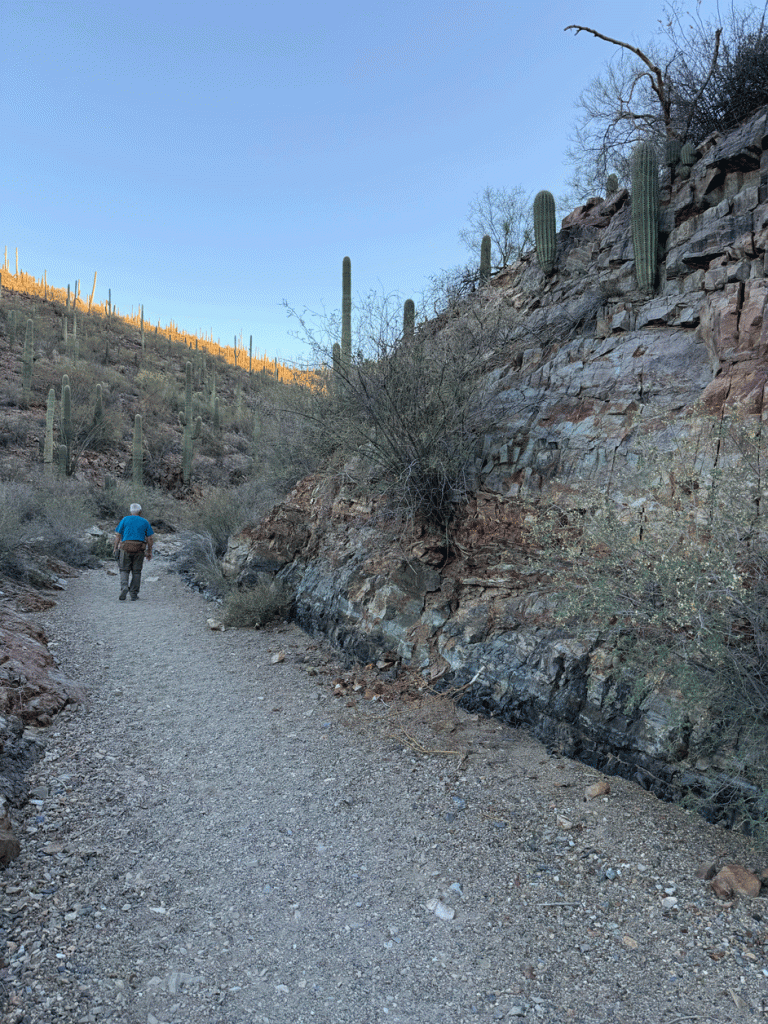
When the trail levelled off about 2 kilometres (1 1/4 miles) from the trailhead, we found we were in an oak, juniper, sycamore forest. It was very pleasant walking. When the forest changed to be predominately pine, we decided to turn around. We knew we had a good stretch of uphill on our way back. While we were having our snack on a nice log, we watched a group of four mountain bikers ride by from a safe distance. Earlier in our hike, we had to scramble into the bushes to get out of the way of two riders.
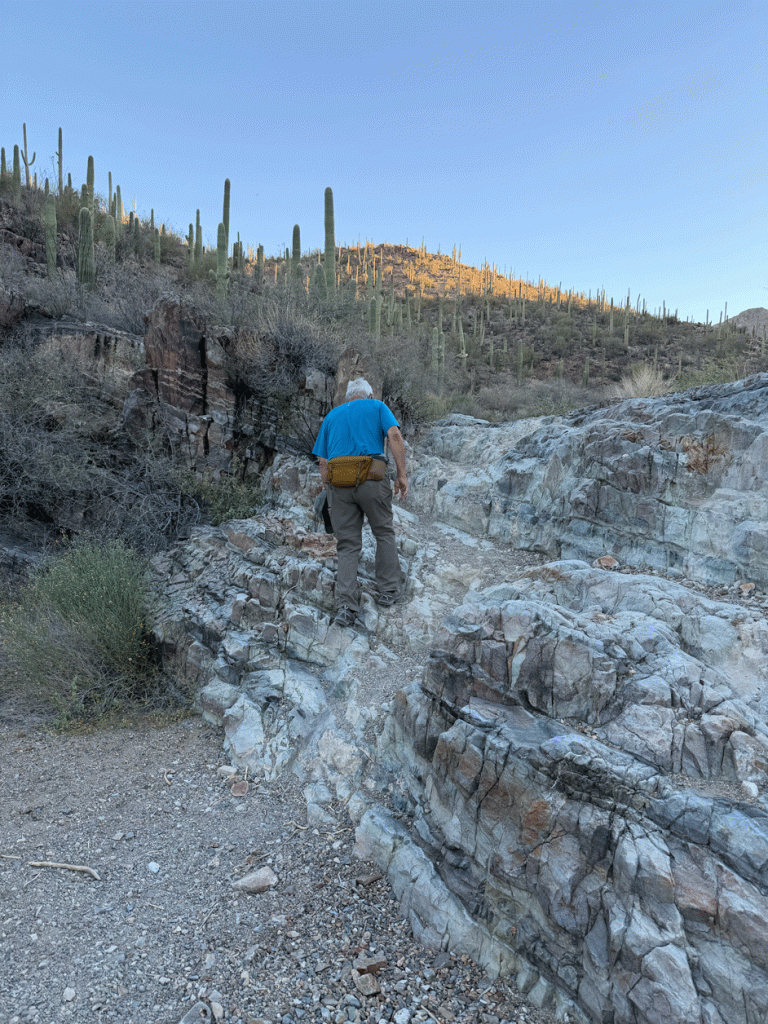
Here’s some views of the nice smooth uphill sections. We saw several species of birds, including a Zone-tailed Hawk and a couple of Band-tailed Pigeons. Our four and a half kilometre (almost 3 mile) hike took us three hours.

Near the end of March, we hiked in Pima Canyon. This crested saguaro is near the start of the trail.

We were in the pleasant shade about an hour and a half in the lower section of the canyon, then it opened up to great views up canyon.

This photo was taken just below our high point. We stopped at our regular spot beside an old dam.

We rested and had a snack, and just as we were leaving, a Rock Wren bobbed along. It must have been a juvenile, because it had little fear and it kept coming closer and closer. The best photo was when it was right at our feet. A lot of people stop at the rocks near the dam and have a snack or lunch. The Rock Wren is doing its job of “clean-up crew.”

Here’s a view looking down the canyon.

Mostly we walked downhill from the dam, but there was a small uphill when the trail moved to the other side of the canyon. The trail has been improved since we hiked it last April. It wasn’t as rocky and steps had been added. The 9 1/2 km hike took us five hours. We took plenty of stops to look at birds, and saw 32 species, including a quick view of a Virginia’s Warbler.

Here’s the customary mountain biking photo taken from one of our four rides at the Tortolita Preserve.

Some afternoons from December to the middle of March, Wendy worked on a quilt that she was making for our new grandson. Here’s a photo of the day she took over the fifth wheel, when the quilt top was almost complete. Usually she didn’t need to get out the extra table or the bigger ironing surface.

Here’s the completed quilt top. It’s called Forest Fungi by Pen and Paper patterns. She has completed the “piecing” portion (sewing the patchwork pieces together) and next needs to do the “quilting.” When we get home to BC, Wendy will layer it with batting and a backing, holding the three layers together temporarily with safety pins. Then she will stitch through all the layers using her home sewing machine, to make the layers stay together as a “quilt.” Once a strip of fabric is sewn around the edge, enclosing the raw edges (called binding), the quilt will be complete. It has taken many hours to get the quilt to this point, and except for the few bits that needed to be ripped out and sewn again, it was enjoyable. Enjoying the “process” is as important as the “product.”

As the weather warms up, the reptiles become more active. Here’s a Sonoran Spiny Iguana who is a regular at the Arizona-Sonora Desert Museum, and has previously been featured in this blog.

We saw this Desert Spiny Lizard on a walkway at Sweetwater Wetlands. It is one of the largest lizards in the Sceloporus species in Arizona. The black wedges on its shoulder are a distinguishing feature.

In March, the flowers in the Arizona-Sonora Desert Museum start to take centre stage. This columnar cactus is growing in the desert garden section, which includes non-native cacti. It’s related to the native Saguaro, but we can’t find out what it is called. It’s beautiful, nonetheless.

Here’s a close up of the flower.

The claret cup cactus grows in the wild in Yavapai county, which includes the areas around Sedona.

This Bonker hedgehog is in a pot in a sheltered area near the gallery. It can be found in the wild in high elevation grasslands. The relatively dark magenta colour of the flowers is a distinguishing feature.

Other years, we’ve seen fields and fields of these poppies in various locations. This year, we had to settle for this planting of Mexican Goldpoppy (Eschscholtzia mexicana) in the desert garden section of the Desert Museum. There hasn’t been enough rainfall to produce a wildflower bloom in the desert this year.

There were three contenders for “Sunset of the Month.” You can decide the winner. Here’s the sunset on March 5th.

Sunset on March 12

Sunset on March 17. We had better sunsets in March, because we had some unsettled weather.

As you can tell, we’ve been busy this March. And we’ve also seen (and photographed) many birds. Part 2: Birding will be posted soon.